Varanasi Sunrise Boat Tour — The Ganges at First Light
Varanasi Sunrise Boat Tour — The Ganges at First Light
A guided two-hour boat journey on the Ganges from the main ghats to the cremation fires at Manikarnika. Timed to arrive at first light. Licensed local guide who explains what you are seeing.
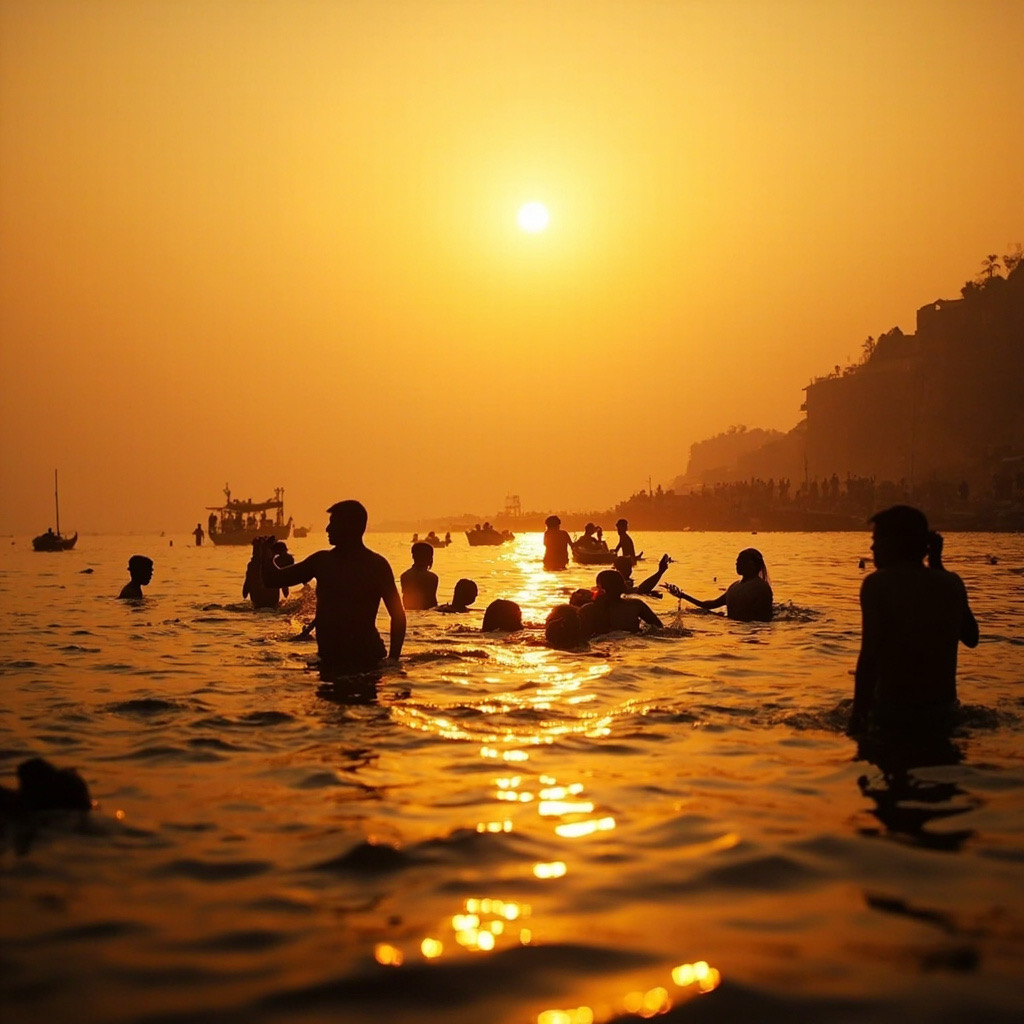
There is no way to prepare for the Ganges at sunrise. You can read about it, watch videos, study the ghats in photographs — and none of it is the same. The river is alive in a way that cities are not. The light at 5:30 AM in Varanasi comes sideways through the haze off the water, turning the ghats gold before the sun clears the building line. The sound reaches you before the image does: temple bells, distant Sanskrit, the splash of an oar in the shallows, someone singing alone.
Varanasi is not a place you visit neutrally. For Hindus, it is the city of Shiva — Kashi, the "city of light," one of the seven sacred cities of Hinduism and the place where the soul arrives when it is ready to stop being reborn. The city predates most of recorded history. Buddha gave his first sermon at Sarnath, a short drive away, after achieving enlightenment at Bodh Gaya. For a pilgrim approaching Varanasi, the city is not a destination - it is a reckoning.
The sunrise boat tour is how most people first encounter the river. You board at one of the main ghats — usually near the Dashashwamedh Ghat where the evening Aarti is held - and move upstream through the sequence of ghats that define the city's eastern bank. Each ghat has a name, a history, and a function: bathing, cremation, prayer, public gathering, boat departure. Your guide will explain them as you pass. What you take from that depends on how present you decide to be.
What You'll See From the Boat
The ghats of Varanasi are not uniform. They have different characters, different histories, and they operate differently at different times of day. The sunrise tour is timed specifically so that you arrive as the first light appears — when the ghats are most alive with the rituals of the early morning.
Dashashwamedh Ghat
The most visited ghat in Varanasi, located near the Vishwanath Temple. At sunrise you will see devotees performing their morning rituals — snapping photographs is considered deeply disrespectful here (the guides will tell you so directly), but observation is welcome. The ghat is named for the ten horse sacrifices (ashwamedha) performed here by the king of Bengal. In the morning light, it is a study in motion and stillness at the same time.
Manikarnika Ghat
The main cremation ghat — the fires here burn continuously, day and night, fed by rosewood and ghee. This is the most significant cremation site in Hinduism; the belief is that dying here, or having one's ashes immersed here, grants liberation from the cycle of rebirth (moksha). For a pilgrim, it is an encounter with a central Hindu truth: that the body is temporary and the soul is something else . For a non-Hindu visitor, it is sobering in a way that changes how you think about the river. The boat passes this ghat - you do not stop here, and you do not photograph here. Your guide will prepare you in advance.
The Morning Rituals
Between 5:30 and 7:30 AM, the ghats are dense with people performing their morning prayers — yoga groups on the steps, families bathing, Brahmins performing tarpana (offerings to ancestors), students reading texts at the water's edge. The light is horizontal and golden, and the reflections on the water are exact. You are watching people practice a faith that has been practiced on this exact stretch of river for at least two thousand years.
The Ghats at Dawn — What You Notice
The stone steps — the ghats are built of stone that has been worn smooth by generations of feet. The colors - the orange of marigold garlands, the white of freshly washed clothes, the occasional red of a priest's cloth. The smell - woodsmoke from the cremation fires mixes with sandalwood from the temples and the damp-earth smell of the river itself. The sounds - bells, chanting, the water against the stone, someone practicing on a tabla from a rooftop. None of this is staged for tourists. The boat is there in the river, moving through the morning.
Tour Itinerary
Before 5:30 AM — Preparation
On the Water — 5:30 AM to 7:30 AM
Optional Add-on — Morning Aarti Observation (included in some tour variants)
Included
- Hotel pickup and drop-off in Varanasi
- Licensed local guide (English-speaking)
- Traditional wooden rowing boat — not a motor launch
- Two hours on the water
- Post-tour debrief with your guide at a local tea stall
- All entrance fees to ghat areas
Not Included
- Breakfast — your guide will recommend a good local spot after the tour
- Personal expenses
- Tipping the guide — discretionary, industry standard is ₹300–500 per person for a half-day tour
- Photography equipment beyond a phone — tripods and professional cameras require a separate permit in some ghat areas
Practical Informatione.
Best Season
October through March is the most comfortable time — temperatures range from 8°C to 22°C in the morning, and the ghats are fully accessible. April and May are hot, with temperatures above 35°C by mid-morning - the early start still works, but the rest of the day becomes difficult. The monsoon (June to September) brings flooding on some lower ghats - our operators monitor conditions and adjust accordingly. Dev Diwali (November/December) is powerful - the ghats are lit with thousands of oil lamps in the evening, and the morning boat tour after that is unlike any other time of year.
What to Wear
Modest dress for the entire duration. Shoulders and knees covered for all visitors regardless of faith background. A light layer is useful in winter — it can be 8–10°C on the water before sunrise in December and January. Comfortable walking shoes you don't mind getting damp. Leave jewelry and valuables on the boat - there is no reason to bring them and every reason not to.
Photography
Phone photography is fine at most ghats. The explicit rule — and your guide will reinforce it - is no photography at Manikarnika Ghat (the cremation site). Photography of the cremation fires is considered deeply disrespectful by Hindu tradition. Beyond that, be present. Some of what you see cannot be captured in a photograph anyway.
Water Safety
The Ganges is safe to be near from the boat and the main ghats for most of the year. Do not drink the water — ever. Do not submerge any part of your body. During monsoon season (June to September) some lower ghats can flood. Our operators monitor conditions daily and will adjust the route if necessary. Your guide will brief you on the morning of your tour.
Best Season
October through March is the most comfortable time — temperatures range from 8°C to 22°C in the morning, and the ghats are fully accessible. April and May are hot, with temperatures above 35°C by mid-morning - the early start still works, but the rest of the day becomes difficult. The monsoon (June to September) brings flooding on some lower ghats - our operators monitor conditions and adjust accordingly. Dev Diwali (November/December) is powerful - the ghats are lit with thousands of oil lamps in the evening, and the morning boat tour after that is unlike any other time of year.
What to Wear
Modest dress for the entire duration. Shoulders and knees covered for all visitors regardless of faith background. A light layer is useful in winter — it can be 8–10°C on the water before sunrise in December and January. Comfortable walking shoes you don't mind getting damp. Leave jewelry and valuables on the boat - there is no reason to bring them and every reason not to.
Photography
Phone photography is fine at most ghats. The explicit rule — and your guide will reinforce it - is no photography at Manikarnika Ghat (the cremation site). Photography of the cremation fires is considered deeply disrespectful by Hindu tradition. Beyond that, be present. Some of what you see cannot be captured in a photograph anyway.
Water Safety
The Ganges is safe to be near from the boat and the main ghats for most of the year. Do not drink the water — ever. Do not submerge any part of your body. During monsoon season (June to September) some lower ghats can flood. Our operators monitor conditions daily and will adjust the route if necessary. Your guide will brief you on the morning of your tour.
Extend to Sarnath — Buddha's First Sermone.
If you have the time, the Sarnath day trip is a natural extension of the Varanasi pilgrimage. It was at the Deer Park in Sarnath — 10 km from the Varanasi ghats - that Gautama Buddha gave his first sermon after achieving enlightenment at Bodh Gaya. The Dhamek Stupa marks the exact spot. The ruins of the ancient university that grew here over centuries are still being excavated.
Sarnath is a fundamentally different experience from the Ganges. Where the ghats are dense with the present tense — people living, praying, dying, being cremated - Sarnath is quiet. Ancient. The Deer Park is still a park. The Buddha's first teaching, the Four Noble Truths, is inscribed in the Ashoka Pillar that stands there - one of the most important archaeological finds in Indian history, and the emblem of modern India. For a pilgrim who has seen the Ganges at sunrise, Sarnath is a continuation of the same journey, in a different key.
You can combine the morning boat tour with an afternoon visit to Sarnath — many of our recommended tours do exactly this. See the combined Varanasi and Sarnath tour on Viator →
If you have the time, the Sarnath day trip is a natural extension of the Varanasi pilgrimage. It was at the Deer Park in Sarnath — 10 km from the Varanasi ghats - that Gautama Buddha gave his first sermon after achieving enlightenment at Bodh Gaya. The Dhamek Stupa marks the exact spot. The ruins of the ancient university that grew here over centuries are still being excavated.
Sarnath is a fundamentally different experience from the Ganges. Where the ghats are dense with the present tense — people living, praying, dying, being cremated - Sarnath is quiet. Ancient. The Deer Park is still a park. The Buddha's first teaching, the Four Noble Truths, is inscribed in the Ashoka Pillar that stands there - one of the most important archaeological finds in Indian history, and the emblem of modern India. For a pilgrim who has seen the Ganges at sunrise, Sarnath is a continuation of the same journey, in a different key.
You can combine the morning boat tour with an afternoon visit to Sarnath — many of our recommended tours do exactly this. See the combined Varanasi and Sarnath tour on Viator →
You Might Also Consider
Varanasi with a Private Guide — Customizable Day
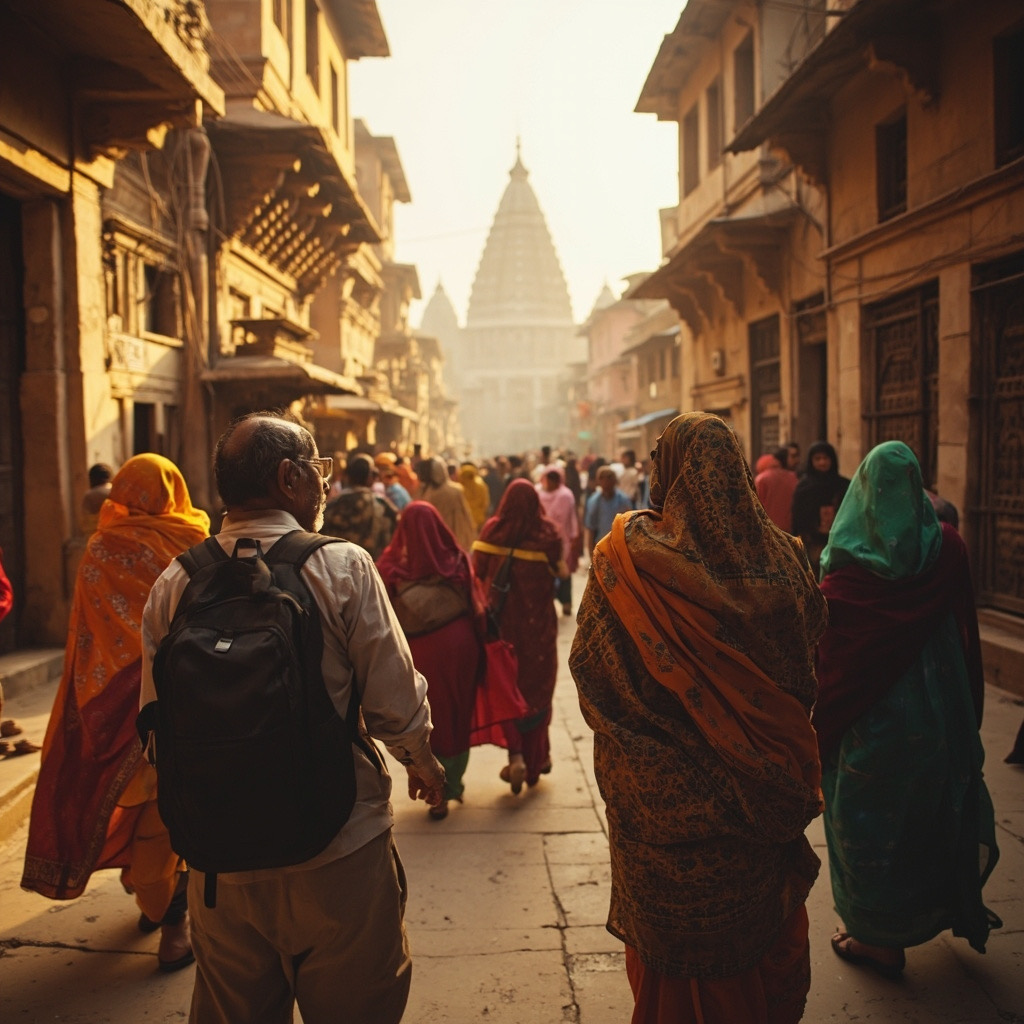
A full day built around your interests — the boat tour, the temples, Sarnath, or the evening Aarti. Your guide, your pace, your questions. Available for individuals and small groups.
See on Viator →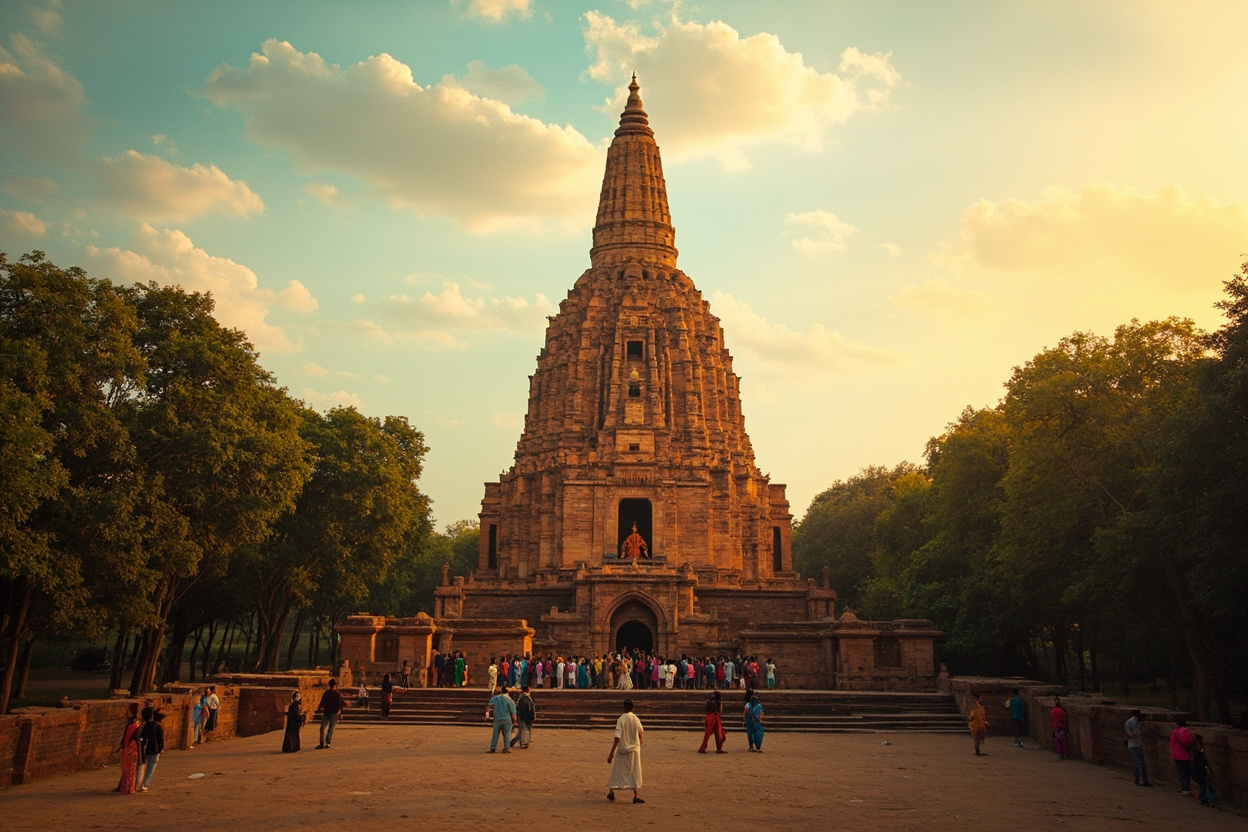
Bodh Gaya Day Trip from Varanasi
The drive from Varanasi to Bodh Gaya takes five to six hours each way — a long day, but one that brings you to the Mahabodhi Temple where Buddha attained enlightenment. For Buddhist pilgrims, this is the single most important site in the tradition.
See on Viator →Frequently Asked Questions
What time does the Ganges sunrise boat tour start?
Tours depart between 4:45 and 5:30 AM, timed to have you on the water before the first light. In winter (October to February) departure is closer to 6:00 AM; in summer (March to May) earlier at 4:45 or 5:00 AM. Your operator will confirm the evening before.
What should I wear for a sunrise boat tour in Varanasi?
Modest dress is expected. Shoulders and knees covered for all visitors regardless of faith background. A light layer is useful in winter — it can be cold on the water before sunrise, 8–10°C in December and January. Comfortable shoes you don't mind getting dusty. Leave valuables on the boat.
Is the Ganges safe to be near?
For observation from the ghats and the boat, the Ganges is safe for most of the year. Do not drink the water or submerge any part of your body. During monsoon (June to September) some lower ghats can flood — our operators monitor conditions and adjust accordingly.
Can I attend the Ganga Aarti ceremony separately from the boat tour?
Yes. The evening Ganga Aarti at Dashashwamedh Ghat starts at approximately 6:30 PM and runs about 45 minutes — free to attend, no booking required. A guide is useful to explain what is happening at each stage. The evening Aarti and the morning boat tour are different in character. Both are worth doing if time allows. For a full comparison of morning vs evening Aarti, see our Ganga Aarti guide.
Is the boat tour appropriate for non-Hindu visitors?
Yes. Varanasi is a major destination for Hindu, Buddhist, and Jain pilgrims. Non-Hindu visitors are welcome on the ghats and the boat. Our guides are experienced in explaining the significance of each site to visitors from all faith backgrounds. The boat tour is an observation experience — you are watching, not participating in rituals.
What is the Manikarnika Ghat and why does it matter?
Manikarnika Ghat is one of the most sacred cremation sites in Hinduism. The fires here burn without interruption, day and night. For a Hindu pilgrim, being present here is an encounter with a central truth of the faith: that the physical body is impermanent and the soul is something else. For a non-Hindu visitor, it is sobering. Photography here is considered deeply inappropriate — your guide will tell you so plainly.