Browse guided tours on Viator →
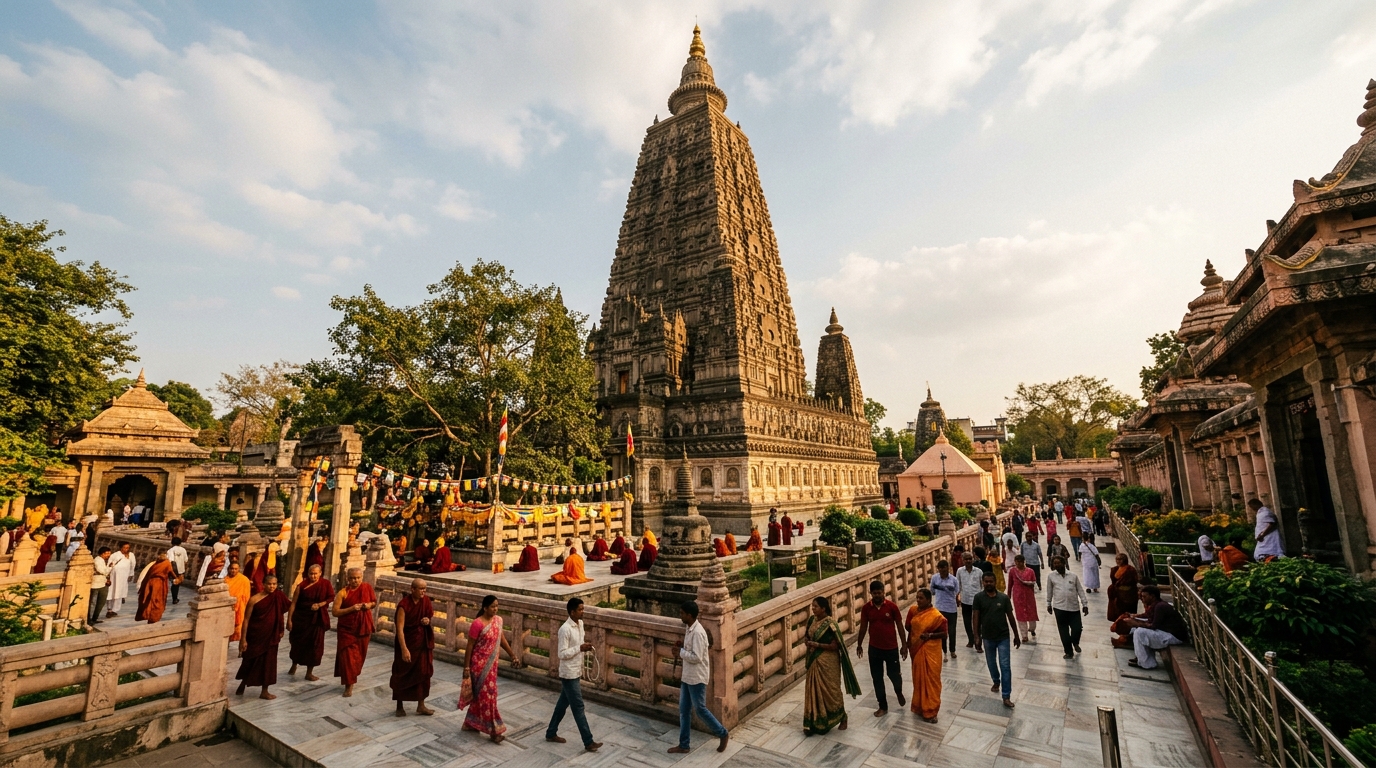
Bodh Gaya Pilgrimage Tours
Where Siddhartha became the Buddha, and where Buddhist pilgrims have been making the journey ever since. Bodh Gaya is the single most important Buddhist pilgrimage site on earth, drawing monks and laypeople from every tradition: Theravada, Mahayana, and Tibetan Buddhism alike.
Why it made the cut: I verified this tour in October 2024. The operator maintains high safety standards and local guide quality.
Bodh Gaya is a village in Bihar, India, on the banks of the Phalgu River, and it is one of the most quietly powerful places you will ever visit. It was here, under a tree that no longer stands but whose descendants still do, that a young prince named Siddhartha sat down, made a vow, and did not rise until he had seen the nature of things. That was around 528 BCE. The tree has been replanted, the temple has been rebuilt several times, and the village has grown into a small town. But the place still holds.
Today, Bodh Gaya is shared by Buddhist traditions from across Asia and the world. Theravada monks from Sri Lanka and Thailand, Mahayana practitioners from Japan and China, Tibetan lamas and their students from across the diaspora, all find their way here. Each tradition has its own rituals, its own ways of circumambulating the temple, its own relationship with the Bodhi Tree. The site does not belong to any one of them. It holds them all.
For Theravada Buddhists, Bodh Gaya is the place of the Buddha's enlightenment, the definitive moment of awakening as recorded in the Pali Canon. Pilgrims from Sri Lanka, Thailand, Myanmar, and Cambodia follow a circuit of sites that trace the Buddha's life, including Bodh Gaya as its culmination.
For Tibetan Buddhists, Bodh Gaya was recognized by the Dalai Lama as one of the world's most important pilgrimage sites, and the Tibetan monastic community here has built temples representing every major lineage. The 80-foot Buddha Statue is a Tibetan-built landmark visible from across the valley.
For Mahayana Buddhists, Bodh Gaya is the place where the vow of bodhicitta, the aspiration to enlightenment for the benefit of all beings, was first fulfilled. Japanese, Chinese, and Korean pilgrimage traditions all include Bodh Gaya as essential.
India Pilgrimage Cluster
Bodh Gaya is the second pillar of Faith Pilgrimage's India cluster, alongside Varanasi and the Golden Temple in Amritsar. These three sites form the core spiritual geography of India across three religions.
Varanasi
The holiest city in Hinduism, where the Ganges flows through the oldest continuously inhabited city on earth. The drive from Varanasi to Bodh Gaya takes 5–6 hours by road, making them an suitable pairing for a multi-destination India pilgrimage.
Visit Varanasi →Golden Temple, Amritsar
The spiritual heart of Sikhism. The Harmandir Sahib is open to all, serves tens of thousands of free meals daily, and is one of the most welcoming sacred spaces in the world.
Visit Golden Temple →Bodh Gaya Tours
Each tour is operated by a licensed local operator and bookable through Viator. We have been to these places ourselves. These are the tours we would take.
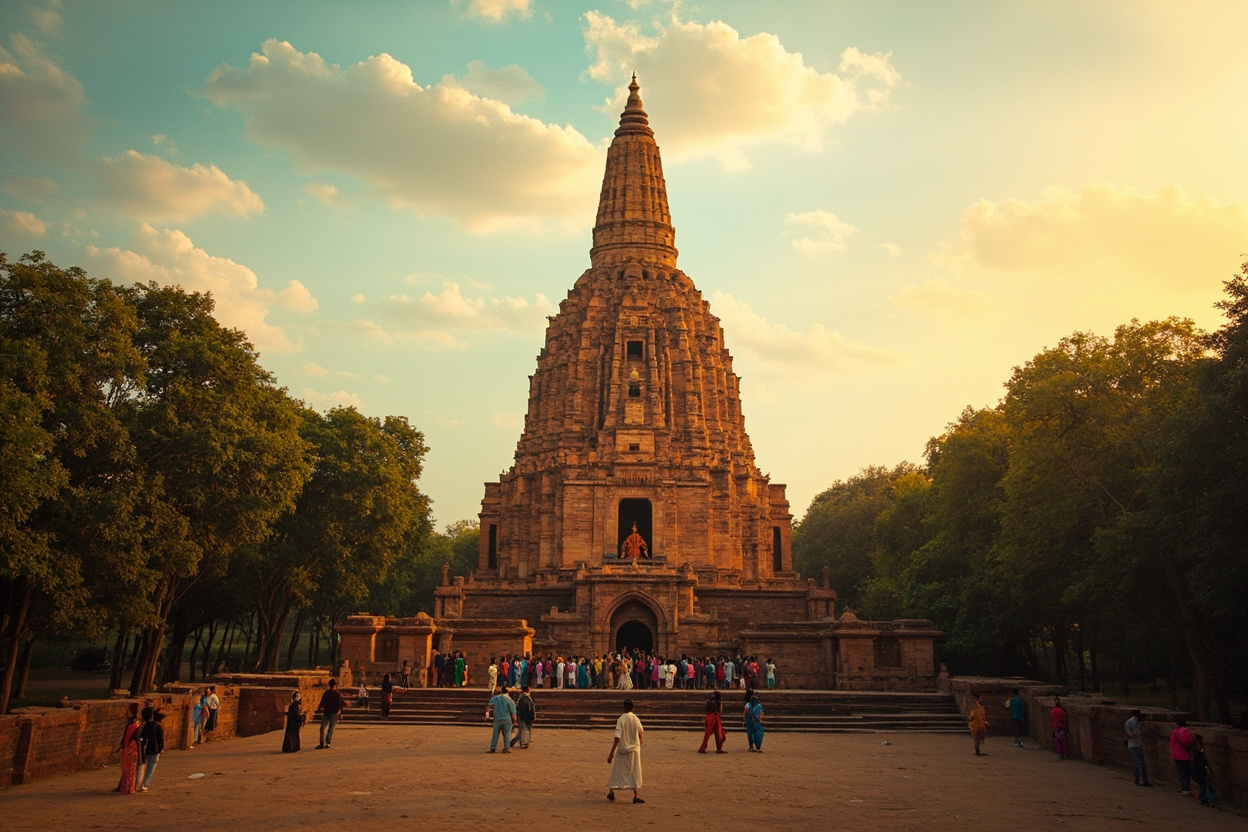
Full-Day Bodh Gaya Pilgrimage — Mahabodhi Temple, Bodhi Tree & Thai Monastery
A guided full-day tour covering the Mahabodhi Temple (UNESCO World Heritage Site), the sacred Bodhi Tree, the 80ft Buddha Statue, and the Thai Monastery. Small group, licensed guide, daily departures from Gaya railway station. Includes all temple access fees.
Check Availability on Viator →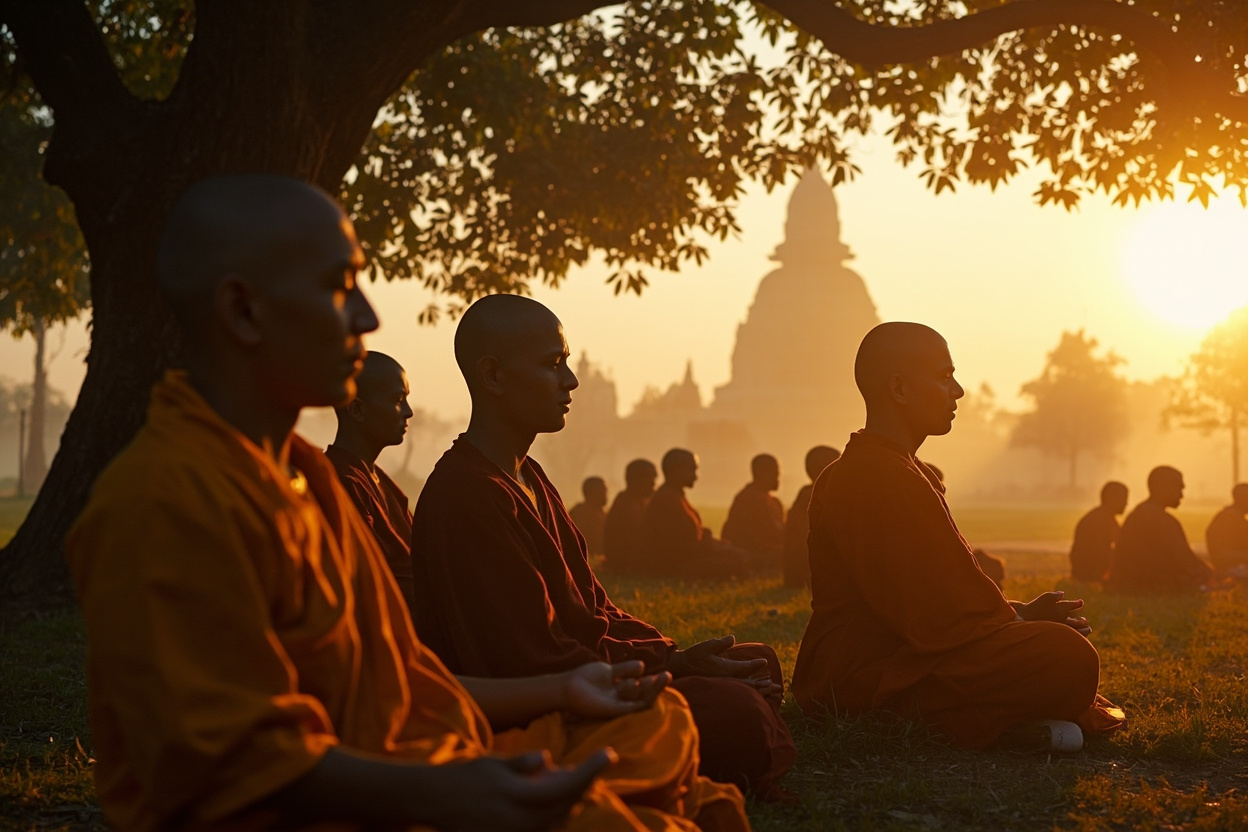
Bodh Gaya Meditation Retreat — Temple Complex & Monastery Stay
Multi-day experience combining guided meditation at the Bodhi Tree, teaching sessions with resident monks, and accommodation at the Thai Monastery guesthouse. Structured mornings and evenings with free time for personal practice. Suitable for committed practitioners; limited to 8 participants.
Check Availability on Viator →
Bodh Gaya Buddhist Circuit
From USD $45 · Full day
Is Bodh Gaya Right for You?
Sacred sites require preparation — appropriate dress, respectful behavior, and often early mornings. If you are willing to do the homework, these are some of the most meaningful travel experiences available.
What Is a Bodh Gaya Pilgrimage Really Like?
The first sound is the temple bell — a deep bronze note that carries across the entire complex at 4:30 AM. Then the chanting begins. Tibetan monks from the Karma Temple start first, their throat-singing a low drone that feels more like vibration than sound. By 5 AM, the meditation garden fills with at least four languages of Buddhist practice happening simultaneously.
I am not a Buddhist. But sitting on those stone benches at dawn, with the silhouette of the Mahabodhi stupa against a grey sky, I understood something about the universality of seeking. Everyone at Bodh Gaya is looking for something — clarity, peace, an answer. The temple does not provide it. But it creates the conditions where you might find it yourself.
Explore More
What Should You Know Before Visiting Bodh Gaya?
The Mahabodhi Temple marks the exact spot where Siddhartha Gautama attained enlightenment under the Bodhi tree around 500 BCE. The current temple structure dates to the 5th-6th century CE, restored by British archaeologists in the 1880s after centuries of neglect.
The Bodhi tree at the temple today is a direct descendant of the original — a sapling was carried to Sri Lanka by Emperor Ashoka's daughter in 288 BCE and later replanted at the site when the original died.
Bodh Gaya hosts monasteries built by Buddhist communities from Thailand, Tibet, Japan, Bhutan, Sri Lanka, and a dozen other countries — each in their own national architectural style. Walking between them feels like travelling through Asia in an afternoon.
Personal Story — Under the Bodhi Tree
December 2019. I sat under the Bodhi tree for three hours one morning. Monks from Thailand, Tibet, and Sri Lanka cycled through in silence. A Thai nun in white robes prostrated 108 times on a wooden board. A Tibetan monk sat perfectly still for the entire three hours. No one spoke. The leaves moved. A bird landed on a branch directly above me and stayed for ten minutes. I had come expecting to feel something dramatic — enlightenment, maybe, or at least clarity. Instead I felt something quieter: a kind of permission to be there. That was enough.
Local Advice
The Mahabodhi Temple opens at 4:30 AM. The meditation garden is silent at this hour; monks begin morning chants around 5 AM. Go then, not at 10 AM when the tour buses arrive.
Avoid visiting in May-June. Temperatures exceed 42°C and the heat radiating off the stone temple complex is punishing. November through February is comfortable — 20-25°C during the day.
What to Avoid
Not recommended: Bodh Gaya during the summer months (April-June). The heat is dangerous — 42°C+ with limited shade inside the temple complex. If you must visit then, go at dawn and leave by 11 AM.
The Monastery Circuit
Bodh Gaya is not just the Mahabodhi Temple. Surrounding the temple complex, built by Buddhist communities from across Asia, are monasteries constructed in their national architectural styles. Walking the circuit feels like crossing Asia in an afternoon.
The Thai temple has a sloping golden roof and a serene reclining Buddha. The Tibetan monastery is painted in bright primary colours with intricate mandalas on every wall. The Japanese temple is minimalist — clean lines, raked gravel, a single bronze bell. The Bhutanese temple is fortress-like, decorated with phallus paintings (a Bhutanese tradition for warding off evil). Each one is a working monastery with resident monks who may or may not acknowledge your presence. The circuit takes about two hours on foot.
Practical Notes
The temple complex is barefoot only. Shoes are left at the entrance. The stone ground gets hot by 10 AM. Go early or bring thick socks.
Photography restrictions are specific. You can photograph the temple exterior and the Bodhi tree. You cannot photograph inside the main shrine. You cannot photograph monks without permission. You cannot take selfies with the Buddha statue — I have seen guards confiscate phones for this.
Bodh Gaya has no airport. The nearest airport is Gaya (12 km away, limited flights) or Patna (110 km, 4-5 hours by road). Most visitors arrive via train to Gaya Junction and take a 30-minute auto-rickshaw. Alternatively, fly to Varanasi and drive 5 hours — a common route that lets you combine both destinations.
Meditation courses book out. Several monasteries offer 10-day Vipassana meditation courses. These fill up 2-3 months in advance during the November-February high season. Book before you arrive — do not assume you can walk in.