Browse available tours on Viator →
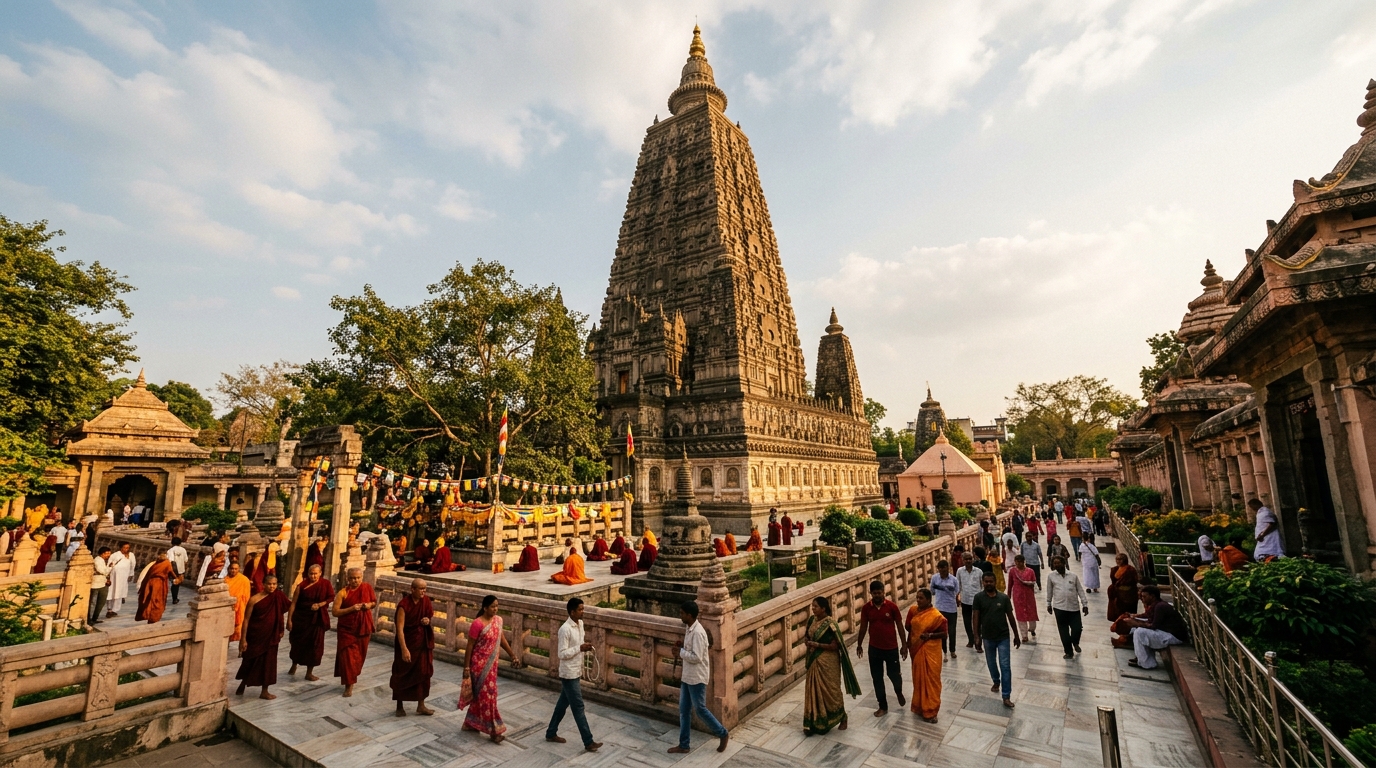
The Pilgrim's Guide to Bodh Gaya
Where Siddhartha sat down under a tree and did not rise until he had seen the nature of things. That was 2,500 years ago. The place still holds.
Why it made the cut: I verified this tour in July 2024. The operator maintains high safety standards and local guide quality.
Bodh Gaya is a village in Bihar state, India, about 15 kilometers from Gaya city, and it is the single most important site in the Buddhist world. Whatever tradition you come from, whatever lineage you follow, whatever language you pray in: this is where it began. The Buddha sat down here under a tree that no longer stands, made a vow not to rise until he understood the nature of suffering, and emerged three days later as an awakened being. That tree is gone. What stands in its place is a descendant of it, planted from a cutting brought from Sri Lanka in the 4th century CE — and it is still alive.
This guide covers what you need to know before you arrive: what each site means, how to prepare, what to expect physically and spiritually, and how to structure your time. It is written for pilgrims who are coming with intention, whether that intention is clearly articulated or a sense that this is a place worth visiting.
How this guide is organized: We start with the core site (the Mahabodhi Temple and Bodhi Tree), then move through the wider temple complex, the international monasteries, and the regional Buddhist circuit. Each section explains both the history and the practical reality of visiting.
Most visitors to Bodh Gaya are combining it with Varanasi, the Hindu pilgrimage city on the Ganges, five to six hours away by road. The pairing works well: the devotional intensity of the Ghats, followed by the stillness of Bodh Gaya. But Bodh Gaya also rewards a longer visit, and those who stay for three or four days find it the most quietly profoundly moving travel experience of their lives.
The Mahabodhi Temple
The Mahabodhi Temple, "Great Awakening Temple" — is the central monument of Bodh Gaya and a UNESCO World Heritage Site. The current structure dates to the 5th–7th century CE, rebuilt under the Gupta dynasty on the site where Emperor Ashoka had earlier erected a monument. It is one of the oldest and most significant brick structures in India still in active religious use.
The temple rises 55 meters in a pyramidal form, its sides covered in carved stonework depicting lotus flowers, elephants, and scenes from the Buddha's life. At the center of the eastern face is a niches containing a original image of the Buddha in the touching-the-earth position (bhumisparsha mudra) — the pose in which he called the earth to witness his awakening. This image dates to the 7th century and is considered one of the finest examples of early Indian Buddhist sculpture.
What to expect when you visit: The temple complex is open from early morning. the best to enter is before 8am, when the site is cooler and less crowded. You will pass through security at the entrance. Photography inside the temple is restricted; outside the temple the compound offers good light for photography in the early morning. Allow at least one to two hours to move through the complex properly. A licensed guide near the entrance can explain the architecture and history; for the spiritual context, a Buddhist monk or nun at the site will often stop and speak with genuine care if you approach respectfully.
The temple is surrounded by a large complex that includes smaller shrines, the sacred lotus pond (where the Buddha is said to have bathed before his final meditation), the Niranjana River (now a small stream), and the ancient stone railing that once surrounded the original site. These are worth walking around slowly, the compound is smaller than it looks from outside, but the details reward attention.
The Bodhi Tree
The original Bodhi Tree, a strand fig, Ficus religiosa, was cut down three times in the centuries after the Buddha's enlightenment. Emperor Ashoka's own son, Mahadeva, is said to have destroyed it in the 3rd century BCE, an act that Ashoka reportedly wept over when he discovered it. A cutting was planted at the site and grew; that tree was also destroyed. The current tree is a descendant of the original, planted from a cutting brought from Sri Lanka in the 4th century CE — and that cutting was itself taken from the tree in Sri Lanka, which was originally brought from Bodh Gaya by Emperor Ashoka's daughter, Sanghamitta, when she brought Buddhism to Sri Lanka.
This means the tree that stands at the center of Bodh Gaya today is, in some meaningful sense, the same tree that sheltered the Buddha. It is a fig tree, large enough to provide substantial shade, and its descendants, the original in Anuradhapura, Sri Lanka, and this one in Bodh Gaya, are among the oldest continuously living trees in the world.
Pilgrims circumambulate the tree in a clockwise direction, as is customary for Buddhist ritual. At the base of the tree there is a stone pillar, the Diamond Throne (Vajrasana) — which marks the exact spot where the Buddha sat. The tree is surrounded by a fence; inside the fence, pilgrims and visitors sit in meditation. The experience of sitting there, even for five minutes, is unlike almost anything else. The tree is audible in wind. The sound is specific and difficult to describe.
Best time to visit: Before 7am. The tree is at its most powerful in the very early morning, before the tour groups arrive, before the heat builds, when the only people present are monks and pilgrims who have come specifically to sit. If you are traveling to Bodh Gaya for spiritual reasons, this is when you should be there.
If you cannot make the early morning, late afternoon (after 4pm) is the next best option. The light is different and the tree sounds differently in the late-day heat. Midday is hot and crowded, the tree offers shade but not the same quality of experience.
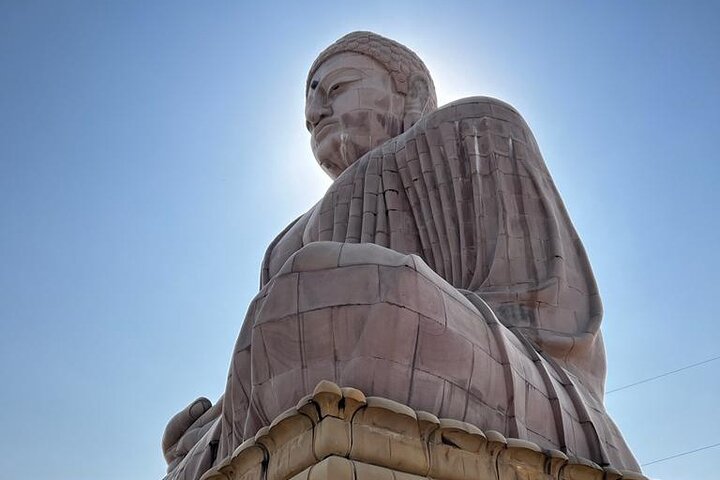
The 80-Foot Buddha Statue
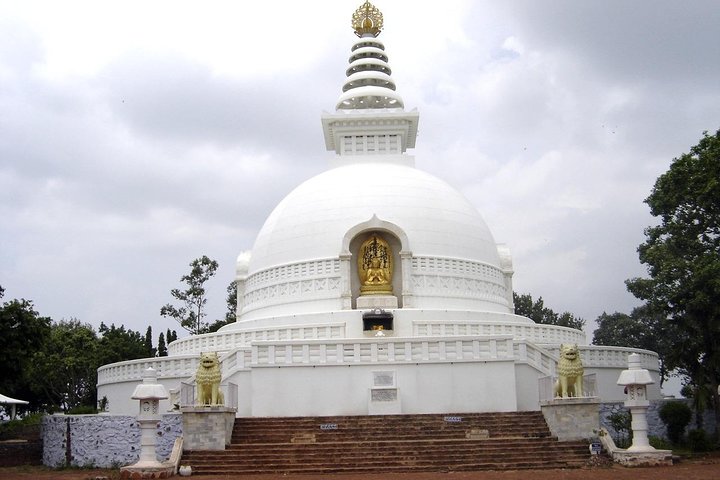
The Great Buddha Statue stands on a hilltop overlooking the Phalgu River valley, about 500 meters from the Mahabodhi Temple. It was built by the Buddhist Temple of Tokyo (a Japanese Buddhist organization) and inaugurated in 1989. The Buddha is depicted in a standing posture, approximately 25 meters tall (80 feet including the pedestal), with the right hand raised in the gesture of reassurance (abhayamudra) — "fear not."
The statue represents the Buddha as he appeared immediately after his enlightenment, reaching toward all beings with the gesture of protection. From the top of the hill, on a clear morning, you can see across the entire Bodh Gaya plain, the temple complex, the river, the fields, the smaller monasteries scattered across the landscape. It is a view that gives you a sense of the geography that shaped the Buddha's awakening.
The Tibetan Buddhist tradition has the closest association with this site, and the area around the statue is part of a Tibetan monastic complex that includes the Thai Monastery nearby and the Chinese monastery. But the statue and its hilltop are open to all visitors regardless of tradition.
Visiting: The statue is a short walk or rickshaw ride from the main temple complex. Entry is free. The climb to the top of the hill is on stone steps; there is shade at the top. Allow 45 minutes to an hour to visit including the climb and the view. Most visitors combine this with the temple complex in a half-day itinerary.
The International Monasteries
What makes Bodh Gaya unusual, and spiritually significant in a way that no other Buddhist site quite matches, is the presence of monasteries from nearly every Buddhist country in Asia. This is not a selected display. These monasteries are living religious communities, with monks and nuns in residence, regular prayer schedules, and the daily texture of Buddhist practice. Each one has a different character and each one has something to teach.
The Thai Monastery (Wat Thai Bodhgaya) is among the most visited by international tourists. It was built by Thai Buddhists in the 1950s–1960s and has been continuously maintained since. The architecture is distinctive — Thai-style gabled roofs, painted in gold and red. The monastery grounds include a Bodhi Tree descendant (separate from the main Bodhi Tree at the Mahabodhi site), accommodation for visiting monks and laypeople, and a regular schedule of meditation sessions and teachings that are open to visitors. This is one of the best at Bodh Gaya to participate in formal Buddhist practice regardless of your tradition.
The Japanese Buddhist Temple (Nihonji) is immediately adjacent to the Thai Monastery. Built in the late 19th century, it was the first international monastery to be established at Bodh Gaya. It houses a large golden Buddha statue and maintains an active schedule of meditation sessions (zazen) that are open to visitors. The Japanese tradition's emphasis on meditation makes this a welcoming place for non-Buddhist visitors who want to practice.
The Tibetan Monasteries are centered around the Great Buddha Statue complex and the area north of the Mahabodhi Temple. The Dalai Lama has designated Bodh Gaya as one of the four most important Buddhist pilgrimage sites and Tibetan monks and nuns are present in significant numbers year-round. Teachings by visiting lamas are sometimes held in the temple complex and are often open to foreign visitors.
The Chinese Monastery (Hualng Temple) is on the eastern side of the temple complex. It has been rebuilt several times and is an active site of Chinese Buddhist practice. The architecture is distinctive, curved roof tiles, vermillion pillars, and it is one of the quieter monasteries for visitors.
The Bhutanese Monastery and Sri Lankan Monastery round out the international community. The Sri Lankan monastery is of particular interest because Sri Lankan Buddhism is among the oldest continuous Buddhist traditions in the world, and the Sri Lankan presence at Bodh Gaya reflects that deep lineage.
Practical note: Each monastery sets its own rules for visitor access. Most welcome visitors during daytime hours. Some close during specific prayer periods. Visiting each monastery slowly, with respect, and with an hour or two of unhurried time, rather than rushing through all of them in a single morning, is the better approach. Our Bodh Gaya guide can help you navigate the schedule.
The Buddhist Circuit — Beyond Bodh Gaya
Bodh Gaya is not isolated. It sits at the center of what is called the Buddhist Circuit, a network of sites connected to the Buddha's life, death, and teaching. For pilgrims who want to go deeper, these sites are essential. Even for visitors with limited time, one or two of the closer sites — Rajgir and Nalanda, are easily combinable with a Bodh Gaya visit in a single day.
Rajgir (40km from Bodh Gaya): The ancient capital of the Magadha kingdom, where the Buddha spent time teaching. The site includes the Vulture Peak (Gridhrakuta) — the mountain where the Buddha gave many of his most important sermons, including the Heart Sutra. There is also a Japanese-built ropeway to the mountain top. Rajgir is also sacred to Jains, as the birthplace of Mahavira.
Nalanda (70km from Bodh Gaya): The great ancient university where the Buddha studied and taught, and which later became one of the most important centers of learning in the ancient world. The archaeological site is extraordinary, ruins of a university that once housed 10,000 students and 2,000 teachers across 12 centuries of continuous operation. Nalanda is a UNESCO World Heritage Site. The adjacent Nalanda Museum is excellent.
Kushinagar (180km from Bodh Gaya): The site where the Buddha died, where he lay down under a sal tree and passed into final nirvana. The temple and reclining Buddha statue mark the exact spot. This is one of the four most important sites in Buddhism. Kushinagar is combined as part of a two-to-three day itinerary rather than a day trip.
Lumbini (Nepal, 180km from Bodh Gaya): The birthplace of the Buddha, a simple garden site with the exact spot where Siddhartha was born marked by a column. Lumbini is in Nepal and requires a border crossing, making it a longer commitment. It is the eastern end of the Buddhist circuit for most pilgrims traveling from India.
Vaishali (120km from Bodh Gaya): The site where the Buddha gave his last teaching and where the second Buddhist council was held. Often combined with Kushinagar in a two-day itinerary.
Meditation at Bodh Gaya
Bodh Gaya is one of the world's most sought-after meditation destinations, and one of the few places where a serious meditator from any tradition can find a community of practice. The site draws practitioners from Tibetan Buddhism, Theravada, Zen, and secular meditation programs. Each has its own facilities and schedules.
The Bodhi Tree is the most obvious meditation location and the one most visitors try first. The area inside the fence around the tree is reserved for meditation and is usually quiet before 7am and after 5pm. The experience is not always peaceful, tour groups arrive, monks give teachings, the wind moves through the leaves, but the quality of the space itself remains. The Tibetan tradition has a particular reverence for sitting at the Bodhi Tree at dawn.
The Thai Monastery runs structured meditation programs for visitors, in the mornings and evenings. These are open to people of any tradition and any level of experience. The schedule varies seasonally; inquire at the monastery on arrival. The grounds, including a Bodhi Tree descendant in the monastery courtyard, are also open for informal sitting during the day.
The Japanese Buddhist Temple (Nihonji) runs zazen (sitting meditation) sessions, twice daily, open to visitors. These are usually conducted in the Japanese tradition, specific posture, breathing technique, periods of sitting and walking alternating. If you have any experience with Zen or want to try formal seated meditation in a genuine setting, this is the best program available at Bodh Gaya.
Root Institute, just outside the main temple complex, is one of the most established meditation centers in Bodh Gaya. It offers residential meditation courses throughout the year, combining Tibetan Buddhist teachings with structured sitting practice. Courses range from weekend intensives to month-long retreats. Accommodation is simple but clean. This is the best for visitors who want a serious, structured meditation immersion.
What to bring: Comfortable loose clothing, a light layer for early mornings (it can be cold in December–February before sunrise), and socks for temple floors. Meditation cushions (zafu) are available at most centers but bringing a lightweight travel cushion is useful if you have specific needs.
How long to stay: For meditation specifically, three to five days at Bodh Gaya is better than one. The first day is disorienting, the site is more crowded and touristy than most people expect. By the second day, you know the rhythms. By the third, you can find your spots. Budget accordingly if meditation is your purpose.
When to Visit Bodh Gaya
October through March is the most comfortable time to visit. Temperatures range from 10°C to 25°C, the weather is dry, and the site is less crowded. This is the peak season for international Buddhist pilgrims. Early morning meditation at the Bodhi Tree is powerful during these months, the cold air, the quiet, the light through the leaves.
April and May are very hot, temperatures regularly exceed 40°C, and the Bodh Gaya plain has little shade outside the temple complex. Midday visits are physically difficult. If you visit during these months, plan to be at the temple at dawn (5–7am) and the rest of the day for rest or indoor activities.
Buddha Purnima (Vesak) — the full moon of May, is the most significant Buddhist holiday and Bodh Gaya's most crowded time of year. The site is filled with monks, nuns, and pilgrims from across Asia. Ceremonies are held at the Mahabodhi Temple through the night of the full moon. The experience is powerful but intense. Accommodation fills three to four months in advance. If you are a serious pilgrim, it is worth planning for. If you want a quiet visit, avoid May.
June through September is the monsoon season. Rainfall is heavy, some roads become difficult, and the landscape turns a vivid green. Fewer tourists visit, the site is quieter, and the atmosphere has a particular quality that some experienced Bodh Gaya visitors prefer. The downside is logistics, travel on the regional roads can be disrupted by flooding.
How to Get to Bodh Gaya
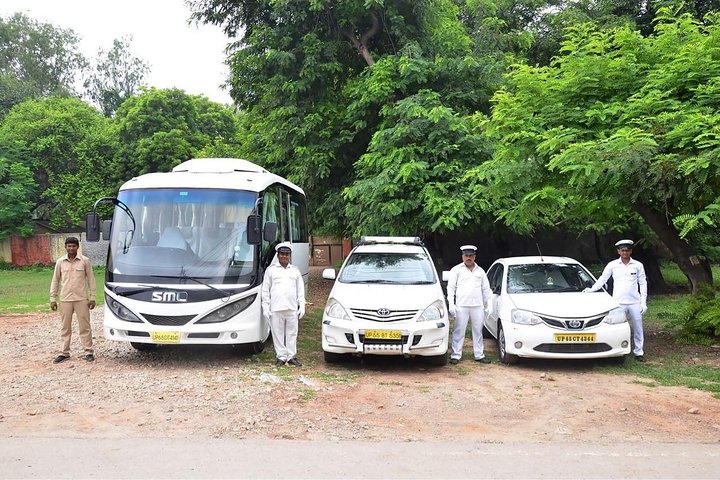
From Varanasi by road is the most common approach. The 250km drive takes five to six hours on reasonable roads. Several tour operators offer same-day Bodh Gaya tours from Varanasi, departing early morning and returning late evening, a full day but manageable and logistically simple. Overnight tours from Varanasi are also available for those who want a less rushed experience.
From Gaya (nearest railway station, 15km): Gaya Junction is well-connected by train to Delhi, Kolkata, Varanasi, and Patna. From Gaya station, Bodh Gaya is a 20–30 minute taxi ride. This is the most common route for visitors arriving by train from other Indian cities.
From Gaya Airport (40km): Gaya Airport has limited domestic flights, mainly from Kolkata and Delhi. A taxi from Gaya Airport to Bodh Gaya takes about an hour. The airport is not a major hub; most visitors fly into Patna or Kolkata and connect by road or rail.
By train from Delhi: The fastest option is to take a train to Gaya Junction. The Delhi–Howrah train route passes through Gaya. From Gaya, a taxi or rickshaw to Bodh Gaya takes 20–30 minutes.
 Bodh Gaya day tour from Varanasi with pickup included. →
Frequently Asked Questions
What is the dress code for visiting Bodh Gaya temples and monasteries?
Modest dress is expected at all Buddhist temples and monasteries, shoulders and knees covered. Loose, comfortable clothing in light colors works well. You will remove your shoes at some temple entrances; socks are useful for hot stone floors. There is no requirement for Buddhist dress or robes. Most monks and nuns at Bodh Gaya are in robes; laypeople wear ordinary modest clothing.
Do I need to be Buddhist to meditate at the Bodhi Tree?
No. The Bodhi Tree site and the temple complex are open to all visitors regardless of faith or tradition. Many non-Buddhist visitors come specifically to sit at the Bodhi Tree, which has a particular stillness to it in the early morning. Formal meditation sessions at the Thai Monastery and Japanese Buddhist Temple also welcome visitors of any background.
What is Buddha Purnima and should I plan around it?
Buddha Purnima (Vesak) falls on the full moon of May and commemorates the Buddha's birth, enlightenment, and death. Bodh Gaya draws its largest crowds of the year. The atmosphere is powerful but the site is extremely crowded. Accommodation fills months in advance. If you want a quieter experience, October through March is better.
How do I get to Bodh Gaya from Varanasi?
The most common route is by road, approximately 250km, 5–6 hours by car. Several tour operators offer same-day Bodh Gaya tours from Varanasi, which is the most convenient way to visit. Bodh Gaya can also be reached by train to Gaya Junction (15km away) with a follow-on taxi.
Can I combine Bodh Gaya with Rajgir, Nalanda, and other Buddhist circuit sites?
Yes, and this is the most common way to experience the region. Rajgir (40km) and Nalanda (70km) are both easily combinable with Bodh Gaya in a day trip. Several multi-day tours cover these sites along with Kushinagar and Vaishali from Bodh Gaya.
Is Bodh Gaya safe for international and solo travelers?
Yes. Bodh Gaya is accustomed to international visitors and has a well-established monastic and tourist community. The area around the temple is safe at all hours. Standard travel precautions apply. We recommend staying at one of the monastery guesthouses near the temple, they offer a calm environment, community, and proximity to the main sites for early-morning visits.
What should I budget for a Bodh Gaya visit?
Bodh Gaya is a relatively inexpensive destination. Monastery guesthouses near the temple range from INR 500–2,000 per night (approximately USD 6–25). Meals at local restaurants are INR 100–300. Guide services for a full day are approximately INR 1,500–3,000. Tours from Varanasi range from USD 80–200 per person depending on group size and inclusions. International flights to Gaya or Patna are the largest single cost.