Browse guided tours on Viator →
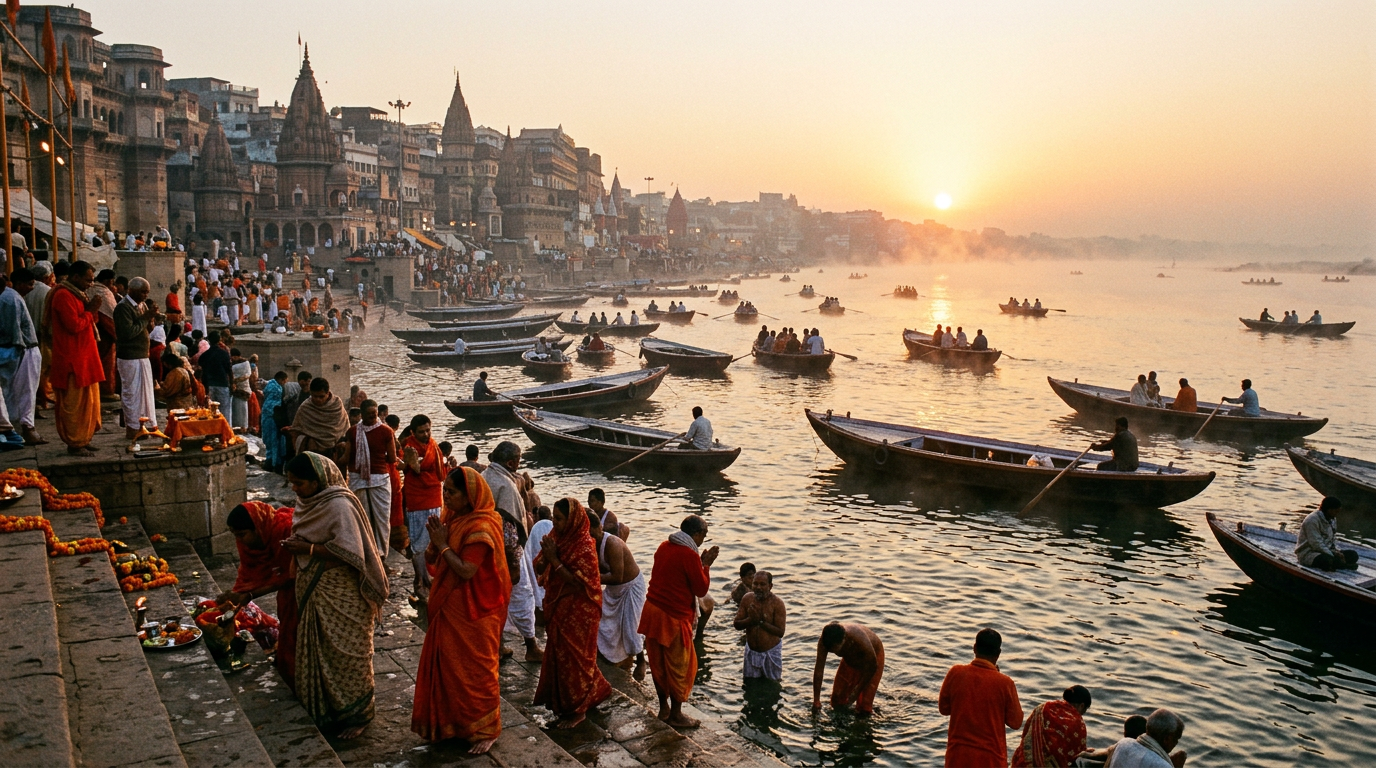
Varanasi Ganga Aarti — Morning vs Evening Ceremony Guide
Two ceremonies. Two hours. Two different encounters with the same river ritual. Here is how to decide which to attend — or whether to do both.
Why it made the cut: I verified this tour in November 2025. The operator maintains high safety standards and local guide quality.
The Ganga Aarti is a daily ritual performed at Dashashwamedh Ghat — five priests, brass lamps, Sanskrit chants, and a river that has received this offering for centuries. There are two ways to experience it: from the ghat steps in the evening as part of the crowd, or from the water before sunrise on a wooden rowing boat. Neither is a rehearsal of the other. The evening ceremony and the morning boat ritual are different events, with different characters, different moods, and different demands on your time.
If you have one evening in Varanasi, the evening Aarti at Dashashwamedh Ghat is one of those experiences that justifies the trip to India on its own. It is loud, crowded, visually extraordinary, and free to attend. If you are a pilgrim who wants depth — who wants to understand what is happening, and what it means - the morning boat tour is the more honest choice. Many travelers do both.
Here is what you need to know to decide, based on your schedule, your tolerance for crowds, and what you want to take away from the experience.
The Evening Aarti at Dashashwamedh Ghat
Start time: Approximately 6:30 PM year-round, shifting with sunset. In winter (October to February) the ceremony begins around 5:45–6:00 PM. In summer (March to May) closer to 7:00–7:30 PM. Arrive 30–45 minutes early to secure a position in the crowd near the ghat steps. The crowd builds quickly — this is the most attended ritual in Varanasi.
What happens: Five priests stand on a raised platform at the ghat, each holding a brass lamp. The ceremony is choreographed — lamps are raised, chants are sung in call-and-response, conch shells are blown, and the river receives the offering. The whole thing runs approximately 45 minutes. It is amplified across the river so that everyone on the ghat and the water can hear.
From the crowd: You will be in a dense crowd pressing toward the ghat steps. This is not a meditative experience — it is visceral. The sound of the bells and conch shells, the sight of the lamps moving in synchronized patterns, the smell of camphor and incense - it all arrives at once. For first-time visitors, it is overwhelming in the best The evening light over the Ganges makes the photographs look better than they have any right to, but the photographs do not capture what it sounds like when the conch shell sounds at the moment the lamps are lifted.
What it costs: Nothing. No ticket, no booking, no fee. Dashashwamedh Ghat is open to everyone. You may be approached by people offering to take you to a "special viewing area" — these are unofficial arrangements that sometimes work and sometimes do not. The free view from the crowd is as good as anything paid for.
Photography: Phone photography from the crowd is fine. Tripods are generally not permitted in the crowd area. A professional camera with a telephoto lens can be useful from the back of the crowd, though you will miss some of the direct experience while operating it. Respect the boundary: no photography of the cremation fires visible downstream at Manikarnika Ghat. Your guide or any local will tell you plainly why.
Dress code: Modest dress — shoulders and knees covered for all visitors. You will need to remove your shoes before entering the ghat area. Flip-flops are more practical than enclosed shoes you have to hold. Leave jewelry and valuables at your hotel.
The Morning Aarti — From the Boat at Dawn
Start time: The boat departs the ghat at approximately 5:00–5:30 AM, timed to have you on the water before first light. Exact departure time varies by season — your operator will confirm the evening before. In winter, it is closer to 6:00 AM; in summer, earlier at 4:45 AM.
What happens: The morning Aarti ceremony is older in Hindu tradition than the evening event. Five priests perform a shorter, quieter ceremony with smaller lamps — no amplification, no crowd. From the boat on the water, you are at river level, watching the priests on the ghat steps against the coming light. The smell of incense and the sound of the bells travel across the water differently than they do from the crowd. The morning light in Varanasi comes sideways through the haze, turning the river gold before the sun clears the building line.
From the boat: You are not a spectator in a crowd — you are on the water. Your oarsman positions the boat so you can see the ceremony while also seeing the ghats awakening. Between 5:30 and 7:30 AM the ghats fill with early morning activity: devotees bathing, yoga groups on the steps, students reading texts at the water's edge, the cremation fires at Manikarnika visible downstream. The boat moves through this quietly. The guide narrates what you are seeing and what it means. After the ceremony, the boat returns to the starting ghat and your guide debriefs the experience over tea at a local stall.
What it costs: The morning boat tour with Aarti observation is a booked tour — it is not a free DIY event like the evening ceremony. Prices start from approximately $45 per person depending on the operator, group size, and whether it is a private or shared tour. Hotel pickup and drop-off, the licensed guide, and the boat are included.
Why the morning is worth the cost: If the evening Aarti is a spectacle, the morning Aarti from the boat is an encounter. You are on the water during the ceremony, which is the original form of this ritual — the lamps are offered to the river from the water, not from the ghat. The boat tour gives you the river perspective that most tourists never get. For pilgrims who want to understand rather than just witness, this is the more substantive choice.
Photography from the boat: Phone photography is practical from the boat — you have space to hold it steady and the light cooperates. The morning Aarti lamps against the dark ghat, with the first light coming up, is one of the most photographed scenes in Varanasi for good reason. Professional photographers often prefer the morning for the quality of the available light.
Morning vs Evening — Direct Comparisone.
Factor
Evening Aarti (Dashashwamedh Ghat)
Morning Boat Aarti (from the river)
Cost
Free — no booking required
From ~$45/person via booked tour
Crowd size
Several hundred — dense crowd at the ghat
Small group on the boat — intimate
Sound
Amplified, loud — chants across the river
Unamplified — bells and chants carry across water naturally
Light
Evening — lamps visible against dark sky
Dawn — horizontal light over the river, golden
Duration
~45 minutes
~2 hours total (ceremony + ghats tour)
Access
Walk in — no booking, open to all
Book in advance — Viator tour operator
Photography
Phone from crowd — good lamp shots, dense atmosphere
Excellent from boat — dawn light, river reflections, no crowd in frame
Best for
First-time visitors, visual spectacle, free event
Pilgrims seeking depth, photographers, those who prefer quiet
| Factor | Evening Aarti (Dashashwamedh Ghat) | Morning Boat Aarti (from the river) |
|---|---|---|
| Cost | Free — no booking required | From ~$45/person via booked tour |
| Crowd size | Several hundred — dense crowd at the ghat | Small group on the boat — intimate |
| Sound | Amplified, loud — chants across the river | Unamplified — bells and chants carry across water naturally |
| Light | Evening — lamps visible against dark sky | Dawn — horizontal light over the river, golden |
| Duration | ~45 minutes | ~2 hours total (ceremony + ghats tour) |
| Access | Walk in — no booking, open to all | Book in advance — Viator tour operator |
| Photography | Phone from crowd — good lamp shots, dense atmosphere | Excellent from boat — dawn light, river reflections, no crowd in frame |
| Best for | First-time visitors, visual spectacle, free event | Pilgrims seeking depth, photographers, those who prefer quiet |
Book the Morning Boat Tour with Aarti Observatione.
The morning Aarti from the boat requires booking. We recommend booking at least two days in advance, especially during peak season (October to March) and around Dev Diwali (November/December).
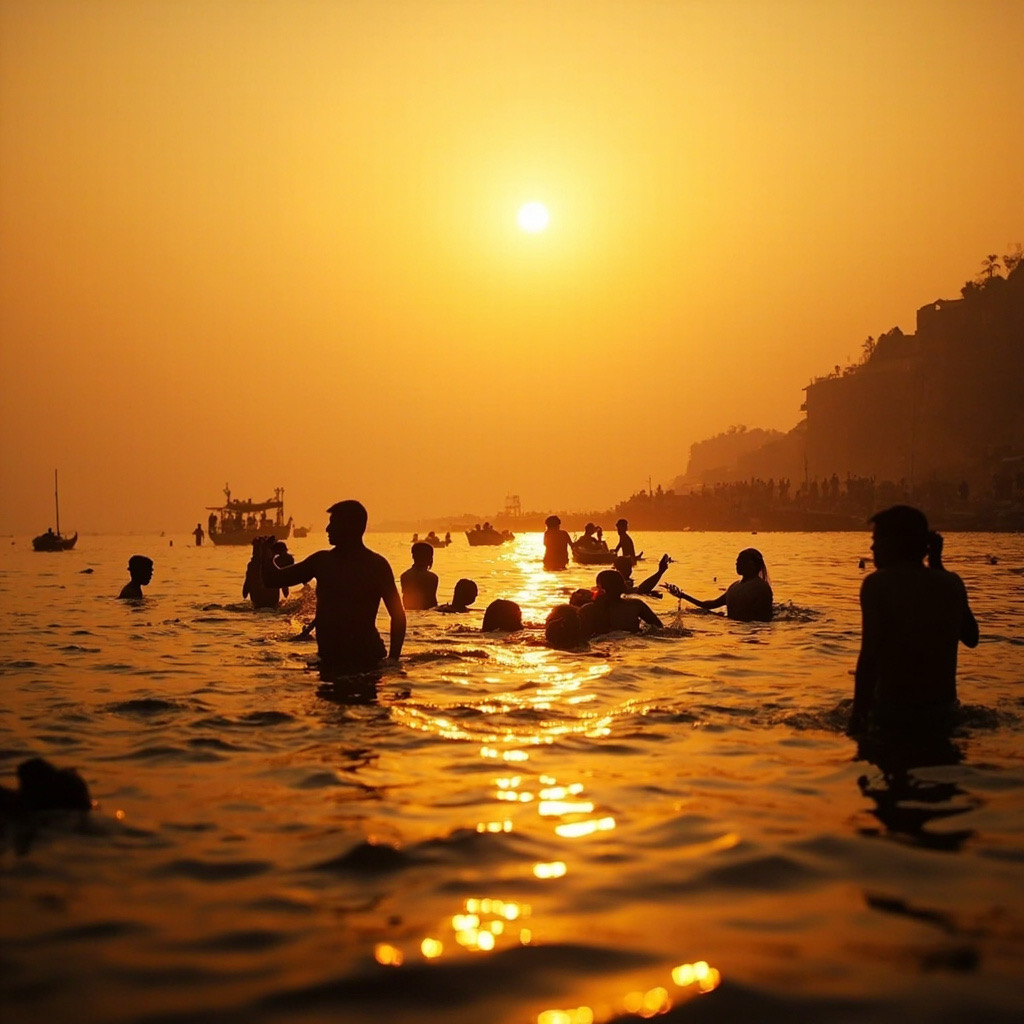
Ganges Sunrise Boat Tour with Morning Aarti
A guided two-hour boat journey on the Ganges. Departs before first light, timed to arrive at the morning Aarti ceremony at Dashashwamedh Ghat. Watch the priests perform from the water as the dawn comes up over the river. Includes licensed local guide and post-tour debrief over tea.
Check Availability on Viator →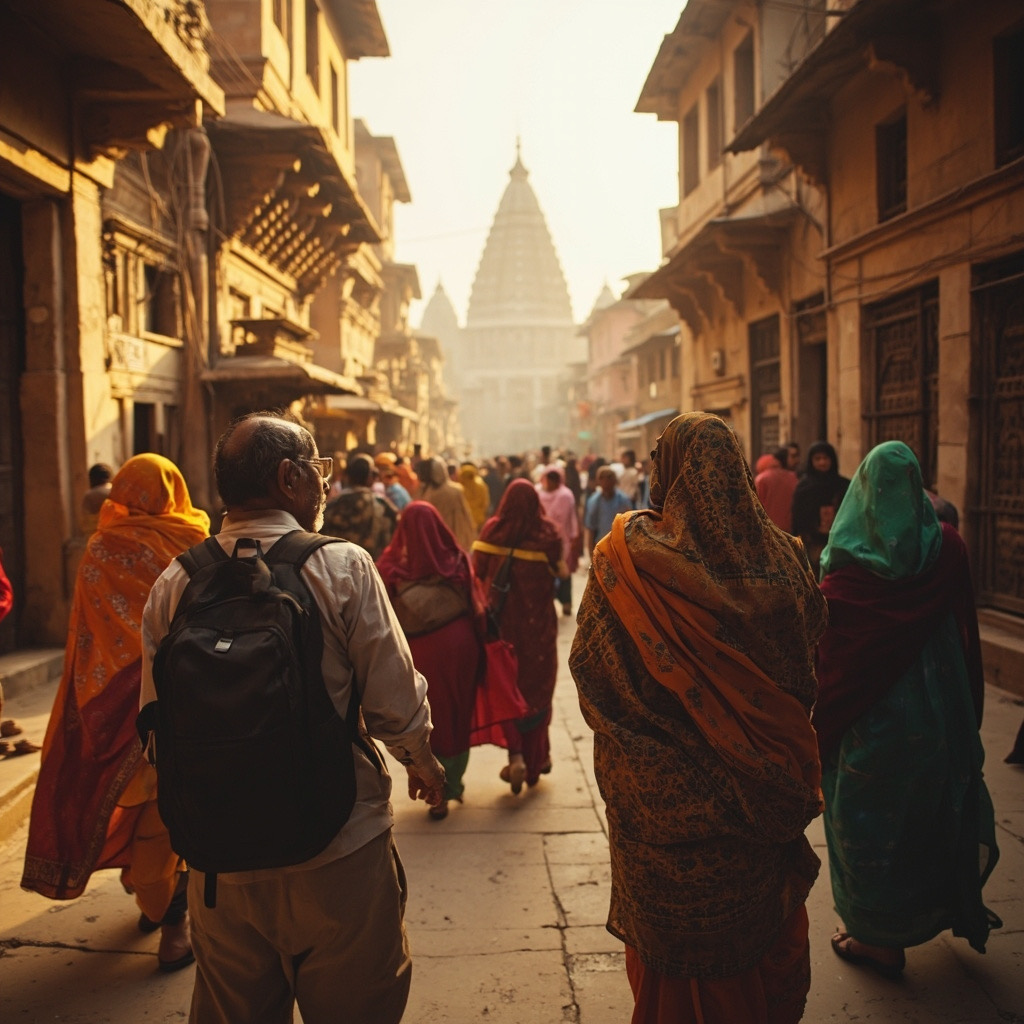
Private Guide — Full Day Varanasi including Evening Aarti
A customizable full day with a licensed private guide — morning boat tour and Aarti, old city lanes, Dashashwamedh Ghat, and return in the evening for the riverside ceremony at the same spot. Includes hotel pickup and drop-off. suitable for pilgrims who want to do both ceremonies in one day with a single guide.
Check Availability on Viator →Practical Guide to Attending the Aarti
When to Go
October through March is the most comfortable — temperatures range from 10°C to 25°C in the evening, and the ghats are fully accessible. April and May are hot and humid by evening; the evening Aarti in May can feel stifling in the crowd. Dev Diwali (November/December) is powerful - the ghats are lit with thousands of oil lamps in the evening and the river reflects them at night. It is the busiest time of year. If you want the experience at its most vivid and least crowded, go in January or February.
Dress Code
Modest dress for all visitors regardless of faith background — shoulders and knees covered. Loose cotton or linen clothing is practical in Varanasi's climate. You will need to remove your shoes to enter the ghat steps area for the evening Aarti - flip-flops you can carry in your hand are more practical than closed shoes. Leave jewelry and valuables at your hotel. No head-coverings or specific religious garments are required.
What to Bring
A small torch (flashlight) is useful for navigating the ghat steps in the dark before the evening Aarti begins. A refillable water bottle — Varanasi is hot and you will be standing for 45–60 minutes in the crowd. Hand sanitizer - the ghats are crowded and facilities are basic. Your phone for photography. That is most of what you need.
Getting There
Dashashwamedh Ghat is in the heart of the old city, accessible by foot or rickshaw from most hotels in Varanasi. Do not attempt to drive — the lanes are too narrow for vehicles and are closed to traffic near the ghat in the evening. Your hotel will know this. Budget 20–30 minutes to walk from the Godowlia area, or take an auto-rickshaw to the Godowlia Chowk and walk the last 5 minutes.
Frequently Asked Questions
What time does the Varanasi Ganga Aarti ceremony start?
The evening Ganga Aarti at Dashashwamedh Ghat starts at approximately 6:30 PM year-round, shifting with sunset. In winter it begins around 5:45–6:00 PM; in summer closer to 7:00–7:30 PM. The morning Aarti from the boat begins before first light, departing the ghat at 5:00–5:30 AM depending on the season.
Is the morning or evening Aarti better for first-time pilgrims?
The evening Aarti is the more memorable, crowd-filled spectacle — five priests, brass lamps, amplified chants. It is free and easy to attend. The morning Aarti from the boat is quieter, more intimate, and historically the older form of the ritual. If you can only do one, the evening is the more dramatic experience; the morning from the boat is the more meditative one.
Do I need a ticket or booking to attend the Ganga Aarti?
No ticket and no booking required for the evening Aarti at Dashashwamedh Ghat — it is free and open to all. Arrive 30–45 minutes early to get a position near the front. The morning boat tour for the Aarti requires booking through a tour operator in advance - it is not a DIY event. Book via Viator at least two days ahead.
What should I wear to the Ganga Aarti ceremony?
Modest dress for all visitors — shoulders and knees covered. Loose, breathable cotton is practical in Varanasi's climate. You will need to remove shoes to enter the ghat area in the evening. Flip-flops that are easy to carry in your hand are more practical than enclosed shoes. Leave jewelry and valuables at your hotel.
Can I photograph the Ganga Aarti?
Phone photography from the crowd is generally acceptable at the evening Aarti. Tripods and professional cameras require a permit in some areas. Photography of the cremation fires at Manikarnika Ghat — visible from the evening Aarti area - is considered deeply inappropriate in Hindu tradition. the best come from being present rather than watching through a lens. Morning light from the boat produces the better images of the ceremony itself.
What is the difference between the morning and evening Aarti ceremony?
The evening Aarti at Dashashwamedh Ghat is the main tourist event — five priests, large brass lamps, Sanskrit chants amplified across the river, a crowd of several hundred. The morning Aarti is a smaller, quieter, older tradition - unamplified, shorter, and experienced from the water rather than the ghat steps. The evening is a spectacle; the morning is an encounter.
Can I do both the morning and evening Aarti on the same day?
Yes. Many travelers with a full day in Varanasi do exactly this — the morning boat tour with Aarti observation, then a rest during the heat of the day, and the evening Aarti at Dashashwamedh Ghat from the crowd. It is a full day but not a rushed one. The private guide full-day tour on Viator is designed around this exact itinerary.
Is the Aarti ceremony appropriate for non-Hindu visitors?
Yes. Varanasi is one of the most important pilgrimage cities in Hinduism, and the Aarti ceremony is a public ritual — non-Hindu visitors are welcome. Our guides are experienced in explaining the significance of what you are seeing to visitors from all faith backgrounds. The ceremonies are observation events - you are watching the priests perform the ritual, not participating in it.