Varanasi Spiritual Guide: Ghats, Aarti, and What Pilgrims Need to Know
I Didn't Expect Varanasi to Feel Like This
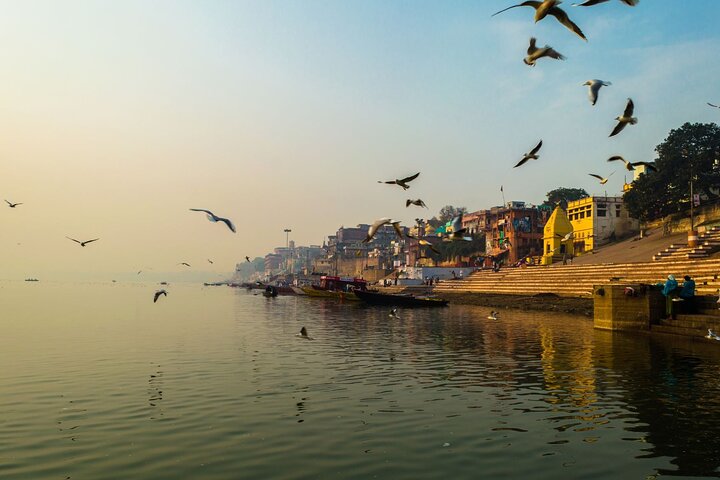
I arrived in Varanasi on a foggy December morning in 2019. The train from Delhi was four hours late, and by the time I found my guesthouse near Assi Ghat, the sun was already a pale disc behind the haze. I had read the guidebooks. I knew the statistics — one of the oldest continuously inhabited cities, with archaeological evidence reaching back to 1800 BCE. I knew there were 87 ghats along the Ganges. I knew Manikarnika Ghat burned bodies 24 hours a day.
None of that prepared me for the smell. Not of death — that came later — but of marigolds, cow dung, frying samosas, and the particular mustiness of old stone rising from the river. I stood on the steps of Assi Ghat and watched a family lower a small clay lamp into the water. The mother said something I couldn't hear. The father touched the water to his forehead. I was an observer, not a participant, and I felt the distance acutely.
I had come to Varanasi to understand how a city so old, so layered with ritual and grief and devotion, could still feel alive in a way that museums never do. I booked a heritage walking tour with a local guide on my second day, and it changed how I saw everything.
Heritage Walking Tour — The Tour That Saved My Trip
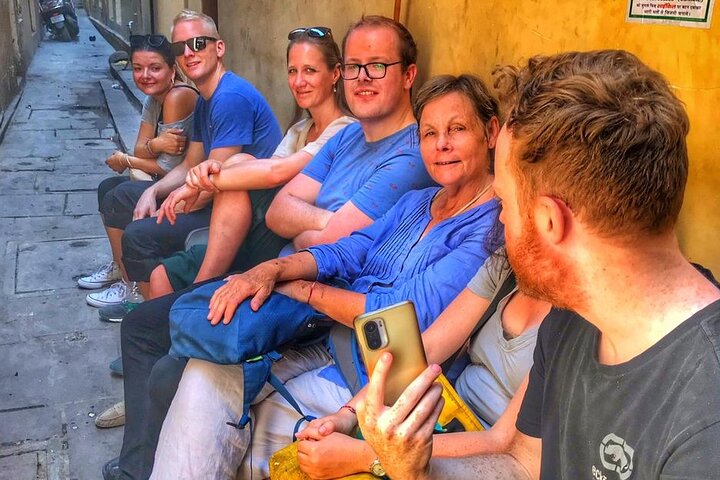
The guide was a man named Ravi, born in the Assi neighbourhood, whose grandfather had been a boatman on the Ganges. He took me through the narrow alleys behind the ghats — galis, they call them — where the city's real life happens. A silk weaver working a handloom in a room no bigger than my bathroom. A chai wallah who had been serving the same spot for 43 years. A small temple to a local saint I had never heard of, with fresh marigolds and a single oil lamp burning.
Ravi pointed out the things I would have missed: the faded inscriptions on old buildings marking where British officers once stayed, the hidden stepwells beneath modern concrete, the way the galis open suddenly onto the river at unexpected points. He told me which ghats are used for bathing, which for laundry, which for puja. He explained that Dashashwamedh Ghat — the main ghat where the Ganga Aarti happens every evening — has been performing that ritual daily without interruption for over a hundred years.
This is not a tour for people who want a photo of the aarti and then dinner. This is for the traveller who wants to understand how the city breathes. I walked away with a notebook full of names and a respect for the place that no guidebook had given me.
Who it's NOT for: Anyone on a tight schedule. The tour runs about three hours and you'll want more time in the galis afterward.
The Moments That Made Varanasi in Winter
I visited in winter — November through February is the comfortable season, with temperatures between 10°C and 25°C. The fog is a factor. Boats often don't leave until 8 or 9 AM because the river is invisible until the sun burns through. The Ganga Aarti starts around 5:30 PM in winter, compared to 6:30 PM in summer, so you need to plan accordingly.
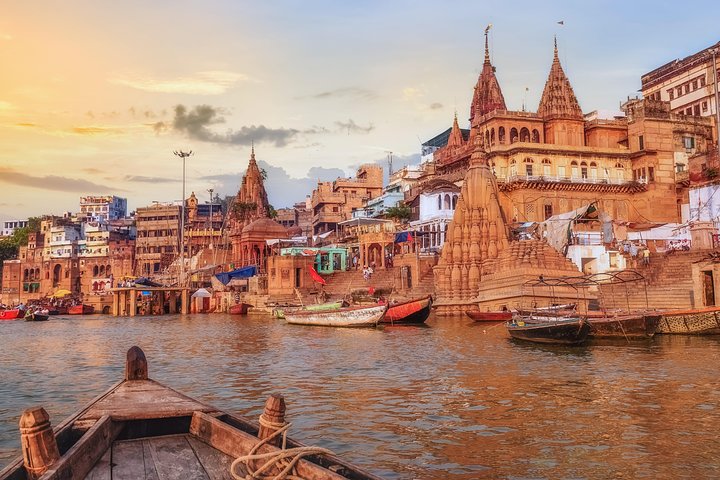
My most vivid memory is from my third morning. I woke at 5 AM and walked to Dashashwamedh Ghat in the dark. The fog was thick enough that I could only see ten metres ahead. A boatman named Prakash offered me a seat in his wooden rowboat for 200 rupees — about $2.50. We drifted downstream as the fog slowly lifted, and I watched the city wake up. A man doing yoga on a platform. A woman filling brass pots at the water's edge. A group of pilgrims chanting, their voices carrying across the water.
That boat ride is the single best decision I made in Varanasi. The sunrise boat tour I booked included a guide who explained the significance of each ghat as we passed. Manikarnika, the main cremation ghat, came into view around 7 AM. Smoke rose from a pyre. Prakash slowed the boat and kept a respectful distance. No photos. The guide spoke quietly about the Hindu belief in moksha — liberation from the cycle of rebirth — and how dying in Varanasi is said to grant it.
I am not Hindu. I do not share that belief. But watching a family perform the last rites for their father, the smoke rising into the winter sky, the river carrying away the ashes — I understood why this place matters to so many people. It is not about comfort. It is about facing what is real.
Ganga Aarti Boat Tour — A Worth Discovering
The Ganga Aarti at Dashashwamedh Ghat is the most famous ritual in Varanasi. Every evening, seven priests in saffron robes raise tiered brass lamps, swing incense, and chant to the sound of conch shells and bells. The ghats are packed shoulder to shoulder — hundreds of people, maybe thousands.
I watched from a boat for both nights I attended, and it was the right call. From the river, you see the full choreography: the synchronized movements of the priests, the flames reflecting on the water, the way the crowd sways like a single organism. On the ghat itself, you're jostled, you can't see over the person in front of you, and the smoke from the lamps gets in your eyes.
The boat tour I used cost 300 rupees per person (about $3.60) and included a guide who explained the meaning of each element of the ceremony. The conch shell represents the primordial sound. The incense purifies the air. The lamp represents the fire element, one of the five that make up the universe. I had read about these things. Hearing them while the aarti was actually happening, with the bells ringing and the river lapping against the boat, was different.
Who it's NOT for: People who want to be in the middle of the crowd energy. The boat is calm and removed. If you want to feel the press of bodies and the heat of the lamps, stand on the ghat.
What Really Surprised Me About Varanasi
Three things caught me off guard.
First, the silence at dawn. Everyone talks about the chaos of Varanasi — the rickshaws, the cows, the vendors, the noise. And it's true. By 10 AM, the galis are a sensory assault. But at 5:30 AM, the city is quiet. The only sounds are the lapping of water, the distant chanting from a temple, the creak of oars. That silence is the real Varanasi, the one that existed before tourism, before electricity, before everything.
Second, the cremation ghats are not morbid. I had steeled myself for something grim. What I found was matter-of-fact. Families bring their dead, the pyre is built, the fire is lit. No weeping. No drama. The body burns for about three hours, and then the ashes are swept into the river. The men who work there — the Dom community — are not sombre. They chat, they smoke, they carry on with the work. Death is a job here, not a tragedy. I found that oddly comforting.
Third, the boat negotiation prices are not fixed. I paid 200 rupees for my sunrise boat. The woman next to me on the second morning paid 500. The difference? She asked the first boatman she saw. I asked three, then walked away from the second. The standard rate for a one-hour sunrise boat ride is 200-300 rupees. For the aarti boat, 300-400 rupees. If they quote more, say "nahi, dhanyavaad" (no, thank you) and walk. They will call you back.
Nadia Osman's Insider Tips for Getting It Right
- Best Ganga Aarti view is from a boat positioned downstream of Dashashwamedh Ghat. The priests face the river, so you see their faces and the full lamp choreography. Upstream boats see their backs. Ask your boatman to position you about 50 metres downstream, slightly angled toward the ghat.
- Don't take photos of the cremation ghats. This is not a suggestion. It is strictly prohibited and deeply disrespectful. The Dom community will confiscate your phone or camera. I saw it happen to a tourist who thought nobody was watching.
- Carry a scarf for shoulders and knees. Every temple requires covered shoulders and legs below the knee. The scarf doubles as a sun shield during the day. I learned this the hard way at the Kashi Vishwanath Temple, where I had to buy a cheap cotton shawl from a vendor outside.
- Visit the ghats at different times of day. Assi Ghat at sunrise is peaceful. Manikarnika at noon is functional. Dashashwamedh at sunset is theatrical. Each ghat has a different personality depending on the hour. Spend at least one full day just walking from Assi to Manikarnika — about 3 kilometres — and stop at every ghat that interests you.
- Volunteer in the langar kitchen at the Golden Temple if you go to Amritsar. I know this is a Varanasi guide, but many pilgrims visit both cities on the same trip. The Golden Temple's langar hall serves free meals to 100,000 people every day. I volunteered there in November 2015, chopping vegetables for 30 minutes before visiting the sanctum. The experience grounded me in a way that the temple itself could not.
What I Wish I'd Known Before I Went
- The fog delays everything. I had planned a 6 AM boat ride. The boatman shrugged and said "fog, madam" until 8:30. Winter boats don't leave until the sun is strong enough to see the river. Plan your mornings accordingly.
- The galis are a maze. I got lost three times in the first two days. The alleys behind the ghats are narrow, unmarked, and identical. Download an offline map of the area. Better yet, hire a guide for the first day to learn the landmarks.
- The water is not safe to drink. This sounds obvious, but I mean it for brushing your teeth too. Every guesthouse will tell you. Use bottled water for everything. The Ganges at Varanasi carries sewage, industrial waste, and cremation ash. Do not touch your face after touching the water.
- Train the shoes you plan to wear. I walked the Camino Francés in 2009 with boots I had not broken in. By day 4 I had thrown away half my gear. The same principle applies here: you will walk 10-15 kilometres a day on uneven stone steps. Wear shoes that have at least 50 kilometres on them before you arrive.
- The aarti starts earlier in winter. I missed the first night because I assumed 6:30 PM, which is the summer time. In winter, it starts around 5:30 PM. Arrive by 5:00 PM to get a good boat position or a spot on the ghat.
- At mass gatherings, follow the saddhus. This is a lesson I learned at the Kumbh Mela in 2013, when I got separated from my group within the first hour. Ten million people. No cell service. I found my way by following the Naga sadhus — they always know where the sangam is, where the food is, where the quiet spots are. In Varanasi, the same principle applies: watch what the local pilgrims do, and do that.
For a deeper dive into the aarti itself, read my detailed guide to the Ganga Aarti. For practical logistics on getting around, see the complete Varanasi pilgrimage guide. And if you want to know more about my background and other journeys, visit my author page.
Explore More
Related comparisons and guides:
Frequently Asked Questions
Which ghat should I visit first in Varanasi?
Start at Assi Ghat at sunrise. It's the southernmost major ghat, less crowded than Dashashwamedh, and the best place to watch the city wake up. From there, walk north along the river — you'll pass Tulsi Ghat, Harishchandra Ghat (a smaller cremation ghat), and eventually Manikarnika and Dashashwamedh.
How much does a boat ride on the Ganges cost?
Standard rates are 200-300 rupees (about $2.50-$3.60) for a one-hour sunrise boat, and 300-400 rupees for an aarti boat. Negotiate before boarding. Ask three boatmen. Walk away if the price seems high — they will call you back.
Can I take photos at the cremation ghats?
No. Photography at Manikarnika and Harishchandra ghats is strictly prohibited and deeply disrespectful. The Dom community will confiscate your phone or camera. Respect the families performing last rites. Watch from a respectful distance on the river.
What is the best time of year to visit Varanasi?
Winter (November to February) is the most comfortable season, with temperatures between 10°C and 25°C. The fog can delay morning boats until 8-9 AM, but the aarti starts earlier (5:30 PM) and the crowds are thinner than during peak pilgrimage seasons.
What should I wear to temples in Varanasi?
Covered shoulders and knees are required at all temples. Carry a scarf or shawl that you can wrap around your shoulders or legs. Avoid leather shoes inside temple premises. Many temples also require you to remove footwear before entering.
How do I get from Delhi to Varanasi?
The Varanasi Junction railway station connects to all major Indian cities. The overnight train from Delhi takes about 8-10 hours. Flights from Delhi to Varanasi's Lal Bahadur Shastri Airport take about 1.5 hours. I recommend the train for the experience — book a sleeper or AC class at least two weeks ahead.