Varanasi Seasons, A Complete Guide
I've Been to Varanasi in Every Season, Here's the Truth
I first arrived in Varanasi in November 2017, stepping off a train at 4:30 AM into a fog so thick the platform lights looked like candles. The air smelled of woodsmoke and marigolds. That first trip I made every mistake a traveller can make, paid a boatman ₹2,000 for what turned out to be a 20-minute ride, photographed the wrong ghat, and wore shoes that took three days to dry after stepping into the Ganga.
Over the next seven years I returned during every season: the furnace of May, the monsoon slosh of August, the crisp winter mornings of December. Each season changes the city more than I expected. The varanasi seasons are not just about temperature, they shift the daily rhythms of the ghats, the timing of the aarti, the behaviour of boatmen, and the quality of light.
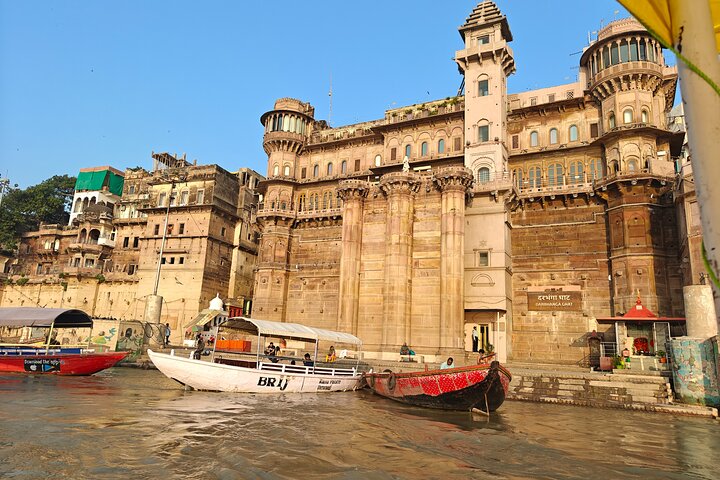
I booked the Varanasi Sunrise Boat & Ganga Aarti Private Tour on my second visit and it changed how I understood the city. The guide pointed out details I had missed, the specific way the Dom community tends the Manikarnika Ghat cremation fires, which have burned continuously for over 3,500 years, passed across generations. That single fact reframed everything I thought I knew about the city.
Varanasi Sunrise Boat & Ganga Aarti Private Tour
Starts at Assi Ghat before dawn, you watch the city wake up from the water while your guide explains the rituals. The Ganga Aarti at evening completes the arc. A long day but the one I recommend when friends only have 24 hours in Varanasi.
 Check Availability →
Varanasi Sunrise Boat & Ganga Aarti Private Tour, Best in Peak Season
The peak season for Varanasi runs from November through February. Winter mornings are foggy, boats sometimes delay departure until 8 or 9 AM because the river is invisible. But the fog burns off by mid-morning, and the winter light on the ghats is soft and gold. I returned in January 2020 and the boat ride at dawn was quiet enough to hear the temple bells from half a kilometre away. The Ganga Aarti in winter starts around 5:30 PM, earlier than the 6:30 PM summer timing, so you can attend the ceremony and still have dinner by 8 PM. This tour works well in peak season because the early start avoids the crowds that build from 9 AM onward.
The Month That Changed How I See Varanasi
May 2019. I arrived in Varanasi during a heatwave. The temperature hit 46°C on my second day. The streets were empty by 11 AM. Shopkeepers napped on their charpoys behind drawn curtains. I thought I had made a terrible mistake.
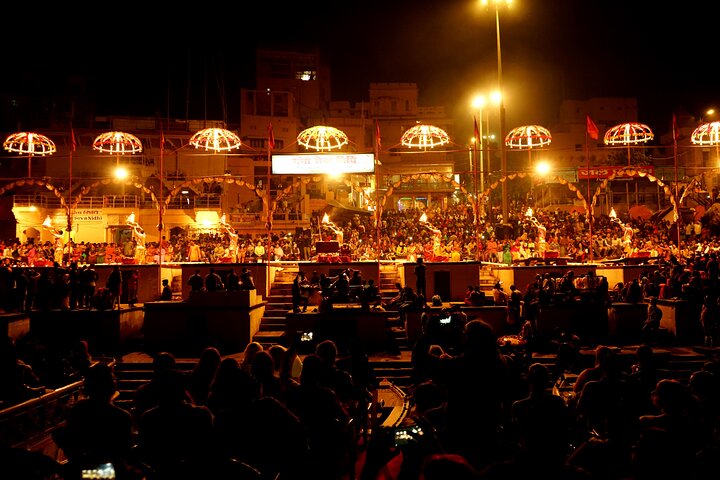
Then I walked to the ghats at 5:30 PM. The sun was low, the stone steps were still hot, but the river had turned the colour of old brass. The evening aarti that night drew fewer than 200 people, compared to the 2,000 I had seen in November. I could see the priests' faces clearly. I could hear the conch shell echo off the water without competing chatter. The Varanasi Evening Ganga Aarti Tour I booked that evening cost less than half the winter price, and the boatman spent 45 minutes explaining the mythology of each ghat without rushing to the next far
Off-season has real advantages. Hotel rooms in May go for 40% of their December rate. The boatmen are desperate for customers and will negotiate fairly. The Dom community at Manikarnika Ghat is more open to conversation, one elder told me his grandfather had tended the same eternal flame before him, and his son would take over. You cannot have that conversation in November when the ghat steps are shoulder-to-shoulder with tourists.
The trade-off is real. You cannot walk the ghats between 11 AM and 4 PM in summer. You need to drink three litres of water and carry a wet scarf for your neck. But the city at dusk in May is more itself than the city at noon in December.
Varanasi Evening Ganga Aarti Tour
The evening boat ride along the ghats as the lamps are lit is the most photogenic hour in Varanasi. The aarti ceremony from the water gives you a view the crowds on the steps don't get. Three hours.
 Check Availability →
Varanasi Evening Ganga Aarti Tour, Surprisingly Great in Low Season
If you visit between April and June, this evening tour is the smartest choice. The heat forces everyone indoors during the day, but the river cools by evening. The boat ride during the aarti ceremony from the water gives you a view the crowds on the steps don't get, and in low season, you might share the boat with only two other people instead of twenty.
Packing Lessons I Learned the Hard Way
On my first trip I brought jeans, a leather journal, and closed-toe sneakers. Within 24 hours I had sweat through the jeans, the journal cover warped from humidity, and the sneakers were soaked after I stepped into the Ganga at Assi Ghat.
Here is what I now carry for any season:
- Cotton or linen clothing only. Synthetic fabrics turn into plastic wrap in the humidity. I own three cotton kurtas that I rotate. Women should carry a scarf long enough to cover shoulders and knees, many temples require it.
- Sandals that can get wet. You will step into the river at some point. Chappals that dry in an hour are better than shoes that stay damp for two days.
- A rechargeable fan. Power cuts happen in summer. A small USB fan clipped to my bag made waiting for the aarti bearable in May.
- Cash in small denominations. Boatmen and chai wallahs do not take cards. I carry ₹2,000 in notes of 100 and 50. Paying with a ₹500 note at a ₹60 chai stall creates problems.
- A scarf for your face. The cremation ghats produce smoke that lingers. I learned this after coughing through an entire boat ride in winter when the air was still.
I also learned to pack half of what I thought I needed. The Jerusalem seasons guide taught me that principle, I carried a 12kg backpack through the Old City in March 2018 and threw away half my gear by day three. Varanasi is the same. You do not need three pairs of shoes.
What I Wish I'd Known Before I Went
I sat at Manikarnika Ghat on my fifth visit, watching the smoke rise, and I realised how many avoidable mistakes I had made. Here is the list I give every friend who asks about Varanasi:
- The best view of the Ganga Aarti is from a boat on the river, positioned downstream of Dashashwamedh Ghat. I watched from the steps on my first night and could barely see the priests. On my second night I paid ₹500 for a boat ride and saw everything. The ceremony is performed facing the river, you need to be on the water to see it properly.
- Negotiate boat price before getting in. ₹500 for a 1-hour private sunrise ride is fair. Pay in rupees, cash only. I learned this after the Sunrise Boat Negotiation story from November 2017, five boatmen surrounded me at Dashashwamedh Ghat at 5:15 AM, each quoting ₹2,000. I walked 50 metres south to Munshi Ghat and found a teenage boy with a boat. ₹400 for an hour. He rowed slowly, named every ghat, and pointed out the exact spot where the Ganga turns north toward the Himalayas.
- Do not photograph the cremation ghats. This is strictly prohibited and deeply disrespectful. The best views of Manikarnika Ghat are from a boat 30 metres offshore. Do not photograph from the ghat steps, it is both disrespectful and enforced. I saw a tourist have his phone taken by a Dom guard in 2019.
- Pay boatmen after the ride ends, not before. I learned this the hard way. A boatman took ₹1,500 from me in advance on my first trip and cut the ride to 15 minutes. Now I pay nothing until we are back at the ghat.
- Winter fog delays boats until 8-9 AM. I arrived at Assi Ghat at 5:30 AM in December 2022 and waited two hours in the cold before the boat could launch. The aarti starts at 5:30 PM in winter versus 6:30 PM in summer, plan your day around these timings.
- The quietest time for the ghats is between 4 AM and 6 AM. I walked the entire stretch from Assi to Manikarnika in January 2023 and saw fewer than 30 people. The city belongs to the early risers.
If you are comparing pilgrimage destinations, the Amritsar seasons guide and Bodh Gaya seasons guide offer similar seasonal advice for those cities. The Mecca seasons guide follows a completely different calendar, the Islamic lunar calendar moves the Hajj season 11 days earlier each year, so planning requires a different approach entirely.
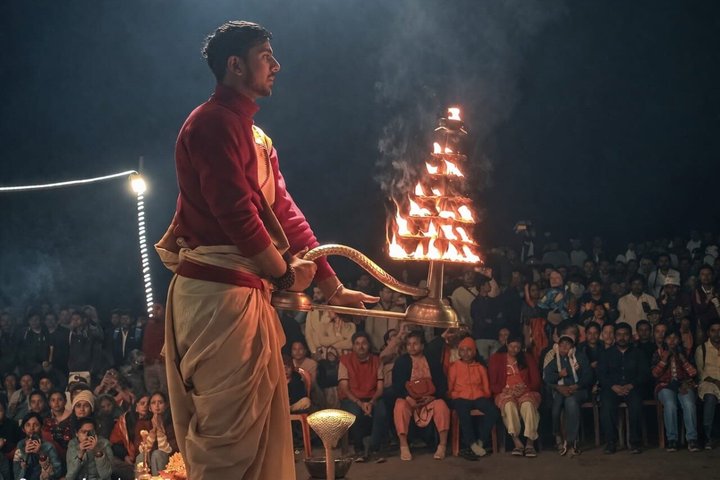
Varanasi Sunset Boat
Combines the sunset boat ride with the evening aarti and a walking tour through the old city. Best for travellers who want ceremony plus context in a single outing.
 Check Availability →
Frequently Asked Questions
What is the best season to visit Varanasi?
November through February offers the most comfortable temperatures, with daytime highs around 22-26°C. However, winter fog can delay boat rides until 8-9 AM. March and October are good shoulder months. Summer (April-June) is extremely hot but uncrowded and cheaper.
How does the Ganga Aarti timing change with seasons?
The evening aarti starts around 5:30 PM in winter (November-February) and around 6:30 PM in summer (April-August). The exact time shifts with sunset. Arrive 30 minutes early to secure a good boat position.
Is Varanasi worth visiting in summer?
Yes, if you can handle 42-46°C heat. The advantages are drastically fewer tourists, lower prices, and more intimate access to the ghats and rituals. Plan all outdoor activity before 10 AM and after 4 PM. Carry at least 3 litres of water and a rechargeable fan.
What should I not do in Varanasi?
Do not photograph the cremation ghats, it is strictly prohibited and deeply disrespectful. Do not pay boatmen in advance. Do not wear shorts or sleeveless tops to temples. Do not take photos of sadhus without asking first. Do not drink tap water.
How much does a boat ride in Varanasi cost?
A fair price for a 1-hour private sunrise boat ride is ₹500. Negotiate before boarding and pay after the ride ends. Walk 50 metres south of Dashashwamedh Ghat to Munshi Ghat for better prices and fewer aggressive boatmen.
When is the quietest time to visit the ghats?
Between 4 AM and 6 AM. The city is waking up, the fog is still on the river, and you will see only a handful of people. This is also the best time for a sunrise boat rid