Ganga Aarti Varanasi: Where to Watch, When to Go, What to Expect
My First Aarti
I came to the water late on a February evening in 2014, my second trip through Varanasi, still convinced I could arrive at seven-fifteen and find room. I could not. Dashashwamedh Ghat was already a bank of shoulders, and I ended up wedged three-quarters of the way up the steps behind a family from Pune who had brought folding stools and a thermos of chai. That is how I saw my first Ganga Aarti: standing on my toes, half a head shorter than everyone around me, watching over the crown of a stranger's woolen cap.
Then the conch sounded. It is a low, blunt note, more felt than heard, and it cut through the hawkers and the bell-ringing and the boat horns like a hand pressed flat against the noise. The chatter dropped. On the tiered platforms below, the priests — young men in saffron and cream, that evening there were seven of them, one to a station — lifted the first of the brass lamps. These are not small. The seven-tiered lamp, the one that gives the ceremony its shape in most people's memory, stands nearly as tall as the man holding it, a stacked tree of oil wicks that throws a column of fire upward when it swings.
I had smelled camphor in temples from Rishikesh to Madurai, but never in that quantity — it comes off the lamps in a sweet, cold, medicinal wave and settles at the back of your throat. Underneath it, marigold: the garlands sold in loops by the boys working the steps, the petals scattered on the platforms, the strings looped over the framed images of the river goddess. Smoke drifted up and out over the Ganges and hung there, because the air on the river in February barely moves. The priests turned in unison, lamps held high, tracing the same arc at the same beat, and the whole ghat — thousands of people — turned its face toward the water with them.
I had spent by then more than a decade writing about ritual. I had stood in the crush of the 2013 Kumbh Mela at Allahabad, sixty kilometres upriver, where the numbers stop meaning anything and you simply give yourself to the current of bodies moving toward the confluence. The aarti is smaller than that, and more legible. You can see the whole thing at once. That first night I mostly could not, hemmed in as I was, and I left promising myself I would come back and do it properly. I have now attended the Dashashwamedh aarti perhaps a dozen times, in three seasons, from the steps and from the water, and this guide is what I wish someone had handed me on that February evening.
Boat vs Shore — Where to Watch
There are two honest ways to watch the aarti, and a third that I will mention and then advise against. You can stand on shore among the crowd. You can hire a boat and sit about fifty metres off the ghat. Or you can pay for a reserved seat on the platforms close behind the priests — which I find puts you so near the performers that you lose the ceremony's relationship to the river, which is the entire point.
The shore view is intimate and difficult. You are close enough to feel the heat of the lamps and to catch individual words of the Sanskrit chant. You are also standing in a crowd that compresses as the ceremony builds, in drifting incense and camphor smoke that will make your eyes water if the air is still. If you are short, as I am, you will spend a good deal of the ceremony managing sightlines. The reward is presence — the sense of being inside the event rather than looking at it. If you want that, take it, but arrive early and make peace with the crush.
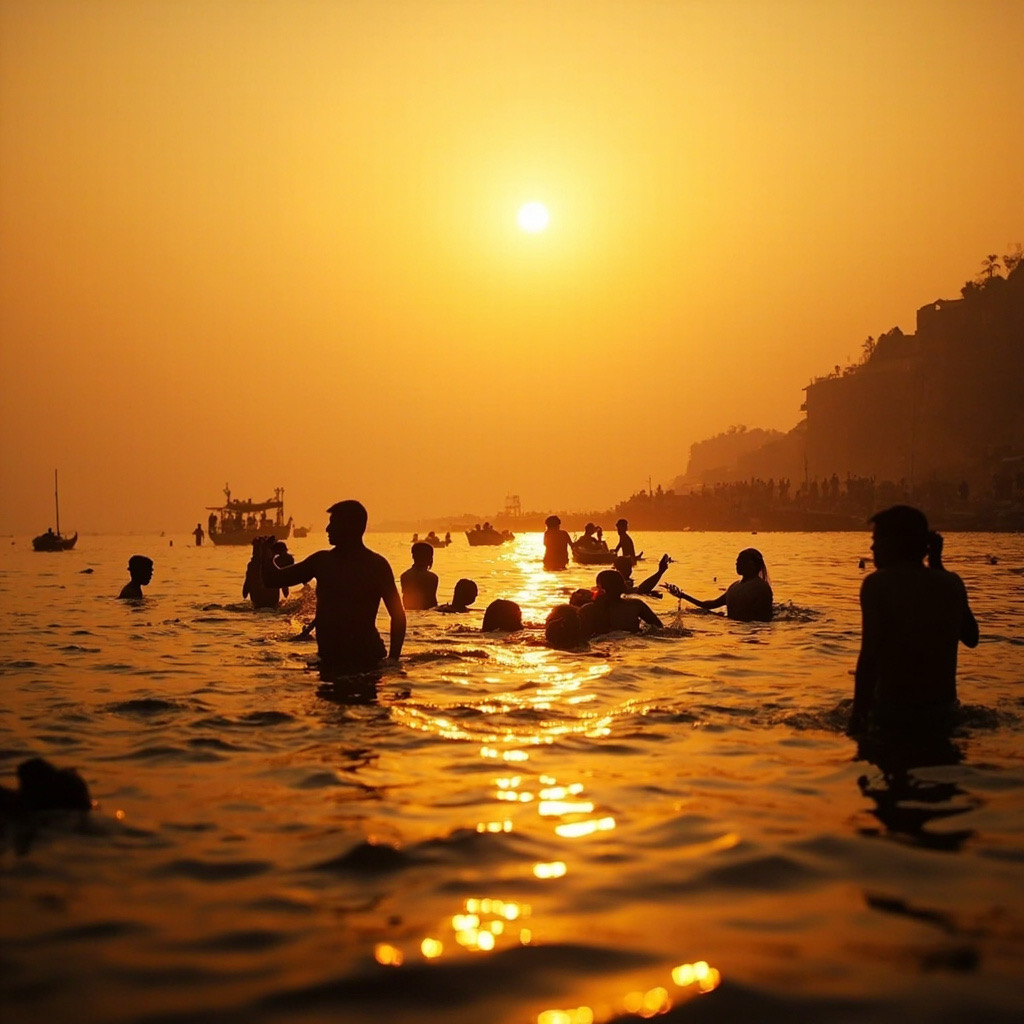
The boat view is what I recommend for a first visit, and it is what I chose the night I finally understood the ceremony. I watched from a boat fifty metres out, and it was the right call. From the water you see all seven priests at once, the full stacked tier of lamps swinging in the same arc, and — this is the part you cannot get from shore — the fire doubled in the black river beneath, the reflection breaking and reforming with every wake. It is quieter out there. The crowd noise softens to a hum across the water, and the boatman cuts the engine so you drift on the current with a hundred other small craft, everyone's oil-lamp offerings floating past in cupped leaf boats. You lose the smell of the camphor almost entirely, and you lose the priests' faces. That is the trade.
For most first-time visitors, a guided tour that bundles a shared boat with a knowledgeable guide is the least stressful way to arrange this, because the boat is booked before you arrive and someone else manages the timing. The one I most often point people toward covers a full day, including Sarnath and a boat ride timed for the aarti:
Insight Varanasi: One Day Tour with Sarnath, Boat Ride & Aarti
Check availability →If you would rather keep the day focused on the riverfront alone and skip the trip out to Sarnath, a shorter full-day tour with a guide and boat covers the ghats and the aarti at a lower price:
Varanasi Full-day Tour with Guide & Boat Ride
Check availability →Skip the boat if: you have trouble with balance on moving water, or you came specifically for the sound and smell of the ritual — the chant, the bells, the camphor. All of that lives on shore. From fifty metres out you are watching a beautiful thing at a remove, and some people find that distance frustrating rather than restful.
What the Ceremony Actually Looks Like
The aarti follows the same order every night, and knowing the sequence helps you read it rather than simply watch lights move. What follows is the shape of it as performed at Dashashwamedh Ghat.
It opens with the conch. One priest raises a large shankha and blows a long, level note, sometimes answered by a second. This is the call that settles the crowd and marks the start. Bells begin — hand bells and the larger fixed bells on the platforms — and the priests light incense, waving thick bundles of smoking sticks in slow circles so that the first offering to the river is scent and sound before it is fire.
Then the fire lamps, in stages. The priests take up smaller lamps first, then the tall seven-tiered brass lamps, and this is the passage most people photograph. Each priest holds his lamp at arm's length and moves it in wide, deliberate arcs — up, out over the water, down, and around — all seven of them synchronized to the rhythm of the bells and a recorded and live chant to the goddess Ganga. The movements are not improvised. They are choreographed and drilled, and watching seven men trace the identical arc at the identical instant is a large part of the ceremony's force.
The chanting runs underneath the whole thing — the Ganga Aarti hymn and associated verses, amplified so it carries down the ghat and across the water. There is a section with a feathered whisk and another with a peacock fan, each a distinct offering. Toward the end the priests take up conch shells filled with river water and pour libations back into the Ganges, returning to the river what the ceremony has offered up.
It closes with the blessing. The lamps are brought among the front rows, and worshippers pass their palms over the flame and then over their own heads, drawing the light and warmth toward themselves. Prasad — usually sweets or blessed petals — moves through the crowd. The conch sounds a final time. The whole sequence runs about forty-five minutes, and the crowd disperses slowly, in no hurry, many people staying to float their own small leaf-boat lamps out onto the current.
Practical Logistics
The ceremony happens every evening at dusk at Dashashwamedh Ghat, which sits roughly in the middle of Varanasi's riverfront, a short walk from the Vishwanath temple area. Dusk is the operative word: the start time moves with the season. In winter — say November through February — it begins around 5:30 PM. In the long light of summer it runs closer to 6:30 PM. Confirm the evening's time with your guide or guesthouse, since it also shifts on certain festival days. The Ministry of Tourism's Incredible India portal and local outfits both publish seasonal timings, and UNESCO's documentation of the Ghats of Varanasi gives useful context on the riverfront itself.
How early to arrive depends on where you plan to sit. For a decent spot on the shore steps, give yourself 45 minutes — the good sightlines fill first, and by twenty minutes before start the lower steps are solid. For a boat, 30 minutes is generally enough if you have booked ahead, because the boat holds your place on the water and you are not competing for stone to stand on. If you have not booked a boat and are hiring one at the ghat, add time and expect to haggle in a rush.
What to bring: a small donation for the organizing trust if you are moved to give one — it is customary, not compulsory, and modest is fine. A camera is welcome, but no flash near the priests during the lamp offering; it is intrusive and it flattens exactly the image you are trying to keep. Bring a scarf or shawl — useful for the cool that comes off the river after dark in winter, and for covering your head or shoulders if you wish. Wear shoes you can slip off easily, since some seating areas ask you to remove them. Carry small change in a pocket you can reach without opening a bag in the crowd.
For travellers who want the riverfront handled privately, without joining a shared group, a private tour with its own boat is worth the difference in price for the control it gives you over pace and timing:
Private Varanasi Tour with Ganga Boat Ride
Check availability →Not for you if: you need quiet, space, and predictability. Even from a boat, the aarti happens inside one of the densest crowds you will encounter on the subcontinent, on uneven stone steps, after dark, with limited signage and no reserved order to the movement of people. If mobility, dense crowds, or sensory overload are genuine concerns, consider the far calmer sunrise boat ride instead, which shows you the same ghats in stillness.
What I'd Do Differently
A dozen visits have taught me mostly by way of my own mistakes. Here is what I would tell my February-2014 self, standing on her toes behind the family from Pune:
- Book the boat ahead of time. My best night on the water was arranged the day before through a guide; my worst was a scramble at the ghat where I overpaid a boatman who then anchored us behind three larger craft and I saw very little. Fifty metres out is the right distance — but only if your boat actually gets there.
- Do not arrive at the start time. Arriving at 5:30 in winter means arriving too late. Treat the printed time as when the lamps rise, not when you should leave your guesthouse. Forty-five minutes early on shore, thirty on a booked boat.
- Agree on a meeting point before you lose your group. I have been separated from travelling companions twice in that crowd, once for over an hour, because we all assumed we would simply stay together. You will not. Name a landmark up the steps, away from the water, and a time to regroup.
- Watch from shore once, if you can manage a second visit. The boat is the better first view, but the ceremony's sound and smell — the camphor, the bells, the chant close enough to feel — only reach you on the steps. If you have two evenings, spend one of each.
- Put the camera down for the blessing. I spent my first proper aarti composing photographs and realized afterward I had not once simply passed my hands over the flame with everyone around me. The lamps come close at the end for a reason. Let them.
- Dress for the river after dark. February on the Ganges is colder than the afternoon suggests, and the damp sits on you once the sun is down. I have shivered through a full ceremony in a linen shirt more than once before I learned to carry a shawl.
The aarti rewards a little planning and punishes none of it. Handle the boat, the timing, and the meeting point in advance, and you free yourself to actually watch the thing you came to watch.
Frequently Asked Questions
What time does the Ganga Aarti start in Varanasi?
The aarti at Dashashwamedh Ghat begins at dusk and shifts with the season. In winter (roughly November to February) it starts around 5:30 PM; in summer it runs closer to 6:30 PM. The ceremony lasts about 45 minutes. Confirm the exact time locally, as it changes on festival days.
Where is the best place to watch the Ganga Aarti?
Dashashwamedh Ghat holds the largest and most organized ceremony. You can watch from the stone steps on shore, from raised platforms behind the priests, or from a boat about 50 metres offshore. Each option carries trade-offs of proximity, comfort, and view, covered above.
Is it better to watch the aarti from a boat or from the shore?
A boat gives you the full panorama of the ghat and the lamps reflected on the water, with less crowd pressure. The shore puts you close to the camphor, the chanting, and the priests' movements but means a tight crowd. For a first visit I prefer a boat about 50 metres out.
How early should I arrive for the Ganga Aarti?
For a seated spot on shore, arrive about 45 minutes before the start. For a boat, 30 minutes is usually enough if you have booked ahead, since the boat holds your place on the water and you are not competing for space on the steps.
Is there an entry fee for the Ganga Aarti?
There is no ticket for standing on the public ghat. Reserved platform seating near the priests can carry a small charge, and boats are hired separately. A modest donation to the organizing trust is customary but not required.
Can I take photographs during the Ganga Aarti?
Yes, photography is permitted. Avoid flash near the priests during the lamp offering, keep tripods off the packed steps, and ask before photographing individual worshippers closely.