Varanasi Tips: What I Learned From 5 Visits to the Ghats
What the Guidebooks Don't Tell You About Varanasi
I first arrived in Varanasi in November 2017 on a Tuesday afternoon. The train from Delhi was seven hours late. I stepped off at Varanasi Junction and the first thing I noticed was the smell — woodsmoke, marigolds, and something else I couldn't name. The guidebooks I had read all said the same things: "Take a boat ride at sunrise," "Watch the Ganga Aarti," "Don't take photos at the cremation ghats." All true. All incomplet
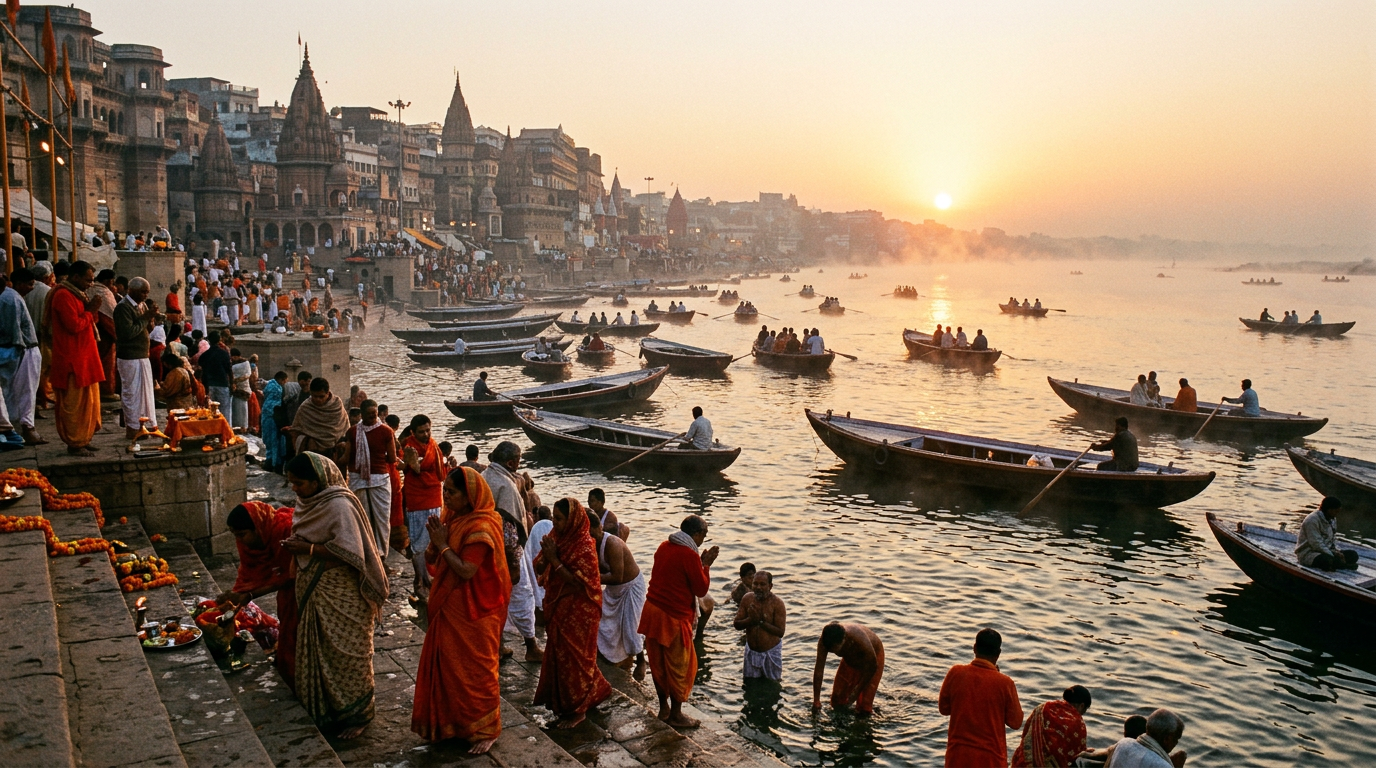
The guidebooks don't tell you that the best view of the Ganga Aarti is from a boat positioned downstream of Dashashwamedh Ghat, not on the ghat steps themselves. I learned this the hard way my first evening. I stood shoulder-to-shoulder with 300 other people for 45 minutes, sweating, unable to see the priests' faces. The smoke from the oil lamps drifted directly into my eyes. I left before the final blessing. The next night I paid ₹400 for a boat from Munshi Ghat — the sunrise boat ride and Ganga Aarti experience I booked through a local operator — and watched from the water. The flames reflected on the river. The conch shells echoed off the water differently. I could see the entire ritual unfolding from start to finish.
The guidebooks also don't mention that the ghats change completely by season. In winter (November to February), fog can delay boats until 8 or 9 AM. The Aarti starts at 5:30 PM instead of 6:30 PM in summer. I arrived in December 2019 expecting a 6:30 PM start and found the ceremony already half over.
A Local's Secret Pick: The Sunrise Boat from Munshi Ghat
My sunrise boat ride with a teenage boatman from Munshi Ghat remains the single best decision I made in Varanasi. He quoted ₹400 for an hour — half what the boatmen at Dashashwamedh Ghat demanded. He rowed slowly, named every ghat, and pointed out the exact spot where the Ganga turns north toward the Himalayas. He never asked for a tip. He never rushed. I paid him ₹500 at the end because he earned it. The boat was wooden, with a faded blue canopy and two cushions. No frills. That was the point.
Who it's not for: If you want a cushioned seat with a life jacket and a recorded commentary in English, this isn't it. The municipal boat service at Dashashwamedh Ghat offers those things for about ₹800. I tried it once. The commentary was inaccurate — the guide claimed the Ganga originates in "the Himalayas above Rishikesh" which is technically correct but misleading (it's Gangotri, 250 km further). The boat was also too large to get close to the smaller ghats.
The Mistakes I Made So You Don't Have To
I have made every mistake a pilgrim can make in Varanasi. Here are the ones that cost me time, money, or respect.
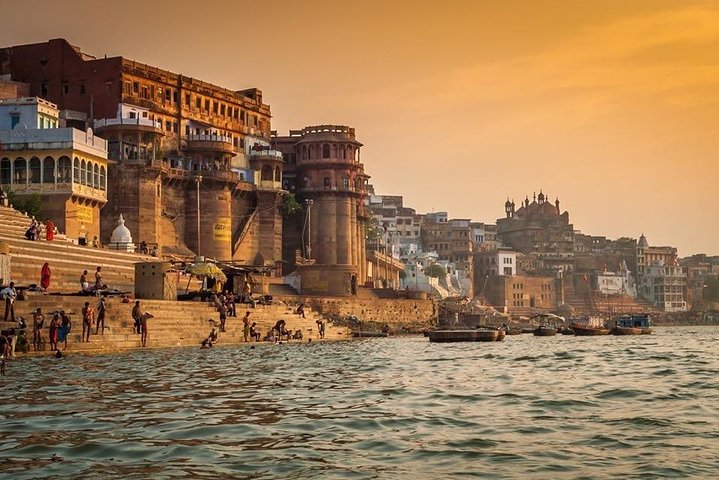
Mistake 1: Taking photos at Manikarnika Ghat. My first morning, I walked down to the main cremation ghat with my camera around my neck. A man in a white kurta approached me within 30 seconds. "No photos," he said, not unkindly. "This is not a tourist place." I put the camera away. The best view of Manikarnika Ghat is from a boat 30 metres offshore. From the water you can see the smoke rising, the families gathering, the priests performing the rites. From the ghat steps you are in the way. The prohibition is not a suggestion — it is enforced. I watched a French tourist have his phone confiscated in 2019.
Mistake 2: Paying the boatman in advance. My second trip, I gave a boatman ₹1,000 before the ride. He took me out for 20 minutes and returned. When I protested, he shrugged and pointed to a group of waiting tourists. I paid after the ride every time after that. The standard rate for a private sunrise ride is ₹500 for one hour. Pay in rupees, cash only — boatmen do not take cards.
Mistake 3: Visiting in May. I made this mistake in 2018. The temperature hit 44°C by noon. The marble on the ghats burned through my sandals. The boat canopy provided no relief from the sun. I lasted two hours. November to February is the comfortable window. Fog can be an issue in December and January, but it burns off by mid-morning.
Mistake 4: Wearing the wrong clothes. I wore shorts my first day. Within an hour I had been asked to cover up at three different temples. Carry a scarf for shoulders and knees. It applies to men too — no singlets or shorts above the knee in any temple or ghat area. I now carry a cotton shawl in my daypack everywhere in Varanasi.
The One Tour Locals Actually Do
Most organized tours in Varanasi follow the same route: sunrise boat, lunch, Sarnath, evening Aarti. I did that tour in 2017 and it felt rushed — the guide spent 20 minutes at Sarnath and 45 minutes at a silk shop where he clearly had a commission arrangement. The tour I recommend instead is the Varanasi walking tour of the ghats and lanes. I took it in 2019 with a guide named Ravi who had grown up in the old city. He showed me a 12th-century well behind a textile shop, a temple dedicated to a monkey god that only locals knew about, and the exact lane where the best kachori-sabzi is sold at 6 AM. The tour cost ₹1,200 for three hours. No silk shop stop.
Who it's not for: Anyone with mobility issues. The lanes of the old city are narrow, uneven, and crowded with bicycles, cows, and motorbikes. Ravi's tour involved 127 steps (I counted) and several sections where we walked single file. The walking tour is also not ideal if you have only one day in Varanasi — the sunrise boat and walking tour together take five hours, which leaves little time for Sarnath. I would do the boat one day and the walking tour the next.
Where to Skip and Where to Splurge
Skip: The evening Aarti at Dashashwamedh Ghat from the main seating area. The crowd is dense, the view is obstructed, and the touts selling overpriced flower offerings will approach you every three minutes. Watch from a boat instead. The boatmen know the timing — they position themselves 50 metres downstream, which gives you the full panorama of the five priests on the stage, the flames, the smoke, the river.
Splurge: A private sunrise boat ride with a guide who speaks your language. The ₹500 boat ride with a local boatman is fine for the experience, but if you want context — the history of each ghat, the mythology of the Ganga, the significance of the cremation rituals — pay ₹1,200 for a guide who can explain. I did this in 2022 with a guide named Anand. He pointed out the exact ghat where Buddha is said to have given his first sermon (Sarnath is the official site, but local tradition holds he stopped at a ghat first). He also explained why the Ganga turns north at that specific bend — the river flows toward the Himalayas, the abode of Shiva. I would not have known any of this without him.
Skip: The silk emporiums on the main tourist strip. The quality is inconsistent and the prices are inflated by 300%. If you want Banarasi silk, go to the lanes around Godowlia Chowk where the weavers actually work. I bought a sari for ₹3,500 in 2019 that would have cost ₹12,000 in the tourist shops. The weaver showed me the difference between real zari (gold thread) and synthetic — real zari does not tarnish.
Splurge: A meal at the rooftop restaurant of the Hotel Alka. The food is average — dal makhani and butter chicken — but the view of the Ganga at sunset is worth the inflated prices. I ate there in November 2022 and watched the Aarti from above while eating a decent thali. The restaurant charges ₹600 for a thali that costs ₹150 on the street. I paid it for the view and did not regret it.
What I Wish I'd Known Before I Went
I wish I had known that Varanasi is not a city you visit once. It is a city you visit, leave, and return to. The first time I came, I tried to see everything in three days. I visited Sarnath, walked the ghats, watched the Aarti, took a boat ride, and left exhausted. The second time, I spent four days doing almost nothing — sitting on the ghats, watching the river, talking to boatmen. That was the visit that mattered.
I wish I had known about the free pilgrim accommodation at the Golden Temple in Amritsar — I wrote about that in my Amritsar tips guide — and that Varanasi has similar arrangements at the Vishwanath Temple complex. The rooms are basic: a cot, a fan, a shared bathroom. They cost ₹100 per night. I stayed there in 2019 for two nights and it was the most grounded I have ever felt in a pilgrimage city. The chanting starts at 4 AM. You wake up to it.
I wish I had known that the best time to visit the Manikarnika Ghat is at dawn, before the crowds arrive. The cremation rituals begin at sunrise, but the families arrive earlier. I went at 5:30 AM in November 2022. The only other people were the boatmen preparing their boats and a group of sadhus performing their morning puja. The smoke from the pyres rose straight up in the still air. No one asked me for money. No one tried to sell me anything. I sat on a step for 20 minutes and left before the first tourist bus arrived.
I wish I had known to carry small bills — ₹10, ₹20, ₹50 notes. Everything in Varanasi is cash. The boatmen, the chai wallahs, the flower sellers. I ran out of small change on my first day and had to break a ₹500 note at a shop that charged me ₹50 for the privilege. ATMs are available but often run out of cash on weekends.
I wish I had known that the Ganga is not a river you look at — it is a river you touch. On my third visit, I finally went down to the water at Assi Ghat, where the river is cleaner, and I put my hands in. The water was cold. A woman next to me was filling a copper pot. She smiled and said something in Hindi I did not understand. I smiled back. That moment — cold water, copper pot, wordless exchange — told me more about Varanasi than any guidebook ever could.
For other pilgrimage destinations, I have written similar guides: Jerusalem tips, Mecca tips, and Bodh Gaya tips. Each city taught me something different. Varanasi taught me to slow down.
Explore More
Related comparisons and guides:
Varanasi in Photos
Frequently Asked Questions
What is the best time to visit Varanasi?
November to February is most comfortable. Temperatures range from 8°C to 22°C. Fog can delay morning boats in December and January. Avoid May and June when temperatures exceed 42°C.
How much should I pay for a sunrise boat ride in Varanasi?
₹500 for a private one-hour sunrise ride is fair. Negotiate before boarding and pay after the ride ends. Walk 50 metres south from Dashashwamedh Ghat to Munshi Ghat for lower prices and fewer touts.
Is it allowed to take photos at the cremation ghats in Varanasi?
No. Photography at Manikarnika Ghat and other cremation ghats is strictly prohibited and deeply disrespectful. The best view is from a boat 30 metres offshore. Violations may result in confiscation of your phone or camera.
What should I wear in Varanasi?
Cover shoulders and knees at all times in temple areas and on the ghats. Carry a scarf or shawl. Men should avoid singlets and shorts above the knee. Women should avoid sleeveless tops and short skirts.
Where is the best place to watch the Ganga Aarti?
From a boat positioned downstream of Dashashwamedh Ghat. This gives you a full view of the ritual without the crowds. The Aarti starts at 5:30 PM in winter and 6:30 PM in summer. Boatmen know the timing.
Is Varanasi safe for solo female travelers?
I have traveled solo to Varanasi three times as a woman. The ghats and main temple areas are generally safe during daylight hours. Avoid dark alleys at night. Dress modestly. Harassment is less common than in Delhi but still happens — a firm "no" usually works. Stick to well-lit areas after dark.
What is the best time to visit Varanasi?
November to February is most comfortable. Temperatures range from 8°C to 22°C. Fog can delay morning boats in December and January. Avoid May and June when temperatures exceed 42°C.
How much should I pay for a sunrise boat ride in Varanasi?
₹500 for a private one-hour sunrise ride is fair. Negotiate before boarding and pay after the ride ends. Walk 50 metres south from Dashashwamedh Ghat to Munshi Ghat for lower prices and fewer touts.
Is it allowed to take photos at the cremation ghats in Varanasi?
No. Photography at Manikarnika Ghat and other cremation ghats is strictly prohibited and deeply disrespectful. The best view is from a boat 30 metres offshore. Violations may result in confiscation of your phone or camera.
What should I wear in Varanasi?
Cover shoulders and knees at all times in temple areas and on the ghats. Carry a scarf or shawl. Men should avoid singlets and shorts above the knee. Women should avoid sleeveless tops and short skirts.
Where is the best place to watch the Ganga Aarti?
From a boat positioned downstream of Dashashwamedh Ghat. This gives you a full view of the ritual without the crowds. The Aarti starts at 5:30 PM in winter and 6:30 PM in summer. Boatmen know the timing.
Is Varanasi safe for solo female travelers?
I have traveled solo to Varanasi three times as a woman. The ghats and main temple areas are generally safe during daylight hours. Avoid dark alleys at night. Dress modestly. Harassment is less common than in Delhi but still happens — a firm "no" usually works. Stick to well-lit areas after dark.