The Story Behind the Temple
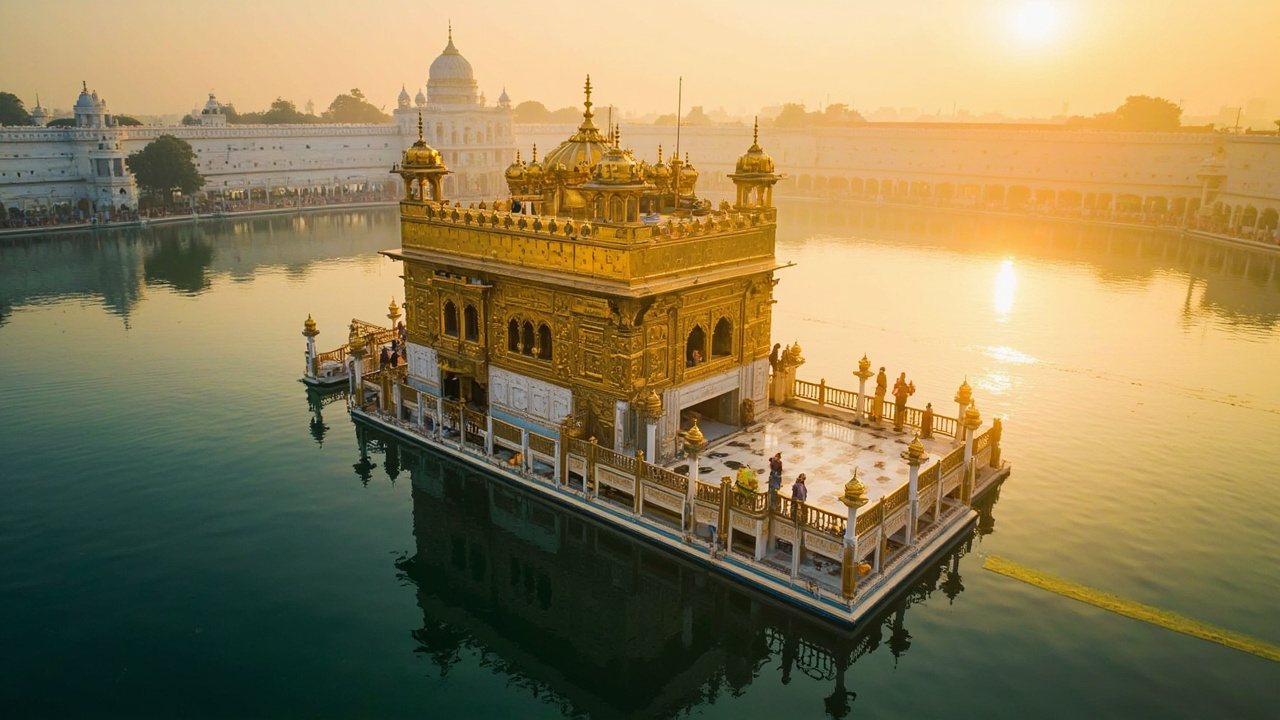
The Golden Temple — Harmandir Sahib, is not a beautiful building. It is the physical expression of a spiritual philosophy, built deliberately and specifically to make a point about equality, openness, and service. Understanding why it was built where it was and how it grew is part of the experience of visiting it.
Guru Ram Das founded the city and the temple in 1577. He was the fourth Guru in the Sikh tradition, and he was building on land that was then outside the main village of Amritsar, it was a deliberate choice to be away from the existing power structures, both Hindu and Mughal. He excavated a pool and called it Amritsar — "the pool of nectar" - which gives the city its name. On an island in the center of the pool, he built the first version of the temple.
His successor, Guru Arjan Dev, completed the temple in 1604 and installed the Adi Granth, the original Sikh scripture, inside. That act transformed the temple from a place of worship into something more specific: it became the permanent home of scripture, which meant the word of God was always present, and the temple could never be without divine presence. Guru Arjan also compiled and finalized the Adi Granth itself, making the temple the literal center of Sikh textual tradition.
The temple was attacked and destroyed several times over the next 150 years, first by the Mughal Emperor Jahangir, then repeatedly by Afghan invaders. Each time it was destroyed, it was rebuilt. The pattern of destruction and rebuilding is part of what gives the site its emotional weight: Sikhs have defended and rebuilt this temple repeatedly for four centuries. It is not a fragile or fragile-seeming place, but the history is real.
In the early 1800s, Maharaja Ranjit Singh, the Sikh king who had consolidated control of Punjab, sheathed the upper walls and dome in gilded copper panels. This is where the "Golden" comes from. The gold was meant to honor the temple's significance and to make it visually match the spiritual status Sikhs already gave it. Before that, the temple was white marble.
What You Will See
You enter the temple complex through one of the four gates. Each gate is at a compass point, north, south, east, west, and each represents the same thing: that the temple is open to everyone, from every direction, without preference. This is not symbolic decoration. It is a statement of principle, and it is still displayed today.
You walk across the causeway (the Govind Singh walkway) to reach the temple itself, which sits on a raised platform. Before you cross, you remove your shoes at the shoe-check counter, there are free lockers and attendants. You wash your feet in the foot-baths provided. You cover your head with a cloth (provided at the gate if you don't have your own). These are not bureaucratic requirements, they are signs of respect that Sikhs observe themselves and that any visitor can participate in naturally.
The temple itself is a single-story building clad in white marble and gilded copper. The dome is gold. Inside, the walls are inlaid with mirrors and glass in a pattern typical of Mughal-era religious architecture. The central shrine holds the Guru Granth Sahib, the Sikh scripture, which is read continuously, 24 hours a day, by a rotation of granthis (scripture readers). The hymns (keertan) that fill the temple are audible throughout the complex, broadcast from inside the shrine.
The sarovar, the holy pool, surrounds the temple on all sides. Pilgrims circumambulate the temple along the marble walkway (Parikrama), which is considered a devotional act. Many pilgrims stop to wash in the sarovar water at various points along the walk. The water is clear and cool; the reflection of the gold dome in it is one of the most photographed things in India.
Outside the temple complex, on its western side, is the main Langar hall, a massive dining hall where the free meal is served continuously. The kitchen adjacent to it is one of the largest volunteer-run kitchens in the world.
The Langar Meal — What It Is and Why It Matters
The Langar is not a canteen or a charity kitchen. It is a spiritual practice. The act of eating together, sitting on the floor, with people from every background, is the Sikh expression of equality before God. There is no hierarchy in the Langar, you do not pay, you do not tip, you do not receive special treatment. You sit where there is space, you eat what is served, and you leave.
The food is always vegetarian, traditionally so that no one from any background, including those who do not eat meat for religious reasons, would be excluded. It is simple and nourishing: dal (lentil soup), a vegetable dish or two, chapati (whole wheat flatbread), rice, and sometimes kheer (sweet rice pudding) for dessert. Water and tea are served alongside.
Volunteers (sevadars) do all the cooking, serving, and cleaning. The work is organized and efficient, thousands of people are fed every day with no apparent chaos. Sikh pilgrims often participate in the Langar as sevadars during their visit: it is considered a form of worship (seva, selfless service). If you want to participate, you can ask at the kitchen entrance. You will be given work: peeling potatoes, rolling dough, washing dishes, or serving food.
For many first-time visitors — Sikh and non-Sikh alike, the Langar is the most memorable part of the visit. Not because of the food, but because of the scale of it, the order of it, and the fact that it is free and open.
The Daily Rhythm of the Temple
The temple follows a daily schedule that changes with the seasons, but the core rhythm is the same:
- Early morning (before 6am): The temple is at its quietest and most powerful. The granthi read the Asa-di-Var (morning hymn) around 5am. If you want to experience the temple as a spiritual space rather than a tourist site, come at opening time. The marble is clean, the sarovar is still, the hymns are at their most intimate.
- Morning (8–11am): The temple fills with pilgrims. The Parikrama is most active. Langar breakfast is being served in the morning hall.
- Midday (12–3pm): The temple remains accessible but the heat in summer can be intense. The marble floors are cool. This is a good time to find shade inside the temple.
- Afternoon (3–6pm): Another wave of visitors. The light is good for photography of the exterior.
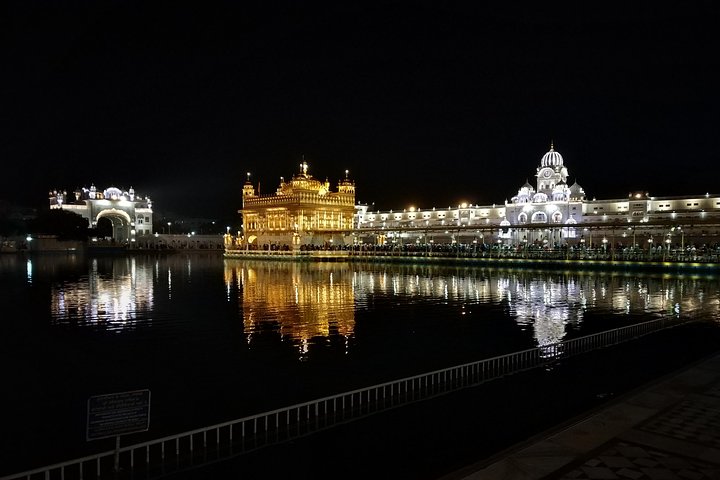
- Evening (6–9pm): The temple is spectacular at night, the gold dome illuminated, the sarovar reflecting light, the evening prayers (Ardas) at their most well-attended. The ceremony of closing the temple for the night (releasing the Guru Granth Sahib from the shrine to its rest room) happens around 10pm and is itself a profound thing to witness.
The Other Sites in Amritsar
Amritsar has more than one significant site. The Golden Temple is the reason you come, but two others are worth your time if you have a full day or more in the city:
Jallianwala Bagh — A memorial garden 50 meters from the Golden Temple entrance. In 1919, British troops under General Dyer fired on a crowd of unarmed civilians (including women and children) who had gathered here, killing hundreds. The exact number is disputed - British records said 379; modern estimates range higher. The garden still has the bullet marks on the walls and the well into which people jumped to try to escape the firing. It is a short visit but an important one: it is the historical context that explains a great deal about modern India and about the Indian relationship to colonialism.
The Partition Museum — Opened in 2016 and located in the same compound as Jallianwala Bagh, it documents the 1947 Partition of British India into India and Pakistan, an event that displaced 14–18 million people and killed an unknown number (estimates range from 200,000 to 2 million). The museum uses personal stories, objects, photographs, and recorded testimonies. It is well-selected and deeply moving. If you are of Indian origin, or if you have a family history connected to South Asia, it will be resonant.
Wagah Border — The changing of the guard ceremony between India and Pakistan at the border crossing between Amritsar and Lahore. Happens every evening around 5pm (check current schedule, times shift seasonally). The ceremony has become a patriotic spectacle and is very well-attended, the Indian side draws large crowds. It is part military ritual, part political theater, and unique. Plan to arrive 1–2 hours early to get a seat in thestands.
How to Get to Amritsar
By air: Amritsar's Sri Guru Ram Dass Jee International Airport (ATQ) has direct flights from Delhi (1h 20min), Mumbai, Chandigarh, Srinagar, and several Gulf cities (Dubai, Kuwait, Doha). From Delhi, IndiGo and Air India operate multiple daily flights.
By train: The Shatabdi Express (New Delhi → Amritsar) departs at 7:05am and arrives at 1:30pm, roughly 6 hours. It is a comfortable journey on dedicated track. Overnight trains are also available but the Shatabdi is the most reliable option.
By road: NH1 runs directly from Delhi to Amritsar — 450km of four-lane divided highway. The drive takes 7–8 hours. Many pilgrims hire a car and driver, often combining Amritsar with a visit to the Wagah Border and an overnight stop before returning to Delhi.
Where to Stay
the best for pilgrims is the SGPC (Shiromani Gurdwara Prabandhak Committee) guesthouse within the temple complex itself. Rooms are simple, clean, and very cheap, available to all visitors regardless of background. They book up quickly, especially during festivals. For something more comfortable, there are many mid-range hotels within a 10-minute walk of the temple on the outer circle of the city's concentric layout.
The area immediately around the Golden Temple is called the Hotel Street area or the Cartwright Road area — both offer good mid-range options within 500m of the entrance.
Cross-Cluster Links
The Golden Temple is most powerfully experienced as part of a wider India pilgrimage that also includes:
Varanasi
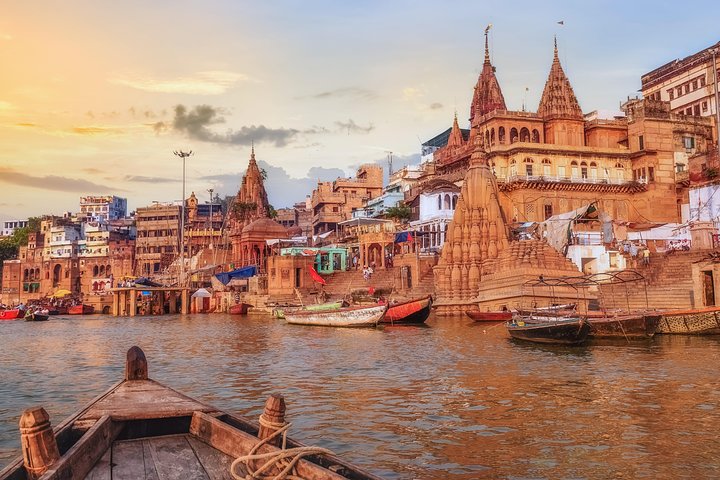
The oldest continuously inhabited city on earth. Hindu pilgrims come from every direction to bathe in the Ganges, to hear the chant, and to be present at what they believe is the mouth of the river that flows to the underworld.
Read the Varanasi Guide →Bodh Gaya
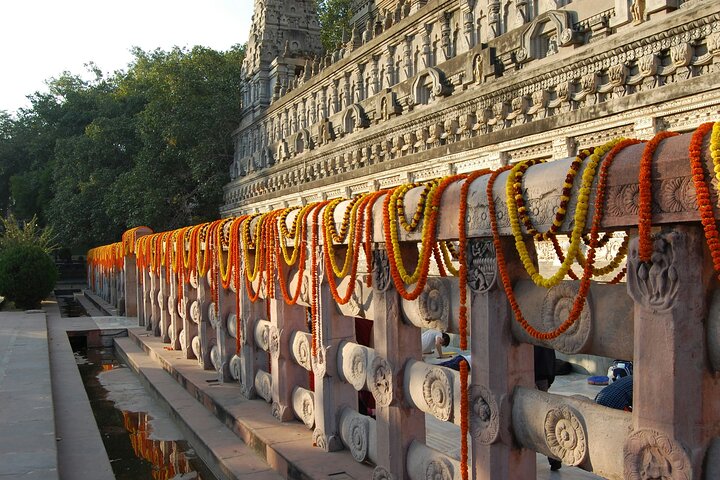
The most important Buddhist pilgrimage site on earth. The Mahabodhi Temple stands where Siddhartha sat under a tree and became the Buddha, and every Buddhist tradition, from Theravada to Mahayana to Tibetan Buddhism, has made the journey here.
Read the Bodh Gaya Guide →Is Golden Temple Right for You?
Sacred sites require preparation — appropriate dress, respectful behavior, and often early mornings. If you are willing to do the homework, these are some of the most meaningful travel experiences available.