Sarnath Day Trip from Varanasi: Buddha's First Sermon and What to See
I Didn't Expect Sarnath to Feel Like This
I arrived in Varanasi on a Tuesday evening in December 2023, the fog thick enough that the ghats disappeared by 4 PM. The next morning, I took a private day trip to Sarnath from Varanasi and it was the right call. The drive is 10 kilometres, about 30 minutes in light traffic, but the fog that week meant closer to 45. My driver, a man named Raj who had been doing this route for 14 years, pointed out the turnoff for the deer park where the Buddha gave his first sermon after enlightenment — the Dhammacakkappavattana Sutta, around 528 BCE.
Sarnath is quiet compared to the ghats. The main road is lined with monasteries built by Buddhist nations — Thailand, Myanmar, Tibet, Japan — each with its own architectural signature. I walked past the Thai temple first, its gold spire catching the weak winter sun. The air smelled of incense and damp stone. I am not a Buddhist, but I have studied the Pali texts long enough to know that this place matters.
The Dhamek Stupa rises 43 metres from the flat ground. It dates to about 500 CE, built on the site where the Buddha is said to have preached. I stood at its base and ran my hand along the stone. The carvings — geometric patterns, birds, flowers — are worn but legible. A group of monks from Ladakh was circumambulating clockwise, their maroon robes brushing the grass. I followed them for three circuits. Nobody spoke.
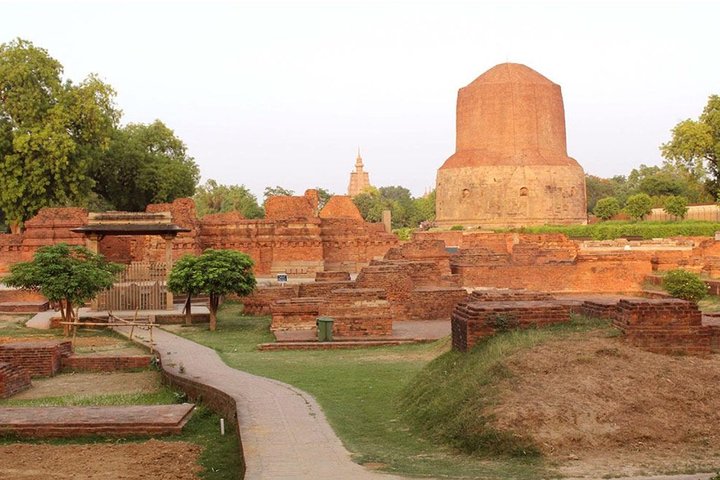
What surprised me was the scale. The stupa is massive, but the site itself is compact. You can see everything in two hours if you move quickly, three if you sit. I sat on a bench near the Ashoka Pillar — the 3rd century BCE sandstone column whose lion capital is India's national emblem. The original pillar is broken; the capital sits in the museum. But the stump remains, and I touched it. That mattered to me.
Who this is NOT for: If you are looking for a bustling pilgrimage experience like Bodh Gaya during Buddha Purnima, Sarnath will feel too quiet. Come here for stillness, not spectacle.
The Private Tour That Saved My Trip
I had planned to take a shared auto-rickshaw from Varanasi Junction, but the fog pushed me toward a private tour. I booked the private day trip to Sarnath from Varanasi through Viator and it saved me three hours. Raj picked me up at 7 AM from my guesthouse near Assi Ghat. He waited while I wandered the stupa grounds for two hours, then drove me to the Sarnath Museum (closed on Fridays — I had checked). The museum holds the Ashoka Pillar capital and dozens of Buddha statues from the Gupta period. I spent 45 minutes there, which was enough.
The tour included a stop at the Mulagandha Kuti Vihara, a temple built by the Maha Bodhi Society in 1931. Inside, a mural by the Japanese artist Kosetsu Nosu depicts scenes from the Buddha's life. The paint is fading, but the sequence is clear: birth, renunciation, enlightenment, first sermon, death. I sat on the cool marble floor for ten minutes. A Sri Lankan pilgrim next to me was whispering the Metta Sutta.
The price was reasonable — about what you'd pay for a decent meal in Varanasi — and the flexibility meant I could leave when I was ready, not when a group tour dictated.
The Moments That Made Sarnath in Winter
Winter in Varanasi means fog until 9 AM and temperatures that hover around 10°C at dawn. I wore a woollen shawl over a long-sleeved kurta and was glad for it. The stupa grounds were empty at 8:30 AM — maybe 15 people total. I sat on the grass near the Dhamek Stupa and watched a peacock walk across the lawn. It stopped three metres from me, shook its tail, and moved on.
The real moment came when I walked to the Chaukhandi Stupa, a smaller structure about 500 metres south. This is where the Buddha met his first five disciples after enlightenment. It is less visited — I was the only person there. The stupa is a brick mound with an octagonal Mughal tower on top, built by Akbar's governor in the 16th century. The layers of history sit on top of each other: Buddhist, Mughal, colonial. I sat on a stone step and wrote in my notebook. The only sound was a crow on the tower.
Another detail that stayed with me: the deer park itself. The Sarnath Deer Park is a small enclosure next to the main temple complex. I saw four deer, two of them fawns. They are descendants of the deer that gave the park its name — the Buddha chose this spot because it was a royal deer sanctuary. I watched them for ten minutes. They ignored me completely.
Who this is NOT for: If you need constant activity or guided commentary, Sarnath will feel slow. This is a place for sitting with your thoughts, not filling a checklist.
The Sarnath Museum — A Worth Discovering
The Sarnath Museum is small — five galleries — but it holds the Ashoka Pillar capital, the four-lion emblem that appears on every Indian rupee note. I stood in front of it for a long time. The sandstone is polished to a dark sheen, the lions seated back-to-back with their mouths open. The museum also has a collection of Buddha statues from the 3rd to the 12th centuries. My favourite was a seated Buddha from the Gupta period (5th century CE) with a serene expression and a missing hand. The label said the hand was in a museum in London. I did not write that down.
The museum charges 15 rupees for Indians and 200 for foreigners (as of 2024). No photography inside the main gallery. I had to leave my phone in a locker. That was fine — it forced me to look properly.
What Really Surprised Me About Sarnath
I expected a quiet archaeological site. What I did not expect was the living Buddhist community. Sarnath has monasteries from at least 20 countries, and many house monks who study at the Central Institute of Higher Tibetan Studies. I walked into the Tibetan monastery around 11 AM and heard chanting from the prayer hall. A young monk in training — maybe 12 years old — was sweeping the courtyard. He smiled at me and said "Namaste" without stopping his broom.
Another surprise: the food. I ate lunch at a small restaurant called "Buddha's Delight" near the main road. The thali cost 150 rupees and included dal, rice, two vegetables, roti, and a small bowl of kheer. The owner, a man from Sikkim, told me he had been running the place for 22 years. He offered me chai after the meal and refused payment.
The most surprising thing was the silence. Varanasi is loud — horns, bells, chanting, boat engines. Sarnath, 10 kilometres away, is a different world. I heard birds, wind, and the occasional chant drifting from a monastery. I sat on the stupa lawn for 40 minutes and did not hear a single car horn.
Who this is NOT for: If you want a full-day excursion with multiple stops, Sarnath alone might feel too short. Combine it with a morning boat trip on the Ganges for a balanced day.
Nadia Osman's Insider Tips for Getting It Right
I have done this trip eight times over the years, in different seasons and with different companions. Here is what I have learned.
Go early. The site opens at 6 AM in summer and 7 AM in winter. I arrived at 8 AM in December and had the Dhamek Stupa almost to myself. By 10 AM, tour buses arrive. By noon, the queues for the museum are 20 minutes long.
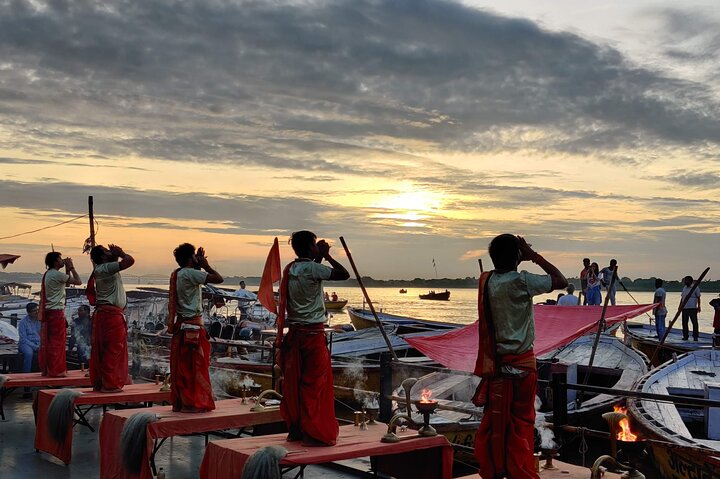
Combine with a Varanasi morning boat trip. I booked a sunrise boat trip on the Ganges at 6 AM, then headed to Sarnath by 9 AM. The boat trip takes about an hour, with views of the ghats as the sun rises. From the boat, I saw the Manikarnika Ghat cremation grounds from the water — the only respectful way to view them. The driver picked me up at the boat landing at 9:15 AM. We were at Sarnath by 9:45.
Bring a scarf. The Mulagandha Kuti Vihara and some monasteries require covered shoulders and knees. I used my shawl for both warmth and modesty.
Skip the audio guide. The Sarnath Museum offers audio guides for 100 rupees, but the labels are clear enough. Instead, read the Archaeological Survey of India page on Sarnath before you go. It explains the stratigraphy of the stupa — the brick core from the Mauryan period, the stone cladding from the Gupta period — better than any audio guide I have heard.
Check the museum hours. The Sarnath Museum is closed on Fridays. I learned this the hard way on my second visit. It is also closed on national holidays. Call ahead or check the official museum website.
Who this is NOT for: If you are on a tight budget, you can do Sarnath for under 500 rupees including transport and food. The private tour is a splurge but saves time and hassle.
What I Wish I'd Known Before I Went
I wish I had known that the Sarnath site is smaller than it looks in photos. The Dhamek Stupa dominates, but the entire complex — including the museum, deer park, and monasteries — is walkable in under two hours. I had planned for half a day. I was done by noon. That was fine because I could go back to Varanasi for the afternoon, but if I had come from further away, I would have felt rushed.
I wish I had known that the best time to visit is between November and February. Summer temperatures in Sarnath exceed 40°C. The stupa grounds offer no shade. I visited once in May 2019 and lasted 30 minutes before retreating to the museum's air conditioning.
I wish I had known that the Ashoka Pillar capital is in the museum, not at the stupa site. I spent 15 minutes walking around the pillar stump looking for the lions before a guard pointed me toward the museum entrance. The capital is 2.2 metres tall and sits in a glass case in Gallery 1. You cannot touch it, but you can get close enough to see the polish.
I wish I had known to bring cash. The museum entry fee is cash only. The restaurant near the main road also preferred cash. There is an ATM at the Sarnath bus stand, but it was out of service on my last two visits.
I wish I had known that the best view of the Dhamek Stupa is from the eastern side, just after sunrise. The light hits the stone at an angle that brings out the carvings. I took a photo there that I still use as my phone wallpaper.
And I wish I had known that the deer park is not a tourist attraction — it is a small enclosure with a handful of deer. Do not expect a safari. But if you sit quietly for ten minutes, the deer will come closer. One of them, a young buck, walked within two metres of me and stared. I stared back. Then it turned and walked away.
Explore More
Related comparisons and guides:
Frequently Asked Questions
How far is Sarnath from Varanasi?
Sarnath is 10 kilometres from Varanasi city centre, about 30-40 minutes by car or auto-rickshaw. In winter fog, allow 45 minutes.
Can I visit Sarnath in half a day from Varanasi?
Yes. The site is compact — you can see the Dhamek Stupa, museum, and monasteries in 2-3 hours. Combine with a morning boat trip for a full morning excursion.
What is the significance of Sarnath in Buddhism?
Sarnath is where the Buddha delivered his first sermon, the Dhammacakkappavattana Sutta, after attaining enlightenment in Bodh Gaya around 528 BCE. The Dhamek Stupa marks the site of that sermon.
Is the Sarnath Museum worth visiting?
Yes, especially for the Ashoka Pillar capital — the four-lion emblem that is India's national symbol. The museum has five galleries with Buddha statues from the 3rd to 12th centuries. Closed on Fridays.
What is the best time of year to visit Sarnath?
November to February. Winter temperatures are 10-20°C, comfortable for walking. Summer (May-June) exceeds 42°C with no shade at the stupa. Monsoon (July-September) brings rain and humidity.
What should I wear to Sarnath?
Covered shoulders and knees are required inside the Mulagandha Kuti Vihara and most monasteries. Bring a scarf or shawl. Comfortable walking shoes are recommended — the grounds are uneven.