Santiago de Compostela Day Trip from Porto: Is One Day Enough for a Pilgrimage?
We earn a commission when you book through our links on Viator (PID P00299531), at no extra cost to you. This is how we keep the site free. Learn more →
From Porto, Santiago de Compostela is close enough for a day trip, and that closeness raises a question I care about as a pilgrimage writer: can one day in the city count as a pilgrimage? My answer depends on what you are travelling toward. If the cathedral and its square are the goal, a day trip can serve you well. If the arrival itself is the goal, a coach cannot give you the one thing that matters, which is the road.
What shapes a visit to Santiago de Compostela
A Santiago de Compostela day trip from Porto gives you the cathedral, the Praza do Obradoiro and a few unhurried hours among granite arcades. It does not give you the arrival that walking pilgrims carry into that square.
I learned the difference in the summer of 2023. We arrived at midday and the square was full of people lying flat on the granite with their boots off, packs beside them, faces up to the sun. I had ridden a coach; they had walked for weeks. Standing among them with clean shoes and a day bag, I felt like a guest who had turned up for the last hour of someone else's long celebration.
That feeling was not shame, and I would not want any reader to carry it as shame. A year earlier, in spring 2022, I had walked the Camino Portugués from Tui toward Santiago, so I knew what those bodies on the stones had been through. The coach visit showed me the building clearly. The walk had shown me the pilgrimage.
Readers drawn to the walking version will find the alternative in my guide to a short walk on the Camino Portugués.
Day Trip from Porto to Santiago de Compostela and Valença: what the itinerary covers
This tour runs from Porto to Santiago de Compostela and adds a return stop at Valença's Vauban-style fortress near the border. For a traveller in the position I was in that summer, based in Porto with limited days and a clear wish to stand before the cathedral, this format turns an impossible side trip into a workable one.
Choose this one if Santiago is the centre of your day and you want the second stop to stay modest. Travellers who want the Portuguese coast on the same trip will find the Viana do Castelo tour below a closer match.
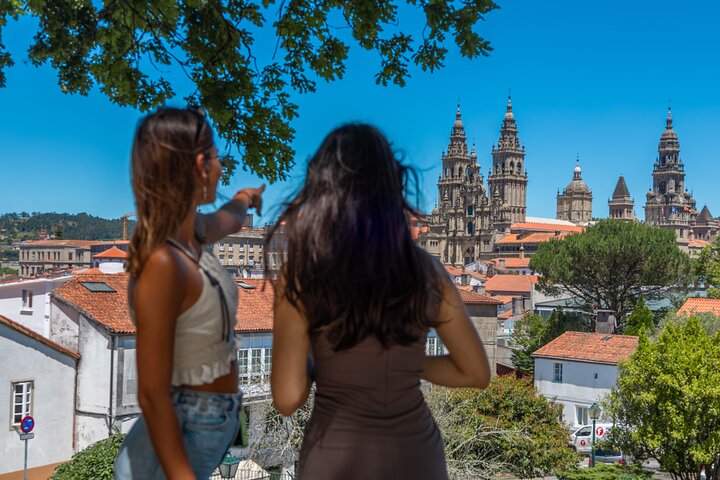
Day Trip from Porto to Santiago de Compostela and Valença
From $91.89 · Price checked: Jul 2026
Best for: Travellers in Porto who want Santiago in a day plus a short heritage stop near the border on the way back.
Not for: Walkers wanting a Camino stage, or visitors hoping for a coastal town rather than a fortress stop.
A ten hour day from Porto to Santiago de Compostela, one of Europe's key pilgrim cities, with a return stop at Valença's Vauban-style fortress instead of the Viana do Castelo pairing.
Check availabilityExternal booking on Viator · pricing and cancellations handled by Viator
Planning day trip pilgrimage review in Santiago de Compostela
I would book this trip for the building and the square, and expect nothing it cannot supply.
My clearest memory of the cathedral interior comes from autumn 2023, when I travelled between Fátima and Santiago. In Fátima I stood on a vast pale plaza with nothing between me and the sky. Three days later, in Santiago, rain ran off granite eaves into narrow arcaded streets and the botafumeiro's smoke hung under stone vaulting. Those two pilgrimages brought contrasting weather into my body, and they taught me that each place asks for a different amount of time.
Fátima works as a single-day devotional destination, while Santiago is a walkable city with a cathedral at its heart. My advice follows from that: give Santiago an overnight and Fátima a day trip. The Sanctuary of Fátima publishes its pilgrim itinerary and celebration schedule on its official website. I set the two side by side in Santiago vs Fátima, and my guide to a Fátima pilgrimage from Porto treats the shrine as its own outing.
If you only have one day and your heart is set on Santiago, a day trip still delivers the cathedral. Pass on it if you already know you will resent leaving before evening, because an overnight solves that problem and a tour cannot.
Santiago de Compostela & Viana do Castelo from Porto: who this tour suits
This tour pairs Santiago de Compostela's cathedral with Viana do Castelo, a Portuguese town of maritime heritage, palaces and churches. It visits the pilgrim goal without walking the Camino, and its description says so plainly, which I respect.
Skip this format if your interest is purely devotional and a coastal town would feel like a detour from your reason for travelling. Book it instead of the Valença tour when a companion wants churches and seafront streets as much as you want the cathedral.
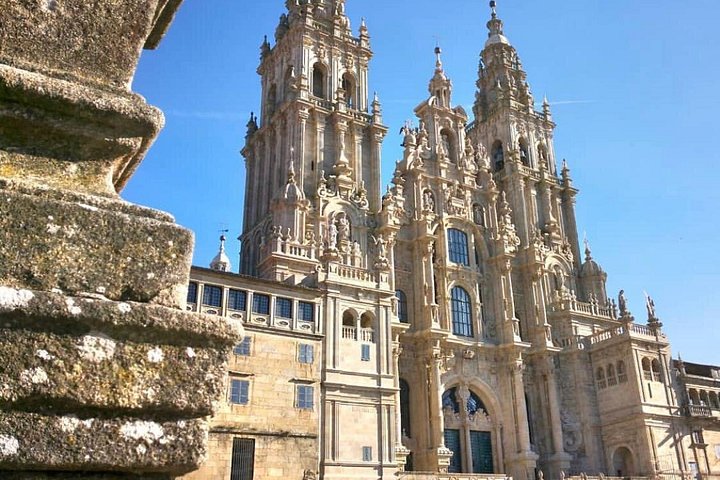
Santiago de Compostela & Viana do Castelo from Porto
From $121.74 · Price checked: Sep 2026
Best for: Travellers in Porto who want to see Santiago's cathedral in a day and enjoy a coastal Portuguese town on the same trip.
Not for: Pilgrims hoping to walk any Camino stage, or to spend long unhurried time in Santiago itself.
A nine hour day from Porto to Santiago de Compostela's 11th century cathedral, then Viana do Castelo's maritime heritage, palaces and churches. It visits the pilgrim goal without walking the Camino.
Check availabilityExternal booking on Viator · pricing and cancellations handled by Viator
What Surprised Me About Santiago de Compostela
What surprised me most about Santiago de Compostela is how much of the city's meaning lives in the bodies of the people arriving. A day visitor sees the finish without the cost. I understood the square that summer afternoon only because I had once paid a small part of that cost myself on the road into Galicia.
On the Camino Portugués from Tui in spring 2022, the landscape did the teaching. The eucalyptus woods smelled sharp after rain and the yellow arrows appeared on kerbs, walls, and the backs of road signs. My shoulders ached in a way that became normal by the third morning. Stone markers along the way counted the distance down and made the cathedral feel real to me long before I saw it.
Another memory, which I keep as a composite field note from a first short stretch of the Camino in Galicia, taught me humility. The morning mist left the eucalyptus smelling sharp and the granite path slick under new boots I had never broken in. By midday a hot spot was rising on my heel with every downhill step, while a stranger's walking poles tapped past me again and again. What I remember from the albergue that evening is the rush of cold water into the basin where I soaked my feet.
Those walks changed how I read the people lying on the Obradoiro stones. If you add any walking to your trip, wear footwear you have already trained in, plan shorter stages than you think you can manage, and let your body set the pace instead of a distance goal.
Planning the visit well
Getting a Santiago day trip right means matching the tour to your purpose, understanding what the Pilgrim Reception Office does, and entering the cathedral as a place of worship first.
Start with the certificate question, since it shapes your expectations. The Pilgrim Reception Office explains its role on its official site. The Pilgrim Reception Office applies the Cathedral's final stamp to pilgrim credentials and issues the Compostela to pilgrims who qualify. If you walked a stretch earlier in your trip and carry a credencial, bring it with the stamps from each stage, because the office checks carefully.
Next, pick the second stop on purpose. Valença offers a fortress, and Viana do Castelo offers a maritime town with palaces and churches. Check the current itinerary, pickup and inclusions on each product card before booking, since operators set those details and they can change.
Inside the cathedral, move slowly and quietly, and keep your camera down whenever a service or private prayer is under way. I cannot speak for what the cathedral's clergy or congregation ask of visitors on a given day, so follow posted notices and staff instructions over anything you have read beforehand. If you decide to stay overnight in the warm months, book accommodation ahead, as the final stages of the Camino fill up.
Before you visit
Before that summer coach day, I wish I had known something simple: a Santiago day trip from Porto gives you the cathedral and the square, not the pilgrimage. Go if the building is your goal, and stay overnight if the arrival is.
Confirm first whether your tour pairs Santiago with Valença or with Viana do Castelo, because the two tours build different second halves around the same cathedral. Watch for three planning mistakes: assuming the day will include a Compostela, judging a tour by its secondary stop alone when Santiago is the reason to go, and, if you add a walk, trusting new boots on wet granite.
A pilgrim who wants to arrive on foot has no reason to book either tour. For everyone else, including travellers who hold their faith lightly and those who hold it with great seriousness, a day in Santiago can be a meaningful visit to a pilgrim city, as long as you are clear with yourself about what kind of visit it is.
Explore More
Related comparisons and guides:
Frequently Asked Questions
Can I receive a Compostela on a day trip from Porto?
The Compostela goes to pilgrims who qualify, and both tours are sightseeing days, not pilgrimage routes. Read the Pilgrim Reception Office's official guidance before assuming any coach visit counts.
Should I pick the Valença tour or the Viana do Castelo tour?
Valença suits travellers who enjoy fortifications and a quieter border stop. Viana do Castelo suits those who want coastal streets, palaces and churches after the cathedral.
Is one day enough to see Santiago de Compostela?
One day covers the cathedral and the Praza do Obradoiro, but it leaves little time to wander the arcaded old town. An overnight lets you see the city after the tour groups have left.
Can I combine Santiago and Fátima from Porto?
You can, and I would plan them as separate outings with a night in Santiago. Checking the Sanctuary of Fátima's celebration schedule first helps you avoid clashing dates.
Do I need a pilgrim credential for a Santiago day trip?
A credencial matters only if you have walked stages and want the Pilgrim Reception Office to review your stamps. For a sightseeing day, it plays no part in the tour itself.
Written from Jerusalem and Cairo.