Jerusalem Pilgrimage Tours: What's Worth It and What to Skip in 2026
We earn a commission when you book through our links on Viator (PID P00299531), at no extra cost to you. This is how we keep the site free. Learn more →
This guide weighs four day tours that start in Jerusalem or reach it from Tel Aviv. I wrote it for pilgrims and religious travellers who want their days to hold both prayer and sightseeing.
What shapes a visit to Jerusalem
Shabbat and Friday prayers reshape what is open and what runs, and the Old City carries several faith calendars in the same lanes.
I learned this at Jaffa Gate in the winter of 2024. By early afternoon on Friday the traffic thinned strangely, shutters came down street by street, and the light went gold and quiet. I stood at the gate watching a city put itself away. My planned dinner and my planned transport had both evaporated while I was inside a church.
Nothing about that evening was hostile or chaotic. The city was keeping its own calendar, and I had not planned for it.
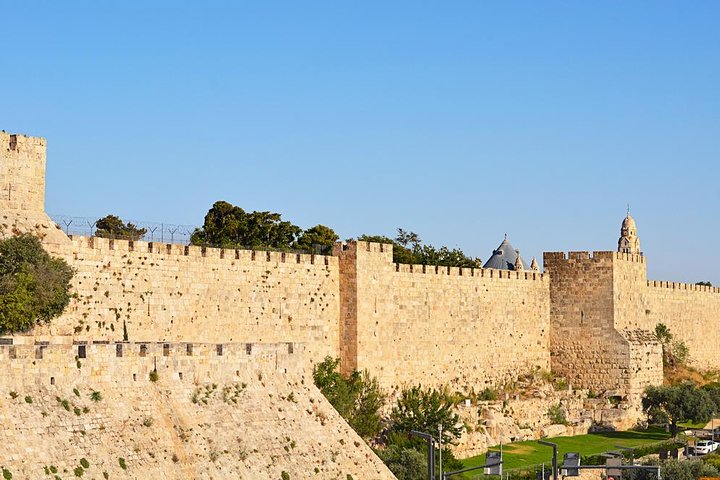
UNESCO lists the Old City of Jerusalem and its Walls as a World Heritage property. The UNESCO World Heritage Centre record sets out the listing in full, and I would read it before you arrive.
Keep Friday afternoon and Saturday clear of any tour whose return transport you have not confirmed in writing.
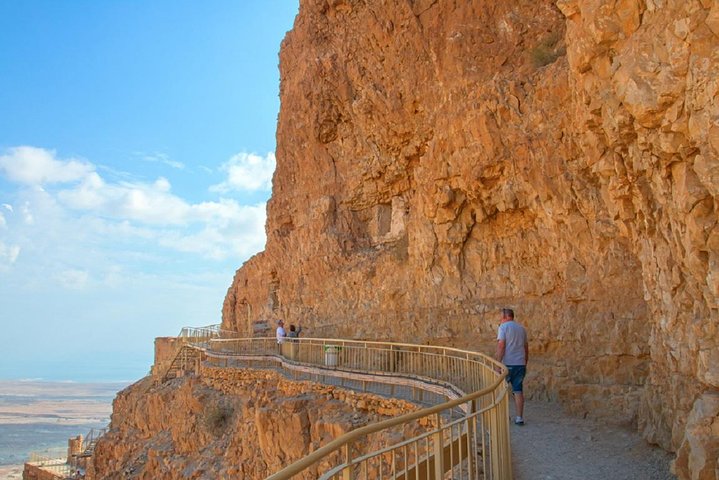
Masada and the Dead Sea Day Trip from Jerusalem: what the itinerary covers
The Masada and Dead Sea day trip leaves the Old City for Masada's ruins, Herod's palaces and the Dead Sea, and the route passes the Good Samaritan setting along the road.
The listing names Qumran and the Jordan River baptism site as substitutions, not fixed stops, so think of them as possible extras you may not get.
Masada is a national park, and the Israel Nature and Parks Authority posts current opening, access and trail notices there.
Pass on this one if you want a devotional day built around scripture sites.
Planning pilgrimage tours in Jerusalem
The tours worth paying for take you where the Old City cannot: Masada at first light, the Galilee of the Gospel accounts, or Bethlehem.
Some of the moments that stay with me happened outside any tour. In the spring of 2025, Passover and Holy Week overlapped, and I walked the Old City while both festivals filled it. The lanes were so dense that I moved at the pace of the crowd, not my own. Palm fronds brushed my face from one direction and the smell of roasting nuts came from another. Crossing from the Jewish Quarter to the Christian Quarter took me far longer than the map suggested.
Book accommodation inside or immediately beside the Old City, and abandon any minute-by-minute schedule.
For Christian pilgrims based in Jerusalem, the Nazareth and Sea of Galilee day trip covers places tied to New Testament accounts and Jesus' miracles. The Ministry of Tourism's Visit Israel page on Nazareth covers the Basilica of the Annunciation and the wider Lower Galilee, and it makes a sensible primer. Book the Galilee trip instead when you can manage long hours on the road and have no nights to spare up north.
Dead Sea, Masada at Sunrise and Ein Gedi Tour from Jerusalem: who this tour suits
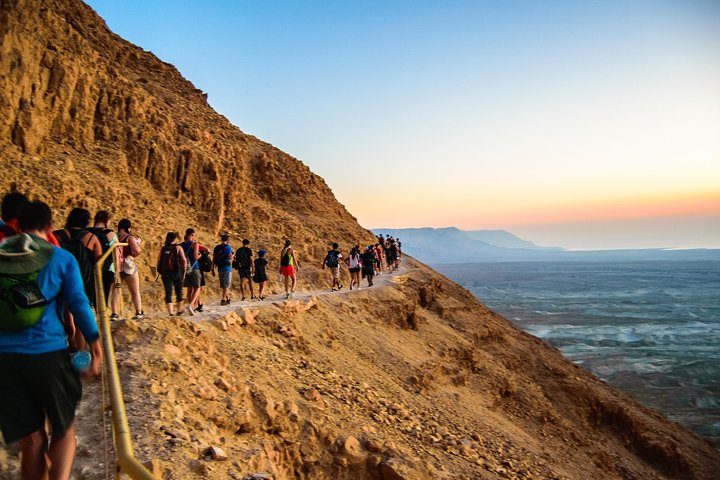
This listing suits a particular traveller: an early riser with a single free day who wants Masada at sunrise, the Ein Gedi oasis and a Dead Sea float in the same trip.
The Dead Sea beach entrance fee is covered, but Masada and Ein Gedi entrance fees and meals are not, so budget for those separately.
It is not for anyone who copes badly with pre-dawn starts, or for pilgrims who want scripture along the way.
What Surprised Me About Jerusalem
Security, not modesty, was the part that slowed me down. Screening is routine at major sites, and a bulky bag costs more time at a checkpoint than a scarf costs at a dress-code check.
On a summer morning in 2022, I emptied my bag into a plastic tray while the metal detector beeped at someone's belt ahead of me. My linen scarf, folded in my daypack since Alexandria, went over my shoulders before I stepped onto the plaza. The stone underfoot was already too hot to stand on barefoot.
For the prayer plaza, follow the Western Wall Heritage Foundation's conduct and dress guidance.
The Temple Mount (Haram al-Sharif) needs its own planning. Non-Muslim access is restricted to specific hours and the queues can be long, so I would not attempt it on a Friday or Saturday.
If your day has no slack in it, leave the Temple Mount for another morning.
Planning the visit well
Book limited-capacity experiences first. Check official schedules for sites that hold live worship. Read every tour listing for what it names and what it leaves out.
Public access to the Western Wall tunnels is limited, and tunnel tours can sell out in advance.
The Church of the Holy Sepulchre is a place of active liturgy. The Custody of the Holy Land publishes visitor and liturgy schedule guidance. Check it before you choose your hour, and be ready to give way to worship. For a first orientation inside the walls, my Old City walking tour guide shows how I would pace a first day, and the Jerusalem pilgrimage planning guide covers the week around it.
The Jerusalem and Bethlehem day tour from Tel Aviv is framed around the roots of several faiths. The listing names no specific stops, so ask for the site list before booking. The UNESCO record for the Church of the Nativity and the Bethlehem pilgrimage route gives you a reference point to measure an operator's reply against. My comparison of Jerusalem and Bethlehem day tours goes further.
Choose it only if Tel Aviv is your base and you have a single day for both cities.
Before you visit
I wish I had matched the city to my constraints sooner.
In the autumn of 2024, I reported from another great pilgrimage city. I walked between basilicas on flat pavement in ordinary shoes and ducked into cafés when it rained. There was no checkpoint, no climb and no ferry. The scale was overwhelming but the logistics were the easiest of any pilgrimage city I have reported from, which felt almost like cheating.
That trip changed how I think about Jerusalem.
I would mark Shabbat on the calendar before I booked a single tour. I would keep my bag as small as possible, because the checkpoint, not the dress code, is where the minutes go.
If step-free routes and short distances are firm requirements for you, Jerusalem is a harder first pilgrimage, and an easier city may serve you better.
Masada and the Dead Sea Day Trip from Jerusalem
From $111 · Price checked: Aug 2026
Best for: Travellers wanting desert history and a Dead Sea visit, with some biblical context along the road, in a single day from Jerusalem.
Not for: Visitors keen on Ein Gedi, which is not listed, or those needing a firm itinerary given the stated substitutions.
A nine hour day from Jerusalem to Masada's ruins, Herod's palaces and the Dead Sea, passing the Good Samaritan setting. Qumran and the Jordan River baptism site are listed as substitutions.
Check availabilityExternal booking on Viator · pricing and cancellations handled by Viator
Dead Sea, Masada at Sunrise and Ein Gedi Tour from Jerusalem
From $109 · Price checked: Sep 2026
Best for: Early risers with one free day in Jerusalem who want the Masada sunrise, Ein Gedi and a Dead Sea float in a single trip.
Not for: Travellers who would rather not leave before dawn, or who expect Masada and Ein Gedi entrance fees and meals to be included.
A pre-dawn start from Jerusalem for sunrise on Masada, then time at the Ein Gedi oasis and a float at the Dead Sea. The Dead Sea beach entrance fee is included; Masada and Ein Gedi entrance fees and meals are not.
Check availabilityExternal booking on Viator · pricing and cancellations handled by Viator
Nazareth and the Sea of Galilee Day Trip from Jerusalem
From $100 · Price checked: Aug 2026
Best for: Jerusalem-based Christian pilgrims and curious visitors who want Galilee sites in one day and can manage long hours in a vehicle.
Not for: Older travellers or families who tire on long drives, as the twelve hour day includes the journey north and back.
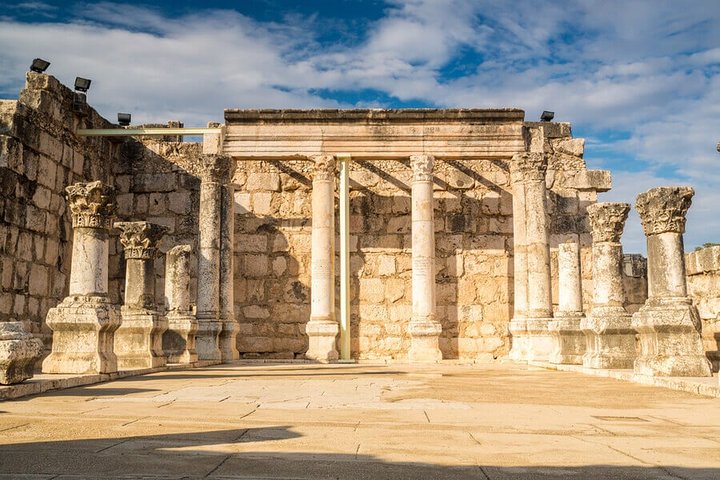
A twelve hour day from Jerusalem to Nazareth and the Sea of Galilee, places tied to New Testament accounts and Jesus' miracles, for those without time to stay in the north.
Check availabilityExternal booking on Viator · pricing and cancellations handled by Viator
Day Tour to Jerusalem and Bethlehem from Tel Aviv
From $121 · Price checked: Aug 2026
Best for: Travellers based in Tel Aviv with one day for both cities, including mixed-faith families wanting a broad introduction to the Holy Land.
Not for: Pilgrims who need confirmed church or holy site entries in advance, or those who dislike long transfer days.
A ten hour day from Tel Aviv to Jerusalem and Bethlehem framed around the roots of several faiths. The listing names no specific stops, so check the site list before booking.
Check availabilityExternal booking on Viator · pricing and cancellations handled by Viator
Explore More
Related comparisons and guides:
Frequently Asked Questions
Which of these day tours suits a pilgrim who wants New Testament sites?
The Nazareth and Sea of Galilee trip is the one on this page built around New Testament places. Both Masada tours focus on desert history and the Dead Sea.
Do I need to book Western Wall tunnel tours ahead?
Yes, if the tunnels are a priority, because public access is limited. Treat the tunnel booking as the fixed point and arrange your other days around it.
What should I pack for dress codes at Jerusalem's holy sites?
Layers you can add in seconds work better than a single outfit chosen for the strictest site. A folded scarf takes almost no space in a small daypack.
Is the Jerusalem and Bethlehem tour worth it if I am staying in Jerusalem?
It is built around a Tel Aviv departure, so a pilgrim based in Jerusalem gains little from it. A Bethlehem option that starts in Jerusalem fits that base better.
Is festival season a good time for a first pilgrimage to Jerusalem?
Festival season gives you the strongest atmosphere and the hardest logistics together. First-time visitors who find dense crowds draining may take in more during a quieter week.
Written from Jerusalem and Cairo.