Planning a Jerusalem Pilgrimage: What to Know Before You Go (2026)
We earn a commission when you book through our links on Viator (PID P00299531), at no extra cost to you. This is how we keep the site free. Learn more →
What shapes a visit to Jerusalem
Jerusalem rewards a smaller plan than first-time pilgrims expect. Sacred places from different faiths sit close together in the Old City, but queues and crossings claim time that no map shows. Pick a few sites that matter to you, give them room, and let anything you skip wait for another visit.
I learned this on a composite day I have stitched together from field notes: one attempt to carry the Old City of Jerusalem and Manger Square in a single sweep. By afternoon my shirt clung to my back, and the crossing queue smelled of diesel and warm bread from a cart nearby. I remember rosaries clinking in a shop doorway more clearly than I remember the grotto, because I reached it with my eyes on my watch. The stone lanes deserved slow feet, and I had walked them like corridors.
That day taught me something I could fit on a ticket stub. A pilgrimage is not a scavenger hunt, and a place you cannot see properly today is not lost to you.
UNESCO lists the Old City of Jerusalem and its Walls as a World Heritage property. The UNESCO World Heritage Centre record makes a sober primer before you arrive. If you want the lanes themselves mapped out stop by stop, my Old City walking tour guide goes deeper than I can here.
Jerusalem Full-Day Tour from Jerusalem: what the itinerary covers
I have not written up a day on this particular tour, so read the heading as a planning verdict and not a memory. What would have rescued my summer 2021 attempt was a start inside the city. That morning I rode Route One from Tel Aviv. The coach left the coast in flat morning haze and began the long climb through the pine hills, air conditioning rattling, everyone silent. By the time the first Jerusalem stone walls appeared I had already been sitting for ninety minutes, and the day's walking had not begun.
If the Old City is your priority, sleep in Jerusalem and start from a Jerusalem pickup point. The Good of Jerusalem Full-Day Tour from Jerusalem is built around that idea. It covers the Old City's quarters, the Western Wall, the Via Dolorosa and the Holy Sepulchre on foot, then carries on into the modern city, Nahlaot and Mahane Yehuda Market.
Skip this format if your knees, your tolerance for heat or your temperament asks for slow feet. After my composite day, I would never pair it with a crossing on the same date.
Planning pilgrimage planning in Jerusalem
In Jerusalem the hour matters more than the itinerary. Book anything that includes the Holy Sepulchre for early morning, and treat midday church visits as optional. The Custody of the Holy Land publishes visitor and liturgy schedule guidance for the church, so check it before you fix a time.
In autumn 2023 I gave one morning in the Christian Quarter to three churches before the crowds woke. I reached the Holy Sepulchre before seven, when the limestone still held the night's cold and the loudest sound was a censer chain ticking against itself. By ten the same courtyard was a wall of raised phones. I slipped out through the rooftop monastery, where someone was sweeping dust into the light.
Those quiet hours are why I would protect a morning above almost anything else on a Jerusalem plan.
Your dates matter too. Religious observances can change access and crowd patterns in the Old City, so confirm official visitor notices before travel. If your trip falls near Holy Week or Passover, read my Jerusalem Passover and Easter guide before you book a single thing.
Jerusalem: Dual Narrative Tour: who this tour suits
The Dual Narrative Tour puts a Jewish Israeli guide and a Palestinian guide side by side through the Old City's main sites. It is a discussion-led walk, and in my judgement that is its strength.
For mixed-faith families, students of the region and thoughtful first-timers, this is the tour I would put near the top of a short list. Choose a pure sightseeing walk instead if you want facts and photographs without debate.
What Surprised Me About Jerusalem
What surprised me was how close the places are and how separate they remain. Manger Square is a short ride away, yet it sits across an administrative line. Carry your passport, expect a crossing in at least one direction, and choose a tour that states clearly which vehicle takes you through.
I made that ride in winter 2022. The bus idled at the crossing long enough for the windows to fog, and I drew a line through the condensation to watch the wall go past in grey panels. Not long after, I was drinking cardamom coffee in Manger Square while bells rang over the rooftops.
The contrast between that fogged window and those bells has stayed with me. When you read a tour description, look for the plain sentence about transport at the crossing. Vague wording there deserves a question before you pay.
Skip a same-day crossing if your Old City plans already fill the day. My composite field note shows what that does to a grotto visit: you arrive, but you are not there.
Planning the visit well
A few practical choices carry a Jerusalem visit: what you wear, which days you aim at which sites, and what you secure ahead of time.
Start with clothing. The Western Wall Heritage Foundation publishes conduct and dress guidance for the prayer plaza, and the dress code is enforced regardless of the weather. Leave shorts in your room even on a hot day.
Timing comes next. Do not try to visit the Temple Mount, known as Haram al-Sharif, on a Friday or Saturday. Non-Muslim access is restricted to specific hours, and the queue can be long. I have no official page to link for those hours, so confirm them locally close to your visit.
Then think about what sells out. Public access to the Western Wall tunnels is limited, and tunnel tours can sell out days ahead. A tour that includes skip-the-line tunnel access is worth securing early, and you should confirm that inclusion in writing when you book.
Finally, consider how much structure you want. The tailored Old City quarters walk listed below suits visitors who want a guide willing to adapt the route to their interests and pace. The provider offers little detail beyond a promise to tailor the route, so ask about specific sites when booking.
Before you visit
What to check before booking comes down to where the day starts, when the Holy Sepulchre falls in it, and whether a crossing is involved. I wish I had asked those questions sooner.
- Look at the pickup point first. A departure from the coast spends your freshest hours on the highway, and my Route One morning is the reminder.
- Read the order of stops. A tour that reaches the Holy Sepulchre at midday will show you a very different courtyard from the one I found at dawn.
- Find the transport sentence for any crossing. If the listing does not name the vehicle, write to the operator and ask.
- Recheck official notices in the week before you fly, not only when you book, because observances can shift what is open.
- Count your priorities, not your stops.
For a wider comparison of formats, my Jerusalem pilgrimage tours comparison lays out more options side by side.
Jerusalem does not need to be conquered in a week. It needs to be met, slowly, at the right hour, with your eyes off your watch.
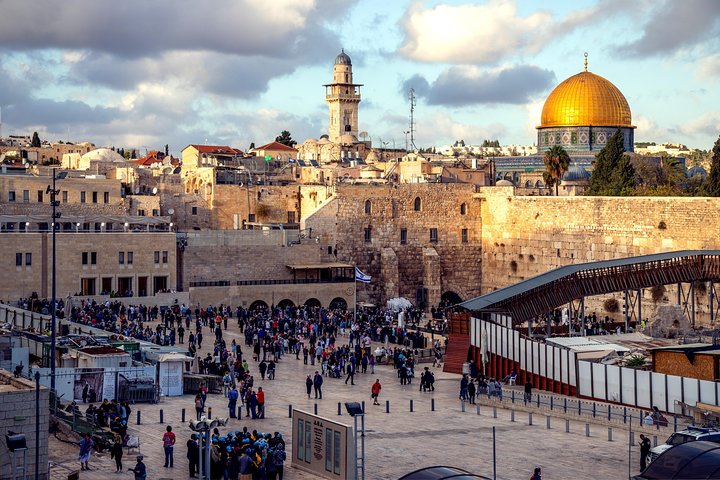
Best of Jerusalem Full-Day Tour from Jerusalem
From $69 · Price checked: Aug 2026
Best for: Energetic first-timers staying in Jerusalem who want sacred sites and everyday modern neighbourhoods together in one ten hour day.
Not for: Older travellers or anyone with limited stamina, since the route is walking-based and runs about ten hours.
A long day on foot covering the Old City's four quarters, the Western Wall, Via Dolorosa and Holy Sepulchre, then continuing into the modern city, Nahlaot and Mahane Yehuda Market.
Check availabilityExternal booking on Viator · pricing and cancellations handled by Viator
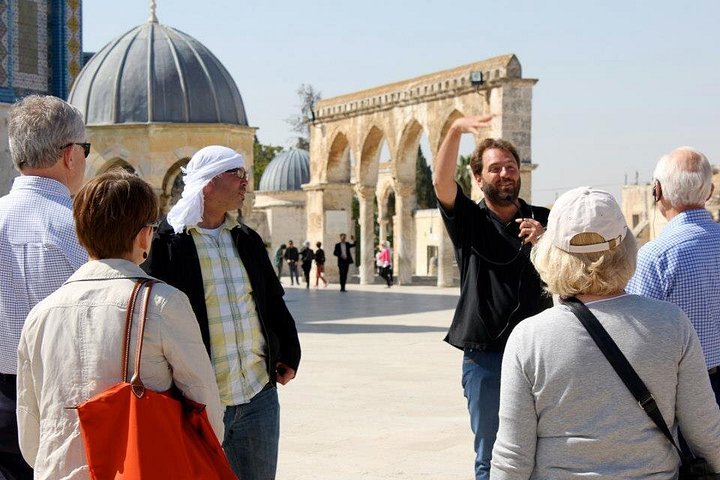
Jerusalem: Dual Narrative Tour
From $65 · Price checked: Aug 2026
Best for: Mixed-faith families, students of the region and thoughtful first-timers with a half day who want context on recent tensions alongside the Old City's famous sites.
Not for: Pilgrims seeking a devotional visit focused on one tradition, or anyone wanting a light walk without political discussion.
Two guides, one Jewish Israeli and one Palestinian, lead the Old City's main sites together, so religious and national ties are heard from more than one side. A discussion-led walk rather than a pure sightseeing loop.
Check availabilityExternal booking on Viator · pricing and cancellations handled by Viator
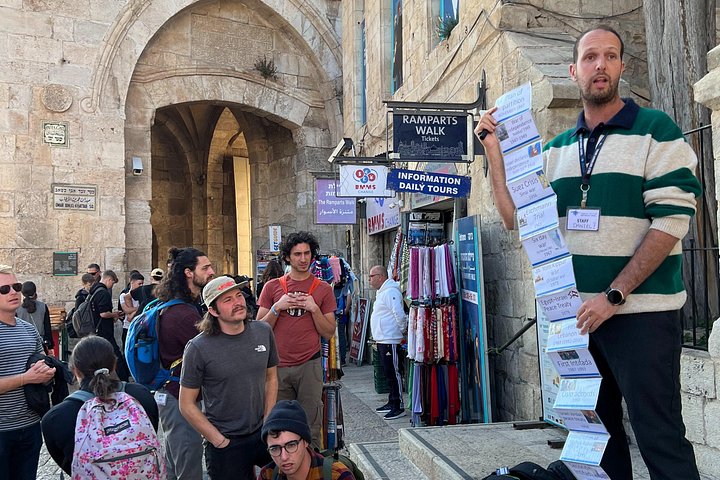
Best seller! Jerusalem old city four quarters tour
From $450 · Price checked: Jul 2026
Best for: Visitors who want a half day in Jerusalem's Old City with a guide willing to adapt the route to their interests and pace.
Not for: Travellers who need a confirmed site list or transport arrangements, as the listing details neither.
A five hour guided walk through the Old City's four quarters. The provider offers little detail beyond a promise to tailor the route, so ask about specific sites when booking.
Check availabilityExternal booking on Viator · pricing and cancellations handled by Viator
Explore More
Related comparisons and guides:
Frequently Asked Questions
Is Jerusalem's Old City a UNESCO World Heritage site?
Yes. The UNESCO World Heritage Centre keeps its record under the name "Old City of Jerusalem and its Walls," and reading it is a useful primer on why the property is protected.
What should I wear to the Western Wall?
Follow the current wording on the Western Wall Heritage Foundation's guidelines page.
Can non-Muslim visitors go up to the Temple Mount?
Non-Muslim access exists but is limited to set hours. Plan it for a weekday with a flexible slot, and you will have room to adjust if the window moves.
Which tour suits a mixed-faith family?
The Dual Narrative Tour is aimed at mixed-faith families and students of the region.
Do religious holidays affect a Jerusalem visit?
They can change which sites are open and how crowded the lanes feel. For the Holy Sepulchre, the Custody of the Holy Land's schedule guidance is the page to check against your dates.
Written from Jerusalem and Cairo.