Jerusalem During Passover and Easter: A Survival Guide for Pilgrims
We earn a commission when you book through our links on Viator (PID P00299531), at no extra cost to you. This is how we keep the site free. Learn more →
What shapes a visit to Jerusalem
During Passover and Easter, Jerusalem rewards the pilgrim who plans fewer sites and earlier hours. Religious observances can change access and crowd patterns in the Old City, so confirm official visitor notices before travel. My advice grows out of a day when I tried to hold too much, and out of the early hour I learned to trust.
One of my composite field notes covers a single combined day, from the Old City of Jerusalem to Manger Square in Bethlehem. By afternoon my shirt clung to my back, and the crossing queue smelled of diesel and warm bread from a cart nearby. I remember rosaries clinking in a shop doorway more clearly than I remember the grotto, because I reached it with my eyes on my watch. The stone lanes deserved slow feet, and I had walked them like corridors.
That day taught me to pick a few sites, leave room for queues and crossings, and let a skipped stop wait for another visit. UNESCO lists the Old City of Jerusalem and its Walls as a World Heritage property, according to the UNESCO World Heritage Centre, and the same body keeps a separate record for the Church of the Nativity and the Bethlehem pilgrimage route.
Give each city its own day and the grotto will get the attention it deserves.
Jerusalem and Bethlehem day tour: what the itinerary covers
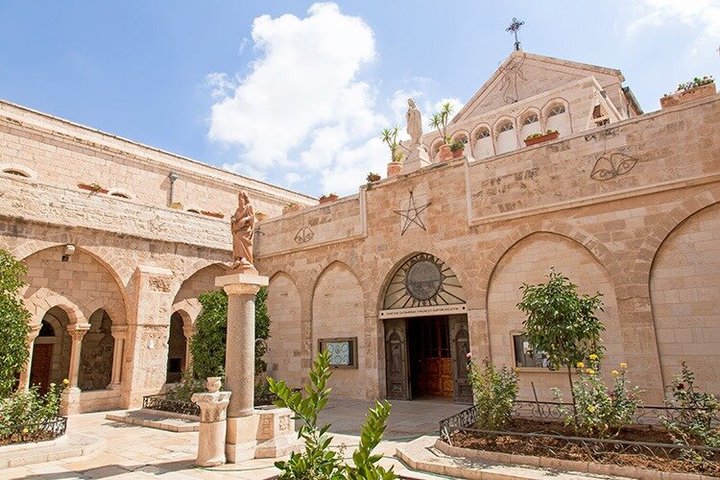
Looking back at that field note, a guided day like this one is the fix I would hand my earlier self. It pairs the Via Dolorosa and the Holy Sepulchre in Jerusalem with Bethlehem's birthplace sites and Shepherds' Field, and it keeps the focus on Christian landmarks in both cities. The guide holds the plan, so your eyes can stay off your watch.
The crossing needs planning too. On the road between Jerusalem and Bethlehem, in the winter of 2022, I sat through a delay that has stayed with me. The bus idled at the crossing long enough for the windows to fog, and I drew a line through the condensation to watch the wall go past in grey panels. Soon afterwards I was drinking cardamom coffee in Manger Square while bells rang over the rooftops. The whole distance is shorter than my commute in Rome.
Bethlehem is close to Jerusalem but administratively separate. Carry your passport, expect a crossing in at least one direction, and ask the operator which vehicle takes you through before you pay.
Jerusalem and Bethlehem day tour
From $800 · Price checked: Aug 2026
Best for: Christian pilgrims based in Jerusalem with one day for both cities, who prefer a guided plan covering the main Gospel sites.
Not for: Visitors seeking Jewish or Muslim sites in depth, or a slower visit to either city on its own.
A seven to eight hour day pairing the Via Dolorosa and Holy Sepulchre in Jerusalem with Bethlehem's birthplace sites and Shepherds' Field, keeping the focus on Christian landmarks in both cities.
Check availabilityExternal booking on Viator · pricing and cancellations handled by Viator
Planning holiday pilgrimage logistics in Jerusalem
In Jerusalem, the hour you arrive matters more than the itinerary you carry. During a holiday week I give that rule even more weight, because the courtyards that feel open at dawn can fill quickly.
In the Christian Quarter in autumn 2023, I tested this for myself. I reached the Holy Sepulchre before seven, when the limestone still held the night's cold and the loudest sound was a censer chain ticking against itself. Later that morning the same courtyard was a wall of raised phones. I slipped out through the rooftop monastery, where someone was sweeping dust into the light.
The Custody of the Holy Land publishes visitor and liturgy schedule guidance for the Holy Sepulchre. Around Easter I read it before fixing anything else, because services come first and visitors fit around them.
Jerusalem Full-Day Tour from Jerusalem: who this tour suits
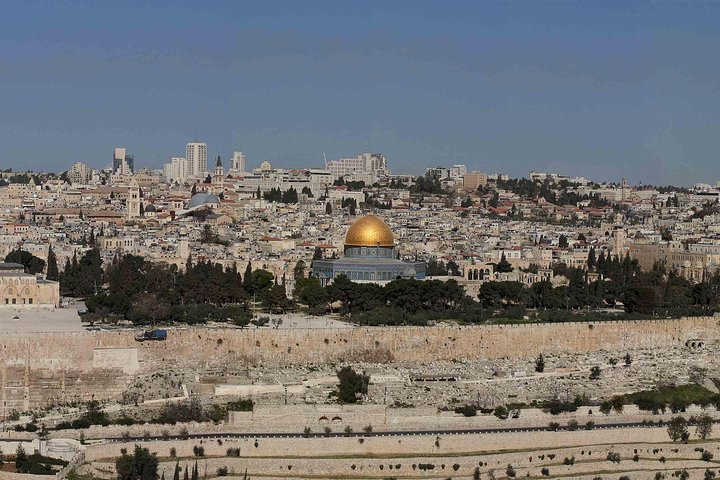
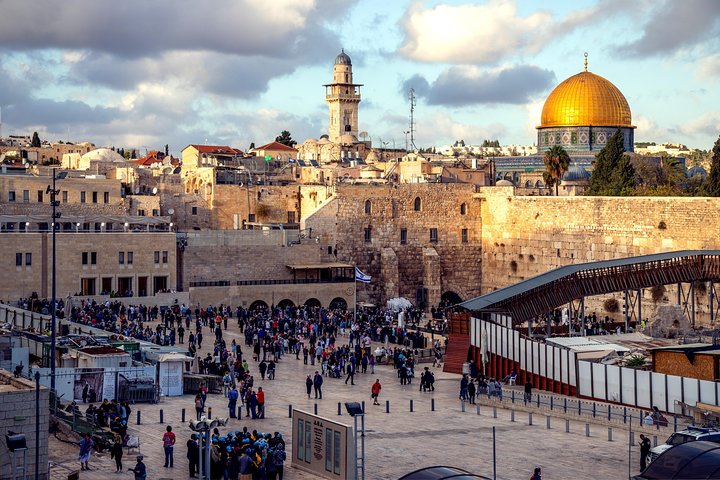
This long day on foot takes in the Old City's quarters, the Western Wall, the Via Dolorosa and the Holy Sepulchre, then carries on into the modern city, Nahlaot and Mahane Yehuda Market. I rate it for first-timers staying in Jerusalem who want sacred sites and everyday neighbourhoods side by side.
Before you go, the Western Wall Heritage Foundation publishes official conduct and dress guidance for the prayer plaza. Read it the night before.
Choose this tour if you have stamina and a curious streak. It is the wrong choice for anyone with limited mobility, or for pilgrims who want to linger in prayer at one site, because the day is built to keep moving.
Best of Jerusalem Full-Day Tour from Jerusalem
From $69 · Price checked: Aug 2026
Best for: Energetic first-timers staying in Jerusalem who want sacred sites and everyday modern neighbourhoods together in one ten hour day.
Not for: Older travellers or anyone with limited stamina, since the route is walking-based and runs about ten hours.
A long day on foot covering the Old City's four quarters, the Western Wall, Via Dolorosa and Holy Sepulchre, then continuing into the modern city, Nahlaot and Mahane Yehuda Market.
Check availabilityExternal booking on Viator · pricing and cancellations handled by Viator
What Surprised Me About Jerusalem
What surprised me was how much of a pilgrim's day can vanish before arrival. If the Old City is your priority over a holiday, sleep in Jerusalem and start from a Jerusalem pickup point.
One summer, in 2021, I rode Route One from Tel Aviv toward Jerusalem. The coach left the coast in flat morning haze and began the long climb through the pine hills, air conditioning rattling, everyone silent. By the time the first Jerusalem stone walls appeared I had already been sitting for ninety minutes, and the day's walking had not begun.
I don't think a Tel Aviv base is wrong in general. For someone mixing beach days with one Old City visit, it can make sense. For a Passover or Easter trip centred on the Old City, though, I would stay inside Jerusalem and walk to the early hours I described above. Keep a coastal hotel if Jerusalem is one stop among many on your trip. Don't keep it if the Holy Sepulchre at dawn is the reason you came.
The second surprise was scale. Three faiths, lanes that turn back on themselves, and a UNESCO-listed Old City all fit inside walls you can cross on foot. That closeness is a gift, but it also tempts people to try everything in one day.
Planning the visit well
My tips come down to pace, paperwork and patience. Go early to the Holy Sepulchre, pick a small number of sites each day, carry your passport for Bethlehem, and dress for the prayer plaza before you leave your room.
If the Western Wall tunnels matter to you, look for a tour that includes access in writing. Public places are limited, and none of the listings on this page promise tunnel entry, so ask the operator directly before you book.
For a shorter commitment, the Old City walking tour at the end of this page offers a half day with a guide who promises to shape the route around you. The provider gives little detail beyond that promise, so send a message naming the sites you care about and read the reply carefully.
For wider context, my Jerusalem pilgrimage planning guide covers the groundwork, my comparison of Jerusalem pilgrimage tours sets the formats side by side, and the overview of Christian pilgrimage routes helps if Jerusalem is one leg of a longer journey.
Before you visit
I wish I had known that a pilgrimage here depends on subtraction. Every story in my notebook comes back to the same point: fewer stops, earlier starts, and a base close to the sites. Before booking a Passover or Easter trip, check the details below.
- A combined Jerusalem and Bethlehem day will feel rushed if you try to add extra stops, so decide which sites matter most before the day begins.
- Your passport belongs in your bag on any day that includes Bethlehem, and your tour should state which vehicle takes you through the crossing.
- Western Wall dress guidance applies whatever the temperature, so pack a covering layer even on warm days.
- Non-Muslim access to the Temple Mount (Haram al-Sharif) is restricted to specific hours, so confirm the current arrangement locally before you build a morning around it.
- A Tel Aviv base puts road time in front of every Old City day, which matters more when your reason for travelling is the Old City itself.
Most of all, I wish I had let the stone lanes set the pace. A site you miss this time can wait for your next visit.
Best seller! Jerusalem old city four quarters tour
From $450 · Price checked: Jul 2026
Best for: Visitors who want a half day in Jerusalem's Old City with a guide willing to adapt the route to their interests and pace.
Not for: Travellers who need a confirmed site list or transport arrangements, as the listing details neither.
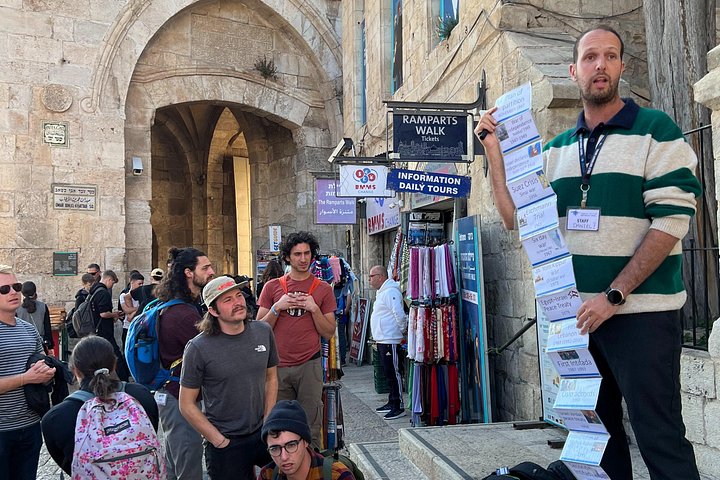
A five hour guided walk through the Old City's four quarters. The provider offers little detail beyond a promise to tailor the route, so ask about specific sites when booking.
Check availabilityExternal booking on Viator · pricing and cancellations handled by Viator
Explore More
Related comparisons and guides:
Frequently Asked Questions
Do I need my passport to visit Bethlehem from Jerusalem?
Yes, bring it, because Bethlehem is administratively separate from Jerusalem and you should expect a crossing. Ask your operator in advance whether the same vehicle stays with you on both sides.
Where can I check Holy Sepulchre service times around Easter?
The Custody of the Holy Land publishes visitor and liturgy guidance for the church on its official website. Check it shortly before your trip, since holiday observances can change what visitors are able to do.
Is a Tel Aviv base workable for a Jerusalem holiday pilgrimage?
It can work for a single Old City day, but the drive eats into your morning before any walking starts. Pilgrims who want dawn visits will find a Jerusalem hotel far easier.
What should I wear to the Western Wall during a warm spring visit?
Follow the Western Wall Heritage Foundation's published guidance and leave shorts at the hotel. A light scarf or wrap in your daypack solves the problem at other sacred sites too.
Can I visit the Temple Mount (Haram al-Sharif) during Passover week?
Non-Muslim visiting hours are limited, and holiday observances can shift access further. Confirm on the day and keep a backup plan for that morning.
Written from Jerusalem and Cairo.