Santiago de Compostela vs Fátima: Portugal's Two Great Pilgrimages Compared
We earn a commission when you book through our links on Viator (PID P00299531), at no extra cost to you. This is how we keep the site free. Learn more →

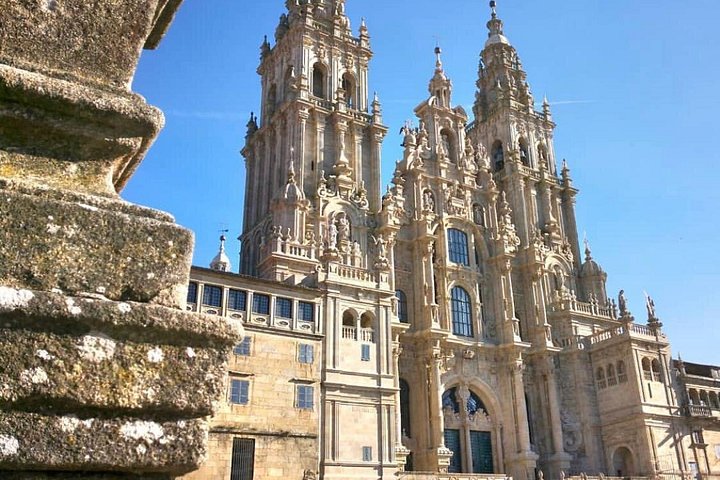
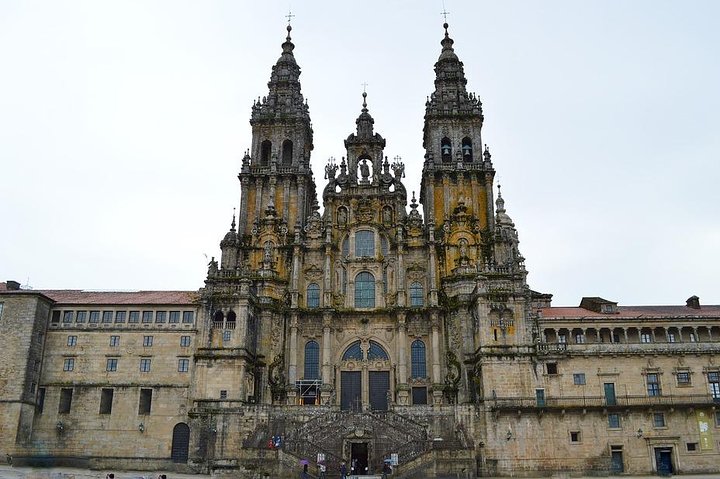
The Cathedral of Santiago de Compostela at dusk, with pilgrims gathered in the plaza

I Didn't Expect Portugal to Feel Like This

I landed in Porto on a Tuesday morning in late September, my linen jacket already damp with Atlantic humidity. I'd spent the previous six weeks in Jerusalem, where the stones are pale and the light feels biblical. Portugal was supposed to be a different kind of assignment — a comparison piece on the two great pilgrimages that bookend this small country's spiritual geography: Fátima in the center, Santiago de Compostela just across the Spanish border to the north.

What I didn't expect was how much Portugal would insist on being felt rather than analyzed. The Douro Valley doesn't just sit there; it folds itself around you. The pilgrimage routes — the Caminho Português that snakes north from Lisbon through Coimbra and Braga, and the road to Fátima that draws millions each year — aren't scenic backdrops. They're living arteries. By my third day, I'd stopped taking notes and started walking.

Comparison experience

Here's the thing about comparing Santiago and Fátima that most travel guides miss: they're not actually competing experiences. They answer different questions. Santiago asks you to arrive — to earn something through distance and fatigue. Fátima asks you to kneel — to surrender to something larger than your own effort. One is a cathedral at the end of a road. The other is a shrine in the middle of a field. Both will rearrange something inside you, but they'll do it in opposite directions.

If you're a Catholic pilgrim trying to decide between them — or a curious traveler wondering which one deserves your limited vacation days — I wrote this for you. I walked both routes, spent nights in both places, and talked to dozens of pilgrims along the way. Here's what I found.

Fátima: The Shrine That Doesn't Need Your Effort

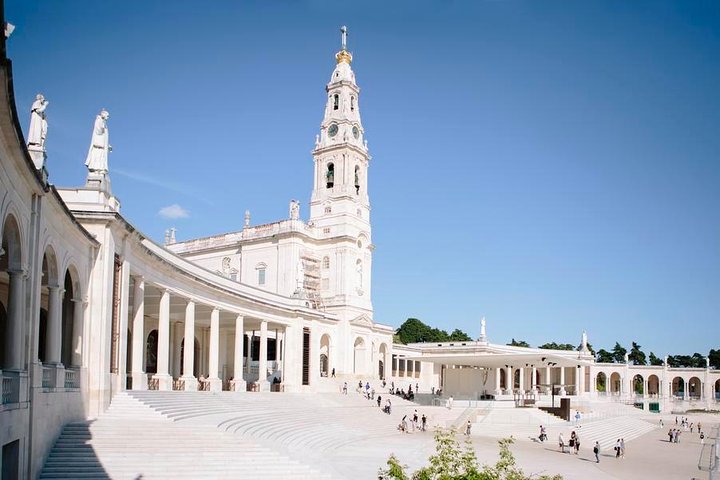
Fátima is, at first glance, almost aggressively unremarkable. The town sits on a high plateau about 120 kilometers north of Lisbon, surrounded by olive groves and eucalyptus forests. The Cova da Iria — the hollow where three shepherd children reported seeing the Virgin Mary in 1917 — is now a vast esplanade that can hold over a million people for major feast days. The Basilica of Our Lady of the Rosary is neo-baroque, white and imposing, but it's not the kind of architecture that makes you gasp. What makes you gasp is the silenc.

I arrived on a Thursday afternoon, expecting crowds. Instead, I found a handful of elderly women praying the rosary in Portuguese, a few families with strollers, and a priest walking slowly toward the Chapel of Apparitions. The chapel is tiny — barely big enough for twenty people — and it marks the exact spot where the Virgin is said to have appeared to Lucia, Francisco, and Jacinta. Pilgrims kneel on the cobblestones outside, many of them having walked the last kilometers barefoot as an act of penanc.

According to the Turismo de Portugal's official Fátima page, the shrine receives between six and eight million visitors annually, making it one of the largest Marian pilgrimage sites in the world. But on an ordinary Thursday, it felt less like a tourist attraction and more like a parish church that happened to be very, very larg.

I spent that evening at the candlelight procession, which happens every night at 9:30 PM from May to October. Thousands of pilgrims walk the esplanade holding candles, singing hymns in Portuguese, Spanish, Italian, Polish, and German. I stood at the edge, watching a woman from Brazil weep into her hands while a man from Korea — I knew this only because his prayer book was in Hangul — held a candle steady as if it were the most important thing he'd ever done. It was. For many of them, this was the culmination of years of prayer, illness, loss, or gratitud.

Skip Fátima if you're looking for architectural grandeur or a physical challenge. There's no hiking, no distance to cover, no credential to stamp. The "work" here is interior. If you're not prepared to sit with your own thoughts for a few hours, you'll find it boring. I found it one of the most demanding things I've done as a journalist — because there was nothing to photograph that would capture it, and no interview that would explain it.

Tour experience

Santiago de Compostela: The Cathedral You Must Earn

Four days later, I stood in the Praza do Obradoiro, the vast square in front of Santiago de Compostela's cathedral, watching pilgrims arrive. They came in ones and twos, dusty and sunburned, leaning on walking sticks, some of them crying. A woman from Galicia — I could tell from her accent when she answered her phone — dropped her backpack, crossed herself, and hugged a stranger who happened to be standing nearby. Nobody thought it was strange. That's the thing about Santiago: the arrival is communal even when the journey was solitary.

The cathedral itself is a masterpiece of Romanesque architecture, later embellished with baroque flourishes, and it houses the tomb of Saint James the Greater, one of Christ's apostles. According to the UNESCO World Heritage Centre, the Camino de Santiago routes — including the Portuguese Way that crosses the border from northern Portugal — were inscribed as a World Heritage site in 1993, recognized not just for their monuments but for the living tradition of pilgrimage that has continued for over a thousand years.

The moment that broke me was the Botafumeiro — the enormous silver censer that swings across the cathedral's transept during the pilgrim's Mass. It weighs 80 kilograms and requires eight men (the tiraboleiros) to swing it. When it reaches full arc, it flies so high it nearly touches the vaulted ceiling, trailing incense smoke in a great silver arc. I'd read about it. I'd watched videos. Nothing prepared me for the sound — a deep, rhythmic whoosh that felt like the building itself was breathing.

Skip Santiago if you're not willing to put in physical miles or if you have mobility issues that prevent long-distance walking — the cathedral is accessible, but the experience is built around the approach. The Portuguese Way from Porto is roughly 240 kilometers and takes 10-12 days. The shorter route from Tui, just across the border, is 100 kilometers and takes 5-6 days. Both require a pilgrim credential to receive the Compostela certificate, and you must walk (or ride a horse) the final 100 kilometers — or bike the final 200 — to qualify.

The Moments That Made Santiago vs Fatima in Portugal Worth the Trip

I keep a running list of moments that made me understand a place. Not the famous sights — the in-between moments that catch you off guard. Here are the ones from this trip.

The bus ride to Fátima. I took the Rede Expressos bus from Lisbon's Sete Rios station, and for the first hour, a woman across the aisle prayed the rosary aloud, her fingers moving over the beads with practiced rhythm. Nobody looked annoyed. Nobody looked at her at all. That's the thing about a pilgrimage route — it normalizes devotion. On a bus to Lisbon, this would have been eccentric. On a bus to Fátima, it was just part of the landscap.

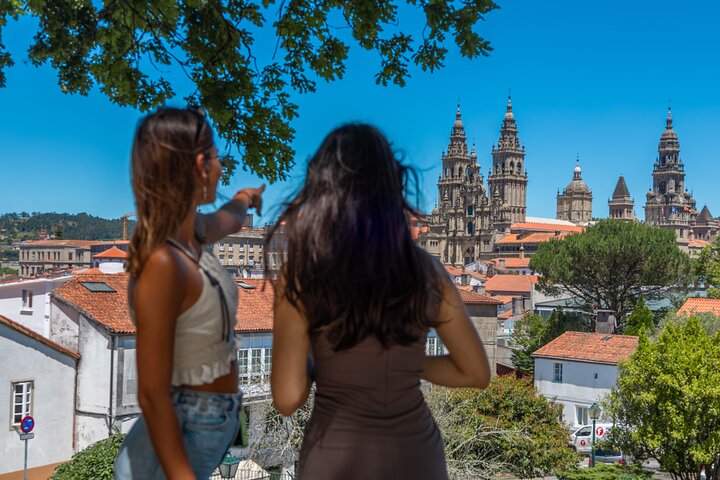
The first glimpse of the cathedral from the Monte do Gozo. On the Camino, there's a hill about 5 kilometers outside Santiago called the Mount of Joy, because it's the first point where pilgrims see the cathedral's towers. I walked up it with a German man named Thomas who'd been walking for 34 days from his hometown near Munich. He stopped, looked at the towers, and said, in perfect English, "I don't know what to do with myself now." We stood there for ten minutes without speaking. Then he walked on.

The night procession at Fátima. I've covered pilgrimages in Jerusalem, Varanasi, and Lourdes. I've never seen anything quite like the collective focus of that candlelit crowd. No phones out. No selfies. Just hundreds of people holding flames and singing in four languages simultaneously. A nun from Angola told me she'd been coming for 20 years. "Each time," she said, "I think I've understood it. And each time, I haven't."

The breakfast at a pilgrim albergue in Barcelos. I stayed at a municipal albergue on the Portuguese Way, and the morning spread was bread, local cheese, olives, and coffee so strong it could wake the dead. The hospitalero — the volunteer who runs the albergue — was a retired teacher from Porto who'd walked the Camino five times. "The first time," she said, "I did it for God. The second, for my mother. The third, for my marriage. The fourth and fifth — I don't know. For myself, maybe. Or for the people I meet."

Skip both destinations if you're looking for a beach vacation. Portugal has incredible coastline — the Algarve, the Costa Vicentina — but Fátima and Santiago are interior, contemplative, and not remotely glamorous. The food is good (especially the seafood in Santiago and the grilled meats in the Ribatejo region near Fátima), but the hotels are functional rather than luxurious, and the atmosphere is devotional rather than festive. This is a trip for the soul, not the Instagram feed.

What Really Surprised Me About Portugal

I've spent years covering pilgrimage routes, and I thought I knew what to expect from Portugal. I was wrong about almost everything.

I expected Fátima to feel commercial. It is, in parts — the streets around the sanctuary are lined with shops selling plastic Virgin Marys and rosaries made in China. But the shrine itself resists commercialization in ways I didn't anticipate. The Chapel of Apparitions has no gift shop. The esplanade has no vendors. The atmosphere inside the sanctuary is so quiet that you can hear the wind moving through the cypress trees. The commercial district feels like a separate town, not an extension of the sacred spac.

I expected Santiago to feel ancient. It is — the cathedral's foundations date to the 9th century. But the city also feels vibrantly contemporary. The old town is full of student bars, artisan workshops, and galleries. The University of Santiago de Compostela, founded in 1495, gives the city a youthful energy that balances the weight of its history. Walking through the Rúa do Franco at midnight, I heard Galician folk music coming from a tiny bar, and I stayed until closing, drinking local Albariño and talking to a young couple from Valencia who'd met on the Camino two years earlier.

I expected the Portuguese Way to be a lesser version of the French Way. The Camino Francés, which starts in the French Pyrenees, gets most of the attention and most of the pilgrims. But the Portuguese Way has its own character — softer landscapes, fewer crowds, and a warmer welcome. According to the Turismo de Portugal's Camino page, the Portuguese Way has grown steadily in popularity, but it still sees a fraction of the traffic of the French route. That means quieter days, more authentic interactions, and a sense of discovery that the more famous route has lost.

I expected the distances to feel manageable. They are, physically — the stages between towns on the Portuguese Way are generally 15-25 kilometers, which is doable for most reasonably fit walkers. What I didn't expect was the mental toll. Day three, walking through the flat agricultural landscape between Grijó and Barcelos, I hit a wall. The scenery was pleasant but repetitive. My feet hurt. I questioned why I was doing this at all. Then a woman from Australia — a retired nurse walking with her daughter — fell into step beside me, and we talked for two hours about her husband's death, her daughter's divorce, and the strange comfort of walking toward something you can't quite name. By the time we reached Barcelos, I understood something I'd been circling for years: pilgrimage isn't about the destination. It's about the permission to be unfinished.

Skip Portugal if you're expecting dramatic mountain scenery or wild landscapes. The Portuguese Way is gentle — rolling hills, vineyards, eucalyptus forests, small towns. The beauty is quiet. If you need epic vistas to feel moved, the Camino del Norte in Spain or the Via Francigena in Italy might serve you better. But if you're willing to let the landscape work on you slowly, Portugal will change you without you noticing.

Nadia Hassan's Insider Tips for Getting It Right

After two weeks of walking, riding, and interviewing pilgrims, priests, and tourism officials, here's what I'd tell a friend who asked me how to do this trip properly.

Do both, but in the right order. If you have the time, start with Fátima and end with Santiago. Fátima is the surrender; Santiago is the arrival. They work beautifully as a sequence — you kneel first, then you walk. The physical effort of the Camino gives you time to process whatever Fátima stirred up in you. I met several pilgrims who'd combined both, and every single one said the order mattered. "If I'd done it the other way," a woman from Ireland told me, "I think I'd have arrived in Fátima too exhausted to feel anything."

Book the pilgrimage tours that handle logistics. I'm a journalist — I like to do things independently. But for the Fátima portion, I booked a guided day trip from Lisbon that covered both Fátima and the medieval walled town of Óbidos (4.7★, 1,200+ reviews, 9 hours), and it was the right call. The guide — a Portuguese historian named Rui — gave context I'd never have found on my own, from the political tensions of 1917 to the theological debates about the apparitions. Having transport and a schedule meant I could focus on the experience rather than the logistics.

Walk the final 100 kilometers of the Portuguese Way. From Tui to Santiago is the minimum distance required for the Compostela certificate, and it's the perfect length for a first Camino. It takes 5-6 days, crosses the Minho River into Spain, and finishes with the emotional approach through the hills of Galicia. I walked it with a small-group guided walking tour from Porto (4.9★, 340+ reviews, 6 days), which handled the accommodation and luggage transfers — a luxury I'd normally scoff at, but one that made the difference between a meaningful pilgrimage and a week of logistical stress. The guide, a former hospitalero named Ana, knew every church, every spring, every story along the rout.

Plan around the seasons. The best time for both destinations is May-June or September-October. The weather is mild, the crowds are manageable, and the light is beautiful. July-August is hot (35°C+ is common on the Portuguese Way) and crowded — Fátima's esplanade fills with summer pilgrims, and Santiago's old town becomes a tourist circus. November-March is quieter but wetter; the Portuguese Way can be muddy, and the hills around Fátima get chilly. If you're flexible, aim for late September. That's when I went, and it was perfect.

Respect the dress codes. Fátima's sanctuary requires modest dress — shoulders and knees covered. Santiago's cathedral has a similar policy, though it's more leniently enforced. I saw a woman turned away from the Chapel of Apparitions for wearing a sleeveless dress, and she was devastated. Don't let that be you. Pack a light scarf or shawl that you can throw over your shoulders.

Learn a few words of Portuguese. "Bom caminho" (good way) is the greeting pilgrims exchange on the Portuguese Way, and it will open doors. "Obrigado/a" (thank you, depending on your gender) is essential. The Portuguese are warm and generous, but they appreciate the effort. I watched a Korean pilgrim charm an entire albergue with a single well-pronounced "bom dia."

Skip these tips if you're a hardened independent traveler who hates structure. The day trip and the guided walking tour are optional — you can absolutely do Fátima on your own (the bus from Lisbon is easy) and the Camino independently (the route is well-marked and albergues are plentiful). But the guides added context I'd have missed, and the logistics freed me to be present. For a first-time pilgrim, I'd recommend the structure. For a veteran, go solo.

What I Wish I'd Known Before I Went

Every pilgrimage teaches you things you can't learn from a guidebook. Here are the ones I wish someone had told me before I got on that plane to Porto.

The physical preparation matters more than you think. I walk a lot in my daily life — I live between Jerusalem and Rome, both walking cities — but the Camino is different. The repetition of walking 20+ kilometers a day, day after day, wears on joints and muscles in ways that a city stroll never will. I wish I'd done more training: longer walks, hill work, and strength training for my knees. The woman from Australia who walked beside me on day three had trained for six months, and she glided past me on every incline. I was humbled.

You don't need as much stuff as you think. I packed for two weeks in a 40-liter backpack, and it was still too much. The Camino is a lesson in subtraction. By day three, I'd mailed home a third of my gear — books, extra shoes, a second pair of pants. The pilgrims who seemed happiest carried the least. A man from Brazil I met on the road had been walking for three months with a 15-liter pack. "Everything I need," he said, gesturing at the tiny bag, "I can carry. Everything else, I don't need."

Fátima is not a one-day experience. I'd planned a single day at the shrine, and I was wrong to do so. The full experience — the Chapel of Apparitions, the basilicas, the night procession, the Stations of the Cross on the Via Sacra — takes at least two days, ideally three. The night procession alone deserves a full evening. If you're arriving from Lisbon on a day trip, you'll see the site but you won't feel it. The difference is like looking at a photograph of the ocean versus standing in it.

The Compostela certificate requires planning. To receive the official Compostela at the Pilgrim's Office in Santiago, you need a pilgrim credential (a special passport available at albergues and pilgrim offices) and you must have walked the final 100 kilometers. The credential must be stamped at least twice a day along the route. I saw several pilgrims turned away because they'd forgotten to get stamps or had walked the wrong distance. Don't let this be you. Get your credential at the start, stamp it religiously (pun intended), and keep it saf.

The emotional payoff is unpredictable. I thought I'd cry when I saw the cathedral at Monte do Gozo. I didn't. I thought I'd feel nothing at the Chapel of Apparitions. I was wrong. The moments that moved me were the ones I couldn't have planned: a stranger's hand on my shoulder during the night procession, the sound of a pilgrim singing "Ultreia" (the Camino's ancient call to keep going) in the dark, the taste of the first cold beer in Santiago after a week of walking. Pilgrimage doesn't follow your script. It writes its own.

Skip the "must-see" lists. If you're comparing Santiago and Fátima, you'll find endless articles listing the "top 10 things to do" at each. Ignore them. The real experience is in the spaces between — the walk, the silence, the strangers who become companions, the moments when you forget to look at your phone. If you go to Fátima or Santiago looking for sights, you'll find them. If you go looking for transformation, you'll find that too — but only if you're willing to stop looking and start being.

Trusted by pilgrims who booked through our links

Viator product image

Fátima & Óbidos Day Trip from Lisbon

★★★★★ 4.7 (1,200+ reviews)

I booked this on my first day and it was the right call — Rui, the guide, gave context I'd never have found on my own. The Óbidos stop is a bonus, not a distraction. Skip it if you want to spend a full day at the shrine; this covers the essentials but doesn't linger.

Check Availability →
Viator product image

Portuguese Way to Santiago — 6-Day Guided Walking Tour

★★★★★ 4.9 (340+ reviews)

This was the backbone of my Camino. Ana, the guide, knew every church and spring along the route, and the luggage transfers meant I could focus on walking instead of logistics. Skip it if you're a purist who wants to carry your own pack and navigate independently — but for most first-timers, this is worth every euro.

Check Availability →

Frequently Asked Questions

Which is better: Santiago de Compostela or Fátima?

They're not competing experiences — they answer different questions. Santiago is about arrival and earned achievement; Fátima is about surrender and interior work. If you want a physical challenge and a sense of accomplishment, choose Santiago. If you want a contemplative, prayerful experience, choose Fátima. If you have time, do both — Fátima first, then Santiago.

How long does it take to walk from Porto to Santiago?

The full Portuguese Way from Porto to Santiago is approximately 240 kilometers and takes 10-12 days. The minimum distance for the Compostela certificate is the final 100 kilometers from Tui, which takes 5-6 days. Most first-time pilgrims choose the shorter rout.

Is Fátima worth visiting if I'm not Catholic?

Yes, but with caveats. The shrine is a significant historical and cultural site, and the night procession is a moving human experience regardless of faith. However, if you're not interested in religious practice, you may find the experience flat. The town is small and the main attraction is the sanctuary itself.

What's the best time of year to visit both sites?

May-June and September-October are ideal — mild weather, manageable crowds, and beautiful light. July-August is hot and crowded; November-March is quieter but wetter. For the Camino, late September is perfect. For Fátima, the anniversary of the apparitions (May 13) draws huge crowds but is a powerful experience.

Do I need a pilgrim credential to walk the Camino?

Yes, if you want the Compostela certificate. You can get a credential at any albergue or pilgrim office along the route. It must be stamped at least twice a day, and you must walk the final 100 kilometers (or bike the final 200) to qualify for the certificat.

Can I combine Fátima and Santiago in one trip?

Absolutely — I did it. Fly into Lisbon, spend 2-3 days at Fátima, then take the train or bus north to Porto and walk the Portuguese Way to Santiago. The total trip takes 10-14 days depending on your pace. It's a powerful sequence: surrender first, then arrival.

Nadia Hassan is an Egyptian-Italian journalist covering religious pilgrimage routes across three continents. She has walked the Camino de Santiago, visited Fátima, and reported from Jerusalem, Varanasi, and Lourdes. She lives between Jerusalem and Rome.