Varanasi with Sarnath vs Without: Is the Extra Drive Worth It?
We earn a commission when you book through our links on Viator (PID P00299531), at no extra cost to you. This is how we keep the site free. Learn more →
If you have one day in Varanasi and a first visit ahead of you, add Sarnath only when the tour still protects your time at the river and at the aarti. Leave it out if the ghats are the reason you came and you want to meet them slowly.
I Compared Both Days. Here's What the Listings Leave Out
Adding Sarnath turns one Varanasi day into two pilgrimages: the Hindu riverfront and a Buddhist site of first importance. The real cost is time on the ghats, which matters more than the drive itself.
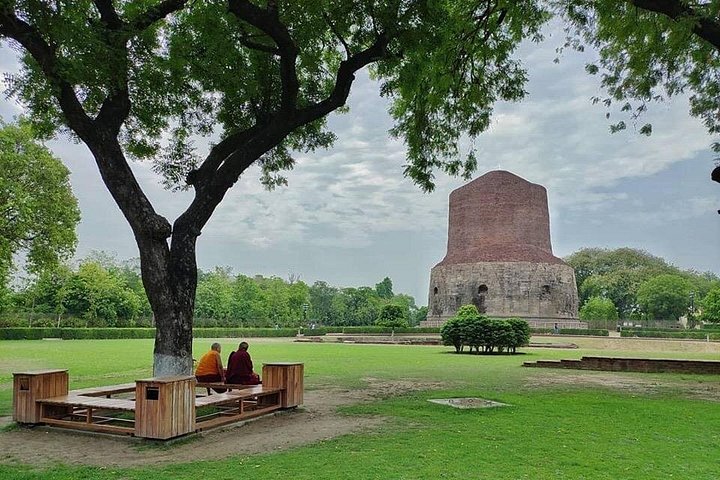
India's Ministry of Tourism describes Varanasi as a pilgrimage city on the Ganges and directs visitors to its ghats and sacred sites. You can read that framing on the official Varanasi destination page. India's Ministry of Tourism identifies Sarnath as the place where Gautama Buddha delivered his first sermon after enlightenment. The ministry's Sarnath and Deer Park page gives the official context.
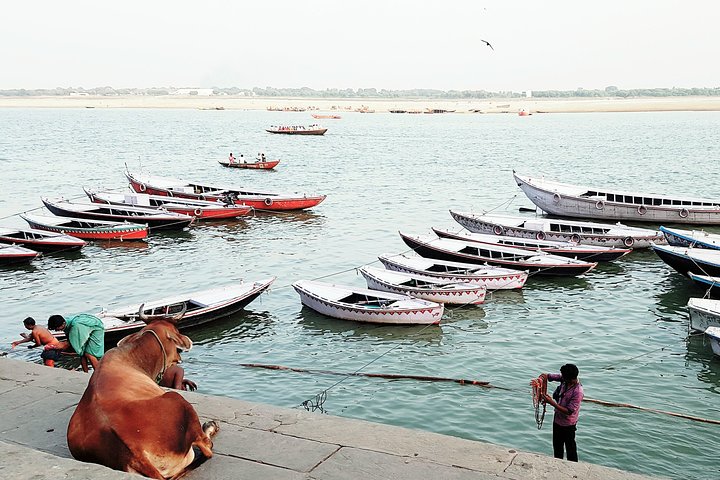
Tour listings present these as stops on one line. I don't think they sit together that easily. The riverfront asks you to slow down, and I learned that on foot one autumn morning. I started south at Assi where the steps were wide and washed, and walked north for two hours past wrestlers, laundry laid flat on stone, and goats asleep in doorways. Near the burning ghat the air changed to woodsmoke and heat, and a silence came over me that stopped me mid-sentence.
Varanasi One Day Tour with Sarnath, Boat Ride & Aarti: The Experience
This private day tries to hold the whole circuit together. The listing describes a boat on the river, a walk through the old city, Sarnath, and a boat ride to the Ganga Aarti, with breaks for breakfast and lunch built in. It can also be split across separate days, and that option is what makes it stand out to me.
I would steer first-time visitors and older travellers here, especially anyone who tires in heat and wants rest planned in advance. This one is not for you if walking the ghats unhurried is the point of your trip.
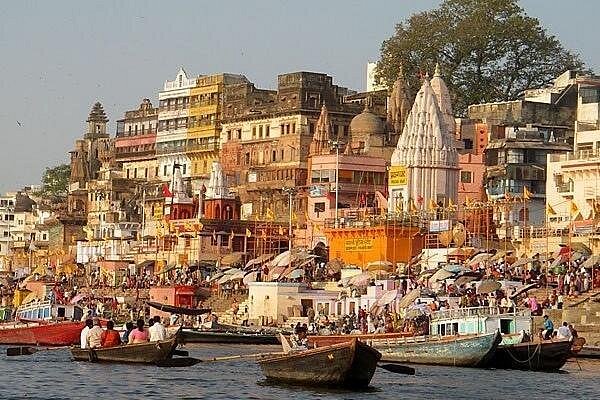
Varanasi One Day Tour with Sarnath, Boat Ride & Aarti
From $117.34 · Price checked: Aug 2026
Best for: First-time visitors and older travellers who want the full Hindu and Buddhist circuit with built-in breaks, or the option to spread it over two days.
Not for: Travellers with only a few hours free, or those wanting a food or ashram focus rather than the standard circuit.
A private fourteen hour day with dawn boat, old city walk, Sarnath and an evening boat ride to the Ganga Aarti, with breaks for breakfast and lunch. It can also be split across two days.
Check availabilityExternal booking on Viator · pricing and cancellations handled by Viator
Where Sarnath has the advantage
The strongest case for Sarnath is that it gives the day a second anchor on dry land. Varanasi's river does not always cooperate. I found that out one late summer in the monsoon, when brown water had swallowed the lower steps and was lapping at doorways that stand high and dry in winter. The boats I had hoped to ride were tied off and going nowhere. Warm rain fell in sheets, and the whole waterfront smelled of wet silt and drenched marigolds.
On a day like that, a tour built only around the river has little to offer. One that includes Sarnath still gives you somewhere to go and something to learn.
Full Day Sightseeing Of Varanasi: The Experience
It pairs a boat ride on the Ganges with a temple circuit that includes Kashi Vishwanath, Sankat Mochan and Bharat Mata, then adds Sarnath and its museum before the aarti.
Choose this format if you have a single day and want to cover as many temples as you can alongside Sarnath. It suits a visitor who is sampling.
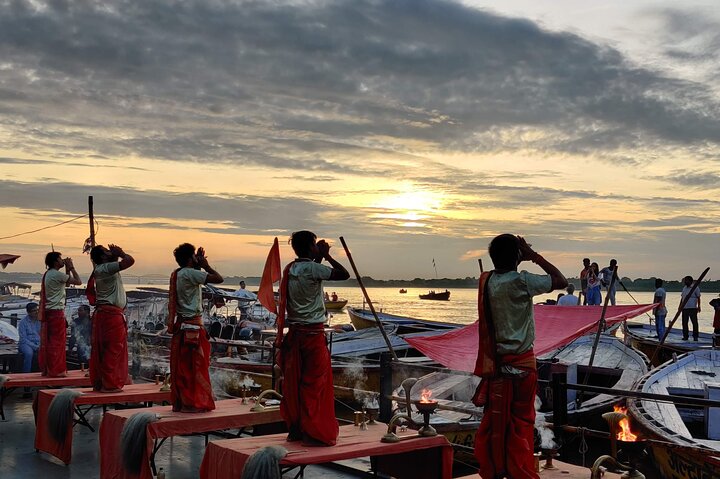
Full Day Sightseeing Of Varanasi - Ultimate 1 Day in Varanasi
From $69.69 · Price checked: Aug 2026
Best for: First-time visitors with one day who want a wide spread of temples plus Sarnath, with breaks back at the hotel between sessions.
Not for: Travellers who prefer walking in the old lanes or a slower day, as the plan moves between many stops.
A full day built around a dawn Ganges boat ride, a temple circuit including Kashi Vishwanath, Sankat Mochan and Bharat Mata, an afternoon in Sarnath with its museum, and evening aarti.
Check availabilityExternal booking on Viator · pricing and cancellations handled by Viator
How to make the decision
For a single day, I would leave Sarnath out whenever watching the Ganga Aarti from the steps is your priority. A good sightline at Dashashwamedh means arriving well before it starts, and a full Sarnath day makes that hard. If you will watch from a boat or you have a second day, add Sarnath without hesitation.
The evening that settled it for me was a spring aarti at Dashashwamedh Ghat. I arrived while the priests' platforms were still empty and claimed a step with a clear sightline. By dusk there was no floor visible behind me, only people. When the tiered lamps lit and swung in unison, I felt their heat on my face from several metres away, and every bell on the ghat rang at once. Anyone who arrived at the start time would have seen the backs of heads.
Timing is the other variable. Dashashwamedh Ghat hosts the Ganga Aarti, but ceremony timing varies with the season, so confirm the day's start time locally and not from a listing.
Full Day Varanasi Private Tour with Temples, Ghats & Rituals
This is the option I would give to a traveller who wants a private day shaped by a local guide's stories. The listing describes a sunrise boat, then old temples and alleyways. The site detail is thin, though. It does not say clearly whether Sarnath or the aarti is included, so settle both with the operator in writing before you pay.
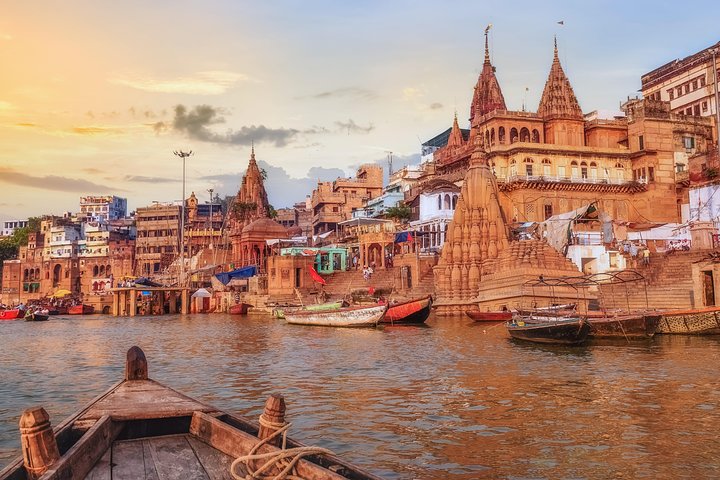
Full Day Varanasi Private Tour with Temples, Ghats & Rituals
From $24 · Price checked: Aug 2026
Best for: Travellers wanting a private full day in Varanasi shaped by a local guide's stories, who are happy to agree on stops in advance.
Not for: Planners who need a named site list, or those with limited stamina for an eleven hour day.
A private eleven hour day with a local guide, starting with a sunrise boat and moving through old temples and alleyways. Site detail is thin, so confirm whether Sarnath or aarti is included.
Check availabilityExternal booking on Viator · pricing and cancellations handled by Viator
Explore the Highlights of Varanasi
This is the clearest "without Sarnath" choice among the four. It is a private walk through old Varanasi that mixes heritage sites with masala chai, local snacks and lassi, and food and daily life get more of the time than they do on the boat-focused tours. This walk is not for you if the river rituals or the Buddhist circuit are why you came, because the listing describes the old city lanes and does not mention either.
Explore the Highlights of Varanasi
From $38.69 · Price checked: Aug 2026
Best for: Families with children and relaxed walkers who want two to four hours of old city lanes, local food and a flexible private pace.
Not for: Travellers wanting a sunrise boat ride, Sarnath or the evening aarti, none of which is listed for this walk.
A private walk through old Varanasi mixing heritage sites with tastings of masala chai, local snacks and lassi. Food and daily life take a larger share here than on boat-focused tours.
Check availabilityExternal booking on Viator · pricing and cancellations handled by Viator
Before you visit
Plan Varanasi around heat and foot traffic before you think about Sarnath at all. The drive matters less than whether your body and your clothing can handle a long day in dense streets.
My lesson came one summer at the Godowlia crossing. Heat rose off the road in visible waves, and my shirt was soaked through before mid-morning. I had brought good walking shoes and no way to carry water. A cycle rickshaw bell rang directly behind my ear and I understood, too late, that I had planned this trip like a European city break. Now I pack loose clothing that covers me, shoes I can slip off, and water I can carry, and I give up the middle of the day to rest.
Clothing matters inside temples too. Carry long trousers or a skirt, keep your shoulders covered, and bring a scarf for temple entry.
First, confirm whether the tour you like includes Sarnath at all, and whether the operator can split the day. Second, ask how you will see the aarti, from the steps or from a boat, and how early you will arrive. Third, if you are going in monsoon, ask the operator what replaces the boat when the river is high.
For more depth, my Sarnath day trip guide covers the Buddhist side alone, the Varanasi boat tour review looks closely at the river, and the Varanasi pilgrimage tours overview sets all the formats side by side.
Explore More
Related comparisons and guides:
Frequently Asked Questions
Can I see Sarnath and the Ganga Aarti on the same day?
Yes. Two of the tours above list Sarnath and the aarti in one itinerary. What you should check is whether you will watch the ceremony from a boat or from the crowded steps.
Is Sarnath meaningful for visitors who are not Buddhist?
Many travellers visit Sarnath for its historical role in the Buddha's teaching, and you need no religious affiliation to go respectfully. Treat it as a living place of devotion, not a backdrop for photographs.
Which tour should I pick if I have two days in Varanasi?
Choose the one-day Sarnath tour that can be split, and give each half its own day. This lets you walk the ghats slowly and still see Sarnath without rushing.
What happens to boat-based tours during the monsoon?
High water can stop boat rides and cover the lower ghats. Ask your operator before booking what they substitute on days when boats cannot go out.
Is a food walk a reasonable substitute for a full-day temple tour?
It works well for families and slower walkers who want the old city's daily life, but it is not built around the river rituals. Pair it with a separate aarti evening if the ceremony matters to you.
Written from Jerusalem and Cairo.