Sarnath Day Trip from Varanasi: Where Buddhism Started
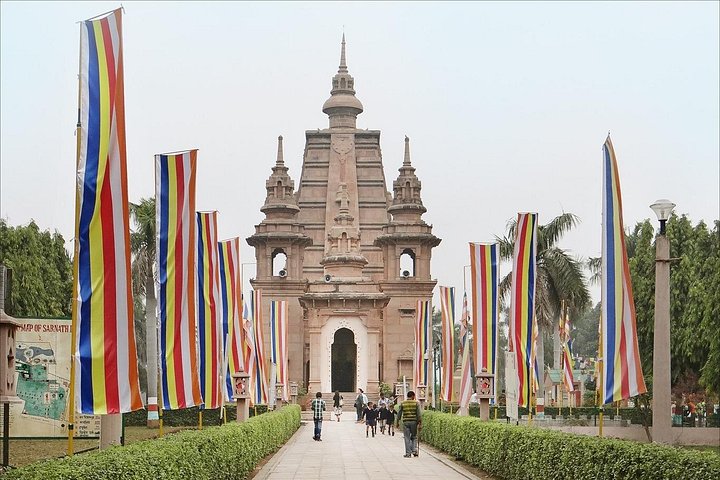
We earn a commission when you book through our links on Viator (PID P00299531), at no extra cost to you. This is how we keep the site free. Learn more →
What shapes a visit to Sarnath
Sarnath rewards a full, unhurried day and punishes a squeezed one. India's Ministry of Tourism identifies Sarnath as the place where Gautama Buddha delivered his first sermon after enlightenment. That significance is the reason to go, but the road out of Varanasi decides how much quiet you get once you arrive, so plan the morning around traffic first.
I went in the winter of 2024, adding Sarnath as a detour to a stay in Varanasi, and I nearly talked myself out of it on the way. The car crawled through horn-blare and diesel for what felt like forever, and I regretted the detour twice. Then the city thinned into fields and low brick, and we arrived at lawns so quiet I could hear my own footsteps on the gravel. The contrast was almost physically disorienting.
That drive taught me the one planning truth I would hand any first-time visitor: Sarnath is close in kilometres and far in traffic time. My judgement is to add Sarnath only if you have a full day, and to leave in the morning before the city congests. I weigh the whole decision more carefully in my piece on Varanasi with Sarnath versus without.
Leave Sarnath off your plan if your time in Varanasi amounts to one rushed afternoon.
The Full-Day Varanasi Tour: what the itinerary covers
The day is built around a dawn Ganges boat ride, a temple circuit including Kashi Vishwanath, Sankat Mochan and Bharat Mata, an afternoon in Sarnath with its museum, and evening aarti. Breaks back at the hotel between sessions matter more than they sound.
For a first-time visitor with a single day who wants a wide spread of Hindu temples plus the Buddhist heritage of Sarnath, I think this is the sensible shape.
Choose a different booking if Sarnath is the main reason you came. Here the Buddhist sites get an afternoon slot inside a much wider circuit, and the museum shares that time with everything else on the list.
Planning Buddhist pilgrimage day trip in Sarnath
The moments that justify a Sarnath day trip are the ones you protect with time: a Varanasi dawn on the river before or after the excursion, and an unhurried stretch at the stupas once you arrive. India's Ministry of Tourism describes Varanasi as a pilgrimage city on the Ganges and directs visitors to its ghats and sacred sites.
The river is the counterweight to Sarnath's lawns, and I would not plan one without thinking about the other. In the winter of 2021 I took a dawn boat, and we pushed off in fog so thick the far bank did not exist. The oarlocks creaked in a steady rhythm. Along the ghats, men chest-deep in cold water cupped handfuls toward a sun I could not yet see. Someone set a leaf lamp adrift and it slid past our hull, still burning.
Nothing about that morning was scheduled for my benefit, and that is exactly why it stays with me. What I took from it is practical: take the dawn boat on your first morning, not your last. Winter fog can erase the view, and one spare morning protects the experience. If you want to compare boat options before you commit, my Varanasi boat tour review goes through the choices.
Private Half-Day Tour in Sarnath from Varanasi: who this tour suits
For readers whose reason for travelling is the Buddhist heritage, this private half day is the format I would look at first. It focuses on Sarnath alone, with the Dhamek and Chaukhandi stupas, a Tibetan temple and the museum's early artifacts. According to its listing, it gives the Buddhist sites more time than full-day Varanasi packages, and that difference in pace is the whole argument for it.
A private booking also means the day moves at your speed. After my own crawl out of the city, I value any arrangement that lets you set off when the roads suit you.
Book the full-day Varanasi tour instead if you want Kashi Vishwanath and the evening aarti in the same package. This half day stays in Sarnath, so the Hindu temple circuit and the river would need separate planning.
What Surprised Me About Sarnath
What surprised me most was how Sarnath's quiet only made full sense against the noise of Varanasi. The two places read as a pair: the ghats press everything close, and Sarnath opens it out. Planning them as complementary halves of one journey, not as competing attractions, changed how I would sequence any visit.
I learned the Varanasi half of that contrast on foot. In the autumn of 2023, I started south at Assi where the steps were wide and washed, and walked north for two hours past wrestlers, laundry laid flat on stone, and goats asleep in doorways. Near the burning ghat the air changed: woodsmoke, heat, and a silence that made me stop talking mid-sentence.
A year later, on those gravel paths at Sarnath, I recognised a different kind of stillness. I do not set one silence above the other. What I can offer is sequence. Walk the ghats south to north in the morning, ending near the cremation grounds, because it builds the right emotional order and keeps the sun behind you. Give Sarnath its own fresh morning on another day.
I also cannot tell you what you will find on your date at the museum or the Tibetan temple, and local arrangements can change. Confirm current access with your guide or hotel shortly before you go, and treat any fixed schedule you read online with caution.
Save the ghat walk for a separate day if you have booked Sarnath for the same morning.
Planning the visit well
Getting a Sarnath day trip right comes down to three decisions made before you leave: the hour you set off, what you wear, and whether a private or group format fits your priorities.
Start with timing. My own experience argues for an early departure, before Varanasi's roads fill, and for keeping the afternoon flexible in case you want to linger.
Clothing comes next. Carry modest clothing: long trousers or skirts, covered shoulders, and a scarf for temple entry. Temple staff in Varanasi can refuse entry to visitors in shorts or sleeveless tops, and a full-day circuit gives you no chance to go back and change. I would dress for the most conservative stop on your list and keep that standard all day.
Evening plans need their own check. Dashashwamedh Ghat hosts Ganga Aarti, and ceremony timing varies with the season, so confirm the day's start time locally. If your trip falls near Dev Deepawali, remember that it follows the Hindu lunar calendar, so confirm the published festival date before booking transport or accommodation. For a wider look at operators and formats, see my shortlist of Varanasi pilgrimage tours.
A group departure is the wrong fit for anyone who wants long, unscripted time at the ghats at dawn.
Before you visit
I wish I had known that Varanasi, and any day trip leaving from it, has to be planned around heat and foot traffic before sightseeing.
That first visit was in the summer of 2019, at the Godowlia crossing. The heat came up off the road in visible waves and my shirt was soaked through before ten. I had brought good walking shoes and no way to carry water. A cycle rickshaw bell rang directly behind my ear and I understood, too late, that I had planned this trip like a European city break.
What I would pack now is simple: loose covering clothes, slip-on shoes, carried water, and a schedule that surrenders the middle of the day. That last point is the one I underrated.
What to Check Before Booking
- Confirm whether the tour puts Sarnath in a morning or an afternoon slot, and decide which suits your energy and the traffic.
- Check whether the itinerary includes a rest break at your hotel, since a long day without one can wear you down.
- Ask whether the booking is private or shared, because that choice controls your departure time and how long you can linger.
- Keep a spare morning free if the dawn boat matters to you, so winter fog does not cost you the whole experience.
- Pack clothing suited to temple entry for the whole day, even if Sarnath is your only planned stop.
This retrospective will not suit anyone who handles heat and crowds with ease and prefers to improvise.
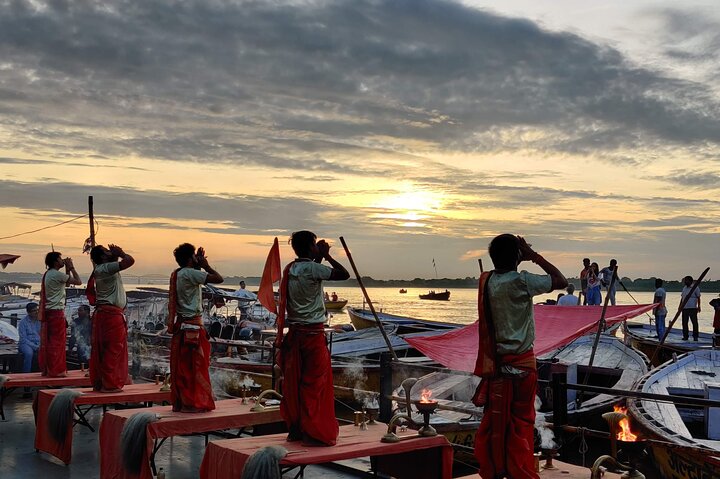
Full Day Sightseeing Of Varanasi - Ultimate 1 Day in Varanasi
From $69.69 · Price checked: Aug 2026
Best for: First-time visitors with one day who want a wide spread of temples plus Sarnath, with breaks back at the hotel between sessions.
Not for: Travellers who prefer walking in the old lanes or a slower day, as the plan moves between many stops.
A full day built around a dawn Ganges boat ride, a temple circuit including Kashi Vishwanath, Sankat Mochan and Bharat Mata, an afternoon in Sarnath with its museum, and evening aarti.
Check availabilityExternal booking on Viator · pricing and cancellations handled by Viator
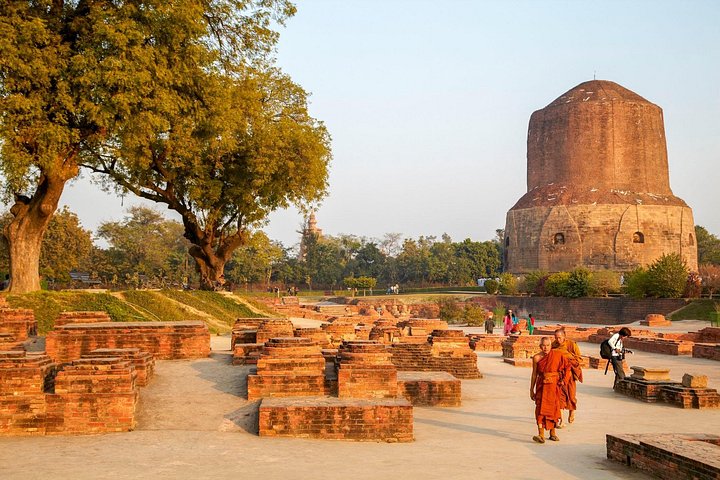
Private Half-Day Tour in Sarnath from Varanasi
From $46 · Price checked: Aug 2026
Best for: Buddhist pilgrims, history lovers and older travellers who want a focused four hour visit to Sarnath from Varanasi.
Not for: Visitors wanting the Ganges ghats, a boat ride or the aarti, which sit outside this Sarnath outing.
A private half day focused on Sarnath, with Dhamek and Chaukhandi stupas, a Tibetan temple and the museum's early artifacts. It gives Buddhist sites more time than full-day Varanasi packages.
Check availabilityExternal booking on Viator · pricing and cancellations handled by Viator
Explore More
Related comparisons and guides:
Frequently Asked Questions
Is Sarnath worth a day trip from Varanasi?
It is worth the trip when you can give it an unhurried day and an early start. Squeezed into a spare hour, the road can take more from you than the site gives back.
Should I choose the full-day Varanasi tour or the private Sarnath half day?
Pick the full day if you want the river, the major Hindu temples and Sarnath in one booking. Pick the private half day if Buddhist heritage is your priority and you want the stupas and museum at your own pace.
What should I wear for a Sarnath and Varanasi day?
Wear loose clothing that covers your shoulders and legs, and carry a scarf so a single outfit works at every temple. Slip-on shoes and a water bottle make the long day noticeably easier.
Can I combine the dawn boat and Sarnath on the same day?
You can, and the full-day tour builds its itinerary that way, but you give up rest to cover more ground. A spare morning later in your stay gives you a second chance at the river if fog hides it.
When does the Ganga Aarti start at Dashashwamedh Ghat?
The start time changes with the season, so ask your hotel or guide on the day instead of relying on a time you saw online.
Written from Jerusalem and Cairo.