Varanasi Morning Boat Tour at Dawn: What the Ride Feels Like
We earn a commission when you book through our links on Viator (PID P00299531), at no extra cost to you. This is how we keep the site free. Learn more →
What shapes a visit to Varanasi
If you're coming to Varanasi for the first time, I'd start with a dawn boat on the Ganges. It's the gentlest way in. You see the ghats from a seat on the water, at a distance you don't have to fight for on foot.
The official description is a good starting point. India's Ministry of Tourism describes Varanasi as a pilgrimage city on the Ganges and directs visitors to its ghats and sacred sites. That's accurate, but it leaves a lot out. A listing can't prepare you for how public the sacred becomes along the riverbank, or how little of it is arranged for visitors.
I learned this at Manikarnika Ghat in the winter of 2025. Standing above the burning ghat in woodsmoke, I thought of the Holy Sepulchre's queue and how carefully death is enclosed there: under a dome, behind marble, kept at a respectful distance. At Manikarnika it was open to the sky and conducted in daylight, and nobody lowered their voice. I saw two traditions holding grief in two different ways, and neither one owed me comfort.
What I took from that morning is about thresholds. Some pilgrims want layered history and structured sites. Others want ritual with nothing in between. Be clear with yourself about which you can hold before you choose a Varanasi itinerary.
The dawn boat isn't for anyone who wants cremations as a photograph. The families at the burning ghat are mourning, and a camera pointed at them from a boat is still a camera pointed at them. Skip the ride altogether if early starts on open water make you miserable.
Varanasi Morning Boat Tour [RowBoat]: what the itinerary covers
If a Varanasi trip starts to feel like nothing but lanes, touts and elbows, this is the booking I'd make to save it. The operator describes a sunrise rowboat outing along the ghats that watches Hindu daily life from the water. It gives you more time on the river than the shorter sunrise option below.
The listing is aimed at early risers and at travellers with limited mobility who want a seated, slow-paced morning. Getting down the ghat steps to the boat is still something you'll have to manage, so if stairs are hard for you, ask the operator how boarding works before you commit.
Choose the shorter sunrise ride if a train, a temple queue or a full day of plans is waiting after breakfast.
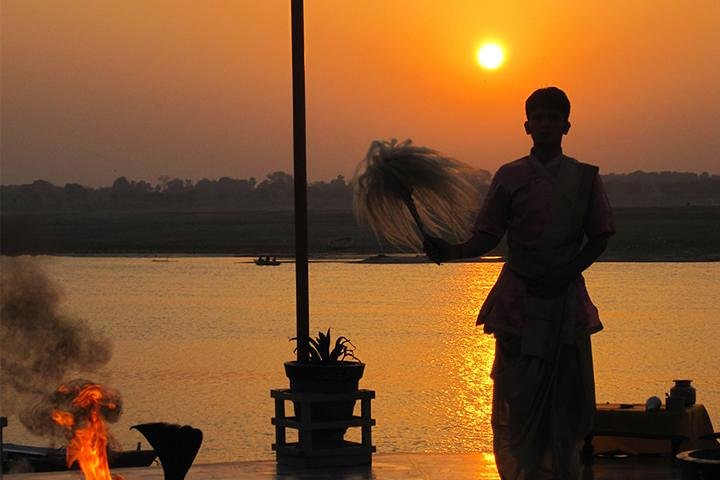
![Varanasi Morning Boat Tour [RowBoat] - photo](/images/7330P3.jpg)
Varanasi Morning Boat Tour [RowBoat]
From $45 · Price checked: Sep 2026
Best for: Early risers and travellers with limited mobility who want a seated, slow-paced morning on the river as a first introduction to the ghats.
Not for: Visitors wanting temples, Sarnath or the evening aarti, none of which is included in this morning outing.
A three hour rowboat outing at sunrise along the ghats, observing Hindu daily life on the riverbanks. It allows more time on the water than the shorter 80 minute sunrise option.
Check availabilityExternal booking on Viator · pricing and cancellations handled by Viator
Planning morning boat tour review in Varanasi
The moments worth waking up for on a dawn boat are the ordinary ones. The operators' own listings point to morning yoga, mantra recitation and holy dips along the ghats. None of it is staged for passing boats, so it asks something of you: sit quietly and be willing to watch without taking part.
It helps to know what the river is like at the other end of the day. During Dev Deepawali in the autumn of 2024, I reached the river before dusk and still found the main steps packed shoulder to shoulder. The lamps carried on past the curve of the ghats, and boat horns and temple bells sounded across the water. I haven't forgotten that sound, and I haven't forgotten how little room I had to move.
That evening gave me a festival rule I still pass on. Set a meeting point, plan your exit, and book accommodation well ahead. Dev Deepawali follows the Hindu lunar calendar, so confirm the published festival date before booking transport or accommodation.
Festival week isn't for travellers who dislike crowds, and I wouldn't make it the setting for a first boat ride. On an ordinary morning, a dawn boat shows you the ghats. During the festival, it shows you the festival.
Varanasi Sunrise Boat Tour: who this tour suits
A Varanasi resident leads this sunrise ride, and that's why I think it's worth a look even though it's the less obvious choice. According to the listing, it's short enough to fit before a full day of other plans. That suits short stays, older travellers and anyone who wants a calm, seated introduction to the river with someone from the city beside them.
Pass on this one if you're hoping for a long, unhurried pause at the water's edge. The rowboat above is the one for lingering.
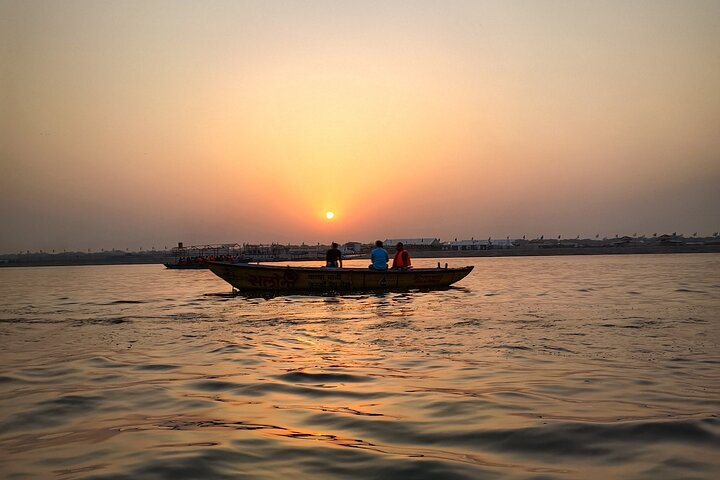
Varanasi Sunrise Boat Tour
From $42.89 · Price checked: Aug 2026
Best for: Early risers, older travellers and short-stay visitors who want a calm, seated introduction to the river at dawn with a local host.
Not for: Travellers wanting temples, Sarnath or the evening aarti, which this short boat outing does not include.
An 80 minute sunrise boat ride led by a Varanasi resident, observing morning yoga, mantra recitation and holy dips along the ghats. Short enough to fit before a full day of other plans.
Check availabilityExternal booking on Viator · pricing and cancellations handled by Viator
What Surprised Me About Varanasi
What surprised me most was how little the Varanasi riverfront looks like the same river elsewhere. The Ganga here is wide, slow and opaque, and the city presses right up against it. If you're picturing clear mountain water, adjust that picture before the boat pushes off.
In the spring of 2025 I stood at Triveni Ghat, upstream in the hills. The Ganga here ran fast, cold, and green between forested hills, and I could see stones on the bottom. At the evening aarti, families sat on clean steps, and the air smelled of pine and river instead of woodsmoke.
The two places share a river and almost nothing else. I wouldn't treat them as interchangeable stops, and I wouldn't sell a Varanasi dawn boat to someone who has their heart set on quiet, nature and yoga.
Vishwanath Gali, in the winter of 2023, surprised me too. The lane narrowed until two people could not pass without turning sideways, and the air was thick with marigold, incense, and the sourness of drains. I left my sandals at a stall and walked the last stretch barefoot on stone slick with flower water. A bell rang somewhere above and didn't stop.
From the water you see the ghat steps, not the lanes packed in behind them. If you're claustrophobic or carrying a full camera bag, save the temple lanes for another day. The core temple lanes require shoe and bag deposits and may restrict cameras, so go with someone who knows the deposit points.
Planning the visit well
My practical advice for a dawn boat in Varanasi comes down to three things. Dress for the temples even if you've only booked the boat. Decide in advance how much time you want at the water's edge. And carry as little as you can.
Pack long trousers or a long skirt, a top that covers your shoulders and a scarf for temple entry. You'll be turned away from several temples in shorts or sleeveless tops.
Think hardest about whether to go with a group or book privately. Our planning notes say private tours leave earlier and let you pause longer without being herded along. Before you pay, ask the operator directly about departure time and how long the boat can stop.
For the lanes behind the river, our Varanasi ghats and temple walking guide covers the ground on foot. Keep in mind that the evening ceremony runs on its own clock. Dashashwamedh Ghat hosts Ganga Aarti, and ceremony timing varies with the season, so confirm the day's start time locally. Our evening aarti guide explains how to plan around it without clashing with a dawn start.
Skip this format if what you want is independent time by the water with no schedule at all. A booked boat, group or private, still runs to someone else's clock.
Before you visit
Before booking a Varanasi dawn boat, check three things: the festival calendar, how comfortable you are with open-air cremation, and whether the boat's pace fits the rest of your day.
The dawn boat and the evening aarti are different experiences, and one doesn't stand in for the other. The morning ride is quiet and seated and shows daily life. The evening ceremony is a gathering with its own crowd.
Festival dates move with the lunar calendar. Look up the published date when you first plan, then check it again close to departure before you pay for anything you can't cancel. My Dev Deepawali evening showed me how quickly the riverfront fills.
Think again about the burning ghat. If open-air cremation is more than you can take in on a first morning, you're allowed to say so. Ask your host to keep the boat's distance and look at the water.
A dawn boat isn't for travellers who treat the river as a backdrop on a checklist. If you're still weighing formats, our Varanasi pilgrimage tours overview sets the boat rides beside walking and temple options, so you can choose the one that fits the pilgrimage you came for.
Explore More
Related comparisons and guides:
Frequently Asked Questions
Which Varanasi morning boat tour suits travellers with limited mobility?
The rowboat listing names travellers with limited mobility as its intended guests, and the sunrise ride names older travellers. Both are seated formats, so what you'll need to manage is getting down the ghat steps to the boat.
Can I photograph Manikarnika Ghat from the boat?
Ask your boat host what local custom allows before you raise a camera near the burning ghat. If you're unsure, keep your lens down and let the moment go unrecorded.
What should I wear for a dawn boat ride in Varanasi?
Wear the same modest clothing you'd wear to a temple, with covered legs and shoulders. Bring a scarf so you can walk from the boat into a temple without going back to your room first.
Is Dev Deepawali a good time for a first boat ride?
Treat the festival as its own trip, not as your introduction to the river. If you want the quieter view, book an ordinary dawn ride on a different day.
Does a morning boat tour include the evening Ganga Aarti?
Neither product in this guide is described as an evening aarti tour, since both run at sunrise. Plan the ceremony at Dashashwamedh Ghat as a separate outing.
Written from Jerusalem and Cairo.