Varanasi for Solo Female Pilgrims: Safety, Dress, and what to expect
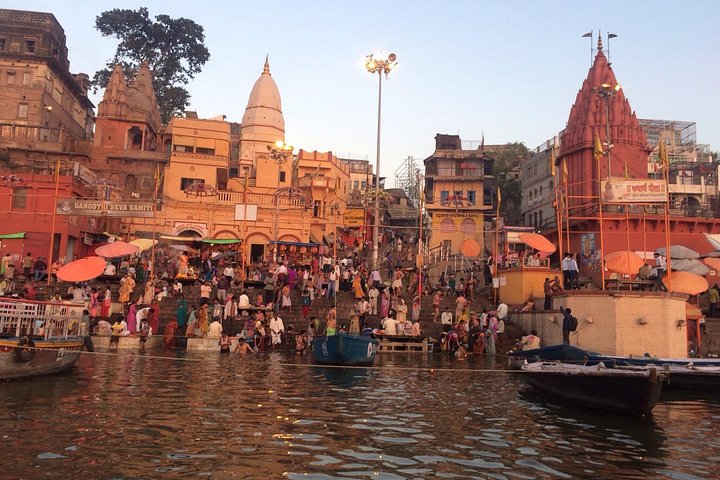
We earn a commission when you book through our links on Viator (PID P00299531), at no extra cost to you. This is how we keep the site free. Learn more →
What shapes a visit to Varanasi
A woman travelling alone can manage Varanasi well if she plans around crowd density and daylight. The risk I weighed was not hostility but crowd pressure and disorientation in the old lanes once evening came. My answer was simple: do your own walking in the early morning, and hand after-dark movement to a guide or pre-arranged transport.
India's Ministry of Tourism describes Varanasi as a pilgrimage city on the Ganges and directs visitors to its ghats and sacred sites.
One autumn I walked to the river in the early dark with a scarf over my hair, and the lanes held only sweepers and dogs. Men noticed me; nobody approached. I remember feeling watched but not threatened, which is a distinction worth holding onto in this city. By evening the same lanes were dense enough that I kept my bag across my body and stayed on the wider streets.
Dress shaped the day as much as timing did. Local guidance I trust is blunt on this point: carry modest clothing, meaning long trousers or skirts, covered shoulders, and a scarf for temple entry, because visitors in shorts or sleeveless tops can be refused at several temples.
Skip an unguided evening wander through the old town if you find narrow, crowded spaces disorienting.
One Day Admirable tour in Varanasi Private Guided Tour: what the itinerary covers
The heading is my shorthand for a planning answer: the shape of this day solves the exact problem my evening walk exposed. It opens with a hand-rowed boat along the ghats towards Manikarnika, moves into the old town lanes and temples, crosses to Sarnath after breakfast, and ends with the evening aarti watched from a rooftop seat.
For a solo woman, that final element matters. A rooftop seat lifts you out of the step-level crush at the ceremony, and a private guide handles the walk home through streets that feel very different after sunset.
Planning solo female pilgrimage safety in Varanasi
The rewarding moments in Varanasi arrived in its densest settings, which is why safety planning and spiritual reward cannot be separated here. Festival nights and the evening aarti gather enormous crowds on the riverfront.
Dev Deepawali made that lesson concrete for me that same autumn. I reached the river before dusk and still found the main steps packed shoulder to shoulder. Lamps continued beyond the curve of the ghats while boat horns and temple bells crossed over the water. Standing there, I understood that nobody moves quickly through a riverfront crowd like that, however confident they feel.
Dev Deepawali follows the Hindu lunar calendar, so confirm the published festival date before booking transport or accommodation. My evening aarti guide covers the ceremony itself in more depth.
If being pressed into a crowd with no quick way out would unsettle you, visit on an ordinary evening and watch from a boat or rooftop.
Varanasi tour in one day: who this tour suits
This private package covers the sunrise boat, the old alleys and a cremation ground, Sarnath and the evening aarti within a single day.
I see its value for a solo woman in the same logic as the first tour: a private guide carries you through both the Hindu and Buddhist sites and through the hours after dark.
Skip this format if you have not yet decided whether you want to stand near open cremation.
What Surprised Me About Varanasi
What surprised me was how openly death and ritual are conducted in Varanasi. At Manikarnika Ghat, cremation happens in daylight, beneath the open sky, and in full view. Before you plan a visit, ask yourself whether you are comfortable with unmediated ritual, because the city makes no attempt to soften it for visitors.
I went back in winter and stood above the burning ghat. Standing above the burning ghat in woodsmoke, I thought of the Holy Sepulchre's queue and how carefully death is enclosed there: under a dome, behind marble, kept at a respectful distance. Here it was open to the sky, conducted in daylight, and nobody lowered their voice. I am not comparing the holiness of the two places; I am describing two very different ways of making death visible, and they ask different things of a visitor.
Your comfort threshold is the variable that matters. Leave conduct questions to the people who tend the ghat, and follow their lead.
The river itself surprised me too. Far upstream in the hills one spring, I stood at a different ghat on the same river. The Ganga here ran fast, cold, and green between forested hills, and I could see stones on the bottom. In Varanasi it had been wide, slow, and opaque, and the evening air there smelled of woodsmoke, where upstream it smelled of pine and river. The two places share a river and almost nothing else.
Sarnath offers a quieter register within reach of the city. According to India's Ministry of Tourism, Sarnath and its Deer Park carry their own Buddhist pilgrimage significance, which is why the full-day tours pair it with the ghats.
Planning the visit well
My core advice is to go private if dawn at the ghats matters to you. A group tour can herd you along the river at a fixed pace, while private tours leave earlier and allow a longer pause.
The third product I would shortlist, the Varanasi One Day Tour with Sarnath, Boat Ride and Aarti, suits first-time visitors and older travellers because it builds breaks for breakfast and lunch into the circuit. It reaches the evening aarti by boat, which gives you distance from the steps.
Dashashwamedh Ghat hosts the Ganga Aarti, and ceremony timing changes with the season, so confirm that day's start time locally, with your guide or your guesthouse, on the morning itself. My Varanasi planning guide sets out how to sequence arrival days, and the pilgrimage tours comparison lines up the full range of guided options.
Book a group departure instead when cost and company matter more to you than a long, unhurried pause at the river.
Before you visit
Before booking, check four things: your festival dates, your after-dark transport, your modest clothing, and your own tolerance for open ritual.
First, set your walking hours. I would front-load independent exploring into the early morning, when the lanes are quiet, and treat the evening as guided time. Second, pack the scarf and covered clothing from the start, so that temple entry never becomes a negotiation. Third, if your trip overlaps Dev Deepawali, reserve accommodation well ahead and agree a meeting point, because the riverfront will not let you hurry.
Fourth, and hardest to plan for, decide in advance how close you want to be to cremation. I found Manikarnika moving, but I had thought about it beforehand, and I would urge you to do the same. If you know you prefer structured, enclosed sacred sites, weigh that preference seriously before choosing Varanasi as your first solo pilgrimage.
This city does not suit a traveller who wants to wander freely at every hour without a plan. It rewards the woman who respects its rhythms, dresses for its temples and lets a guide carry her through its evenings.
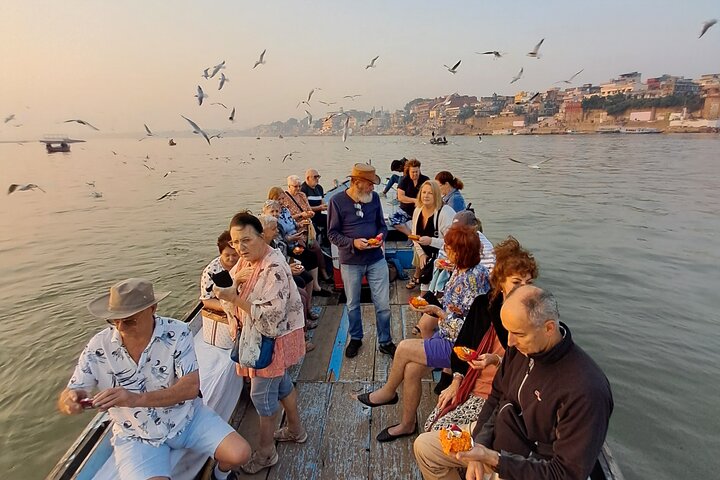
One Day Admirable tour in Varanasi Private Guided Tour
From $65.38 · Price checked: Aug 2026
Best for: Travellers with one day in Varanasi who can manage a very early start and a twelve to fourteen hour schedule, and who value seated aarti viewing.
Not for: Anyone uncomfortable passing an active cremation ghat, or travellers who want a gentler pace spread over two days.
A long private day starting with a 5 am hand-rowed boat along the ghats to Manikarnika, then old town lanes and temples, Sarnath after breakfast, and evening aarti viewed from a rooftop seat.
Check availabilityExternal booking on Viator · pricing and cancellations handled by Viator
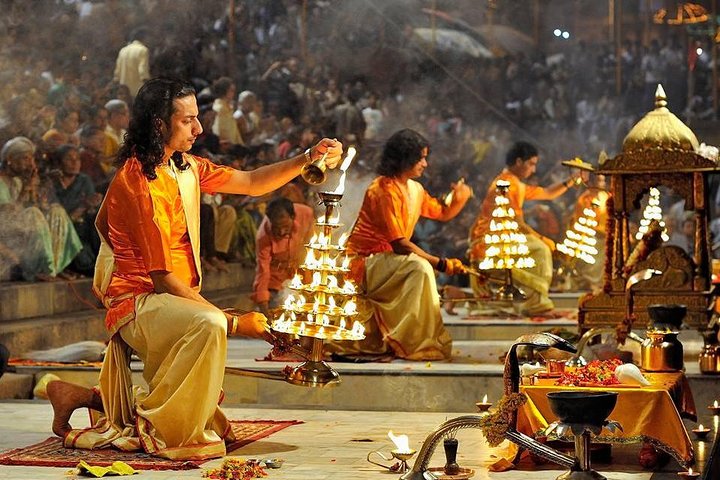
Varanasi tour in one day
From $63 · Price checked: Aug 2026
Best for: Short-stay visitors with a single day and stamina for up to fourteen hours, who want Hindu and Buddhist sites handled in one private plan.
Not for: Travellers uncomfortable at cremation grounds, or anyone with limited energy who would be better served splitting the day.
A private package for one full day, covering the sunrise boat, old alleys and a cremation ground, Sarnath and evening aarti. Coverage matches similar full-day plans, so compare timings and details.
Check availabilityExternal booking on Viator · pricing and cancellations handled by Viator
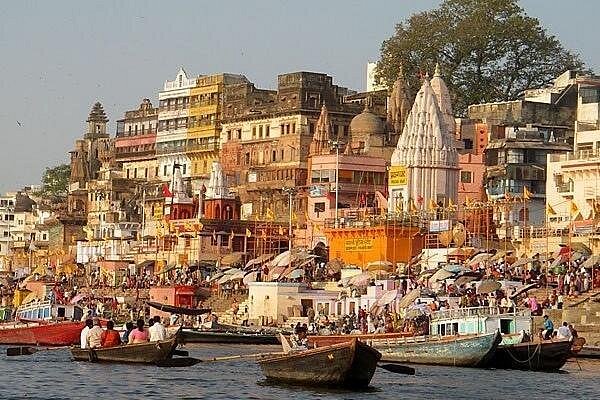
Varanasi One Day Tour with Sarnath, Boat Ride & Aarti
From $117.34 · Price checked: Aug 2026
Best for: First-time visitors and older travellers who want the full Hindu and Buddhist circuit with built-in breaks, or the option to spread it over two days.
Not for: Travellers with only a few hours free, or those wanting a food or ashram focus rather than the standard circuit.
A private fourteen hour day with dawn boat, old city walk, Sarnath and an evening boat ride to the Ganga Aarti, with breaks for breakfast and lunch. It can also be split across two days.
Check availabilityExternal booking on Viator · pricing and cancellations handled by Viator
Explore More
Related comparisons and guides:
Private Varanasi Tours I Would Shortlist
Frequently Asked Questions
Is Varanasi safe for a woman travelling alone?
Varanasi can be managed alone with planning, and the pressures I weighed came from crowds and confusing lanes after dark. Arranging your transport before evening removes the part of the day I found hardest to handle alone.
What should a woman wear to temples in Varanasi?
Pack long trousers or a long skirt, a top that covers the shoulders, and a scarf you can use for temple entry. Custodians at each shrine have the final word, so keep the scarf in your day bag rather than at your guesthouse.
Should I choose a private or group tour as a solo female pilgrim?
A private tour gives you control over pace and a guide for the walk home after the aarti. Group departures can suit travellers who value company, though they give you less time on the river at dawn.
Can I visit Manikarnika Ghat as a visitor?
Visitors do stand above the burning ghat, but cremation there is a family rite as well as a public sight. Ask your guide where to stand and follow the lead of the people conducting the ritual.
When is Dev Deepawali held in Varanasi?
The festival date moves each year because it follows the Hindu lunar calendar. Check the published date first, then book rooms and transport around it.
Written from Jerusalem and Cairo.