Planning a Varanasi Pilgrimage: Everything I Wish I Knew Before Going
We earn a commission when you book through our links on Viator (PID P00299531), at no extra cost to you. This is how we keep the site free. Learn more →
What shapes a visit to Varanasi
If you are planning a first pilgrimage here, plan around the river's daily rhythm. Put the quiet early hours at the ghats first, dress modestly for temples, and have a guide or booked transport ready for when the lanes fill up. India's Ministry of Tourism describes Varanasi as a pilgrimage city on the Ganges and directs visitors to its ghats and sacred sites. The rest of this guide follows from that.
I arrived expecting intensity and got something more changeable. On my first morning I walked to the river before six with a scarf over my hair, and the lanes held only sweepers and dogs. Men noticed me, but nobody approached. The city felt spacious in a way I had not been warned about, as if the river's edge belonged to anyone who got up early enough.
By nightfall it was a different place. By evening the same lanes were dense enough that I kept my bag across my body and stayed on the wider streets. Nothing went wrong. What I felt was crowd pressure, plus the uneasy sense that a wrong turn in those narrow passages could cost me an hour. For solo women I would put the mornings first and arrange a guide or transport after dark, and I have gathered more of that thinking in my Varanasi safety notes for women travelling alone.
Full Day Varanasi Private Tour with Temples, Ghats & Rituals: what the itinerary covers
This is the format I would steer a nervous first-timer towards, because it answers the problem those evening lanes raised. According to the listing, it is a private full day with a local guide. It starts with a sunrise boat and then moves through old temples and alleyways, so the hardest-to-navigate parts of the city come with someone who knows them.
The weakness is in the paperwork. The listing gives little detail about individual sites, so before paying, confirm in writing whether Sarnath or the evening aarti is included. It suits travellers who are happy to agree stops with a guide in advance and to let that guide's stories shape the day.
Planning pilgrimage planning in Varanasi
Manikarnika Ghat was the place where my own pilgrim habits met their limit. Standing above the burning ghat in woodsmoke, I thought of the Holy Sepulchre's queue and how carefully death is enclosed there: under a dome, behind marble, kept at a respectful distance. Here it was open to the sky, conducted in daylight, and nobody lowered their voice. I have spent years around sacred places where mourning is architectural. This was ritual without that layer of mediation, and I needed a few quiet minutes to understand that what I was watching was not mine to interpret.
My judgement is simple. Choose Varanasi if you want ritual that is not filtered through structured, enclosed sites, and be candid with yourself about your comfort threshold before you go. Skip lingering at the burning ghat if open cremation is something you cannot watch with composure. Mourning families deserve better than a visitor's visible distress, and in my view a camera has no place there.
Sarnath gave me the counterweight. The great brick stupa rose out of clipped lawns like something left behind by a different country, while monks in maroon walked slowly around it and parakeets argued in the trees. After my four days in Varanasi's lanes, the open sky overhead felt like taking off a heavy coat. India's Ministry of Tourism keeps a dedicated page on Sarnath and its Deer Park, which is worth reading before you go so the site has some context when you arrive.
Explore the Highlights of Varanasi: who this tour suits
Not every pilgrim wants a river-first day. This private walk through old Varanasi combines heritage sites with tastings of masala chai, local snacks and lassi, and food and daily life get more space here than on the boat-focused tours. For a family with children, or for anyone who finds the ritual core of the city heavy going, it offers a gentler way into the lanes at a pace you control.
What Surprised Me About Varanasi
What surprised me most is how specific Varanasi is. The Ganga is not one experience. If you are after quiet, yoga or forest air, this city will not give you those, however well you plan.
I understood this only when I saw the river somewhere else, a season later, in the forested hills far upstream. The Ganga here ran fast, cold, and green between forested hills, and I could see stones on the bottom. In Varanasi it had been wide, slow, and opaque. At the evening aarti there, families sat on clean steps and the air smelled of pine and river, not woodsmoke. The two places share a river and almost nothing else, so do not plan them as interchangeable.
The calendar surprised me too. Dashashwamedh Ghat hosts Ganga Aarti, and ceremony timing varies with the season, so confirm the day's start time locally. Festival dates also move. Dev Deepawali follows the Hindu lunar calendar, so confirm the published festival date before booking transport or accommodation. My guide to timing a Varanasi visit goes into seasons in more depth, but the principle is the same in every month: check the date first and book afterwards.
Planning the visit well
Start with clothing. Pack long trousers or skirts, tops that cover your shoulders and a scarf for temple entry. You will be denied access to several temples in shorts or sleeveless tops, and the heat does not change that. I keep the same scarf with me from the dawn walk to the last temple, and it earns its space in the bag.
Next, think carefully about dawn. Do not book a group tour if you want time at the ghats at dawn; private tours leave earlier and allow a longer pause without being herded.
Finally, pin down the route. The Pilgrimage Varanasi outing is a shorter guided introduction with a licensed guide who shares local knowledge and personal stories. Its listing does not name specific stops, so it works for visitors who are happy to shape the route in conversation on the day. I compare the formats side by side in my Varanasi pilgrimage tours guide.
Before you visit
I wish I had known that planning Varanasi comes down to limiting what you have to decide on the spot. Fix your dawns, your evening transport and your rest day before you land, and leave the rest open. Here is what I would check before booking anything, based on what my own days there taught me.
- Ask any full-day tour whether Sarnath and the evening aarti are included, and get the answer in writing.
- Confirm the day's aarti start time locally, since it shifts with the season.
- Check the published Dev Deepawali date before you commit to trains, flights or rooms.
- Arrange pre-booked transport or a guide for after dark if you are travelling alone.
- Protect a quiet half-day for Sarnath in the middle of the trip so it does not get squeezed.
- Pack temple clothing and a scarf that you can carry all day without thinking about it.
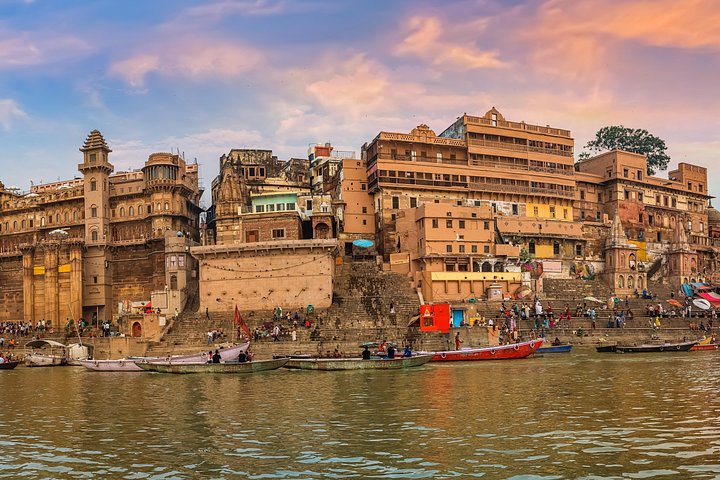
Full Day Varanasi Private Tour with Temples, Ghats & Rituals
From $24 · Price checked: Aug 2026
Best for: Travellers wanting a private full day in Varanasi shaped by a local guide's stories, who are happy to agree on stops in advance.
Not for: Planners who need a named site list, or those with limited stamina for an eleven hour day.
A private eleven hour day with a local guide, starting with a sunrise boat and moving through old temples and alleyways. Site detail is thin, so confirm whether Sarnath or aarti is included.
Check availabilityExternal booking on Viator · pricing and cancellations handled by Viator
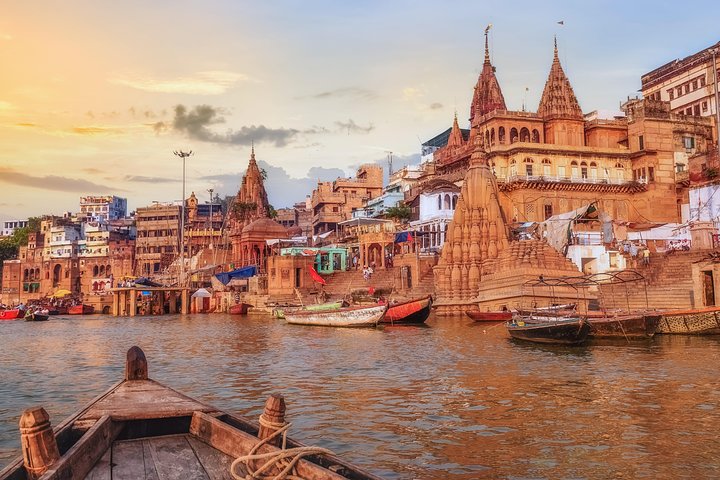
Explore the Highlights of Varanasi
From $38.69 · Price checked: Aug 2026
Best for: Families with children and relaxed walkers who want two to four hours of old city lanes, local food and a flexible private pace.
Not for: Travellers wanting a sunrise boat ride, Sarnath or the evening aarti, none of which is listed for this walk.
A private walk through old Varanasi mixing heritage sites with tastings of masala chai, local snacks and lassi. Food and daily life take a larger share here than on boat-focused tours.
Check availabilityExternal booking on Viator · pricing and cancellations handled by Viator
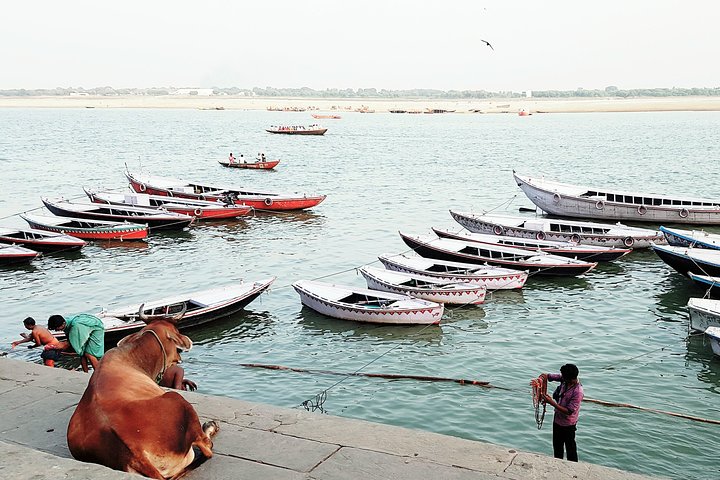
Pilgrimage Varanasi
From $32 · Price checked: Aug 2026
Best for: Visitors who want a shorter introduction to Varanasi with a licensed guide and are happy to shape the route in conversation on the day.
Not for: Planners who need a fixed itinerary of ghats, temples or ceremonies set out before the day begins.
A three to four hour guided outing in Varanasi with a licensed guide who shares local knowledge and personal stories. The listing does not name specific stops, so confirm the route before booking.
Check availabilityExternal booking on Viator · pricing and cancellations handled by Viator
Explore More
Related comparisons and guides:
Frequently Asked Questions
Is Sarnath worth a separate half-day from Varanasi?
Yes, if you give it unhurried time, because its open lawns and slow pace are a real break from the dense old city. Read the Ministry of Tourism's Sarnath page beforehand so the stupa and Deer Park make sense when you arrive.
When does Ganga Aarti start at Dashashwamedh Ghat?
The start time changes with the season, so no single time holds all year. Ask your guesthouse or guide on the morning of the day you plan to attend.
Is Varanasi safe for a woman travelling alone?
The main risks I would plan for are crowd pressure and getting lost in narrow lanes after dark. Booking a car or guide for the evening return deals with both.
Which Varanasi tour suits a family with children?
The Explore the Highlights of Varanasi walk is designed for families and relaxed walkers. Its chai, snack and lassi stops give children natural breaks in the day.
How should I plan around Dev Deepawali?
Treat the festival date as the fixed point and build everything else around it, because the lunar calendar moves it from year to year. Only book rooms and transport once the date is published.
Written from Jerusalem and Cairo.