When to Visit Varanasi: Monsoon, Festival Season, and What Pilgrims Miss
We earn a commission when you book through our links on Viator (PID P00299531), at no extra cost to you. This is how we keep the site free. Learn more →
What shapes a visit to Varanasi
When you go to Varanasi depends on which riverfront you want to meet. One is the packed, lamp-lit riverfront of Dev Deepawali. The other is the quieter ghats of an ordinary dawn.
The official framing is simple. India's Ministry of Tourism describes Varanasi as a pilgrimage city on the Ganges and directs visitors to its ghats and sacred sites.
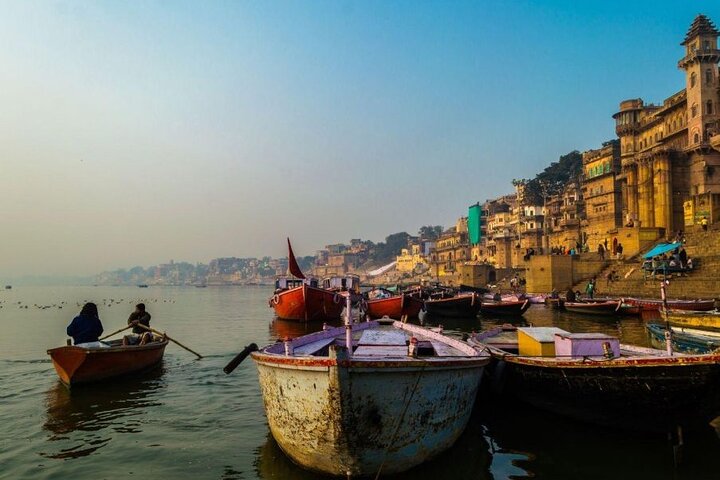
My own first lesson came at Dev Deepawali in the autumn of 2024. I reached the river before dusk and still found the main steps packed shoulder to shoulder. Lamps kept going beyond the curve of the ghats, further than I could see, while boat horns and temple bells carried across the water. I had assumed that arriving early would give me room to move. It did not, and I spent the evening adjusting to the crowd instead of drifting along the riverfront as I had pictured.
That evening left me with a working rule. Dev Deepawali calls for a fixed meeting point with your companions, a planned exit, and accommodation booked well ahead. The festival follows the Hindu lunar calendar, so confirm the published festival date before you book transport or a room.
If dense crowds unsettle you, or if slow shuffling through packed steps would strain your body, the festival is the wrong first visit.
Varanasi Sunrise Boat Tour: what the itinerary covers
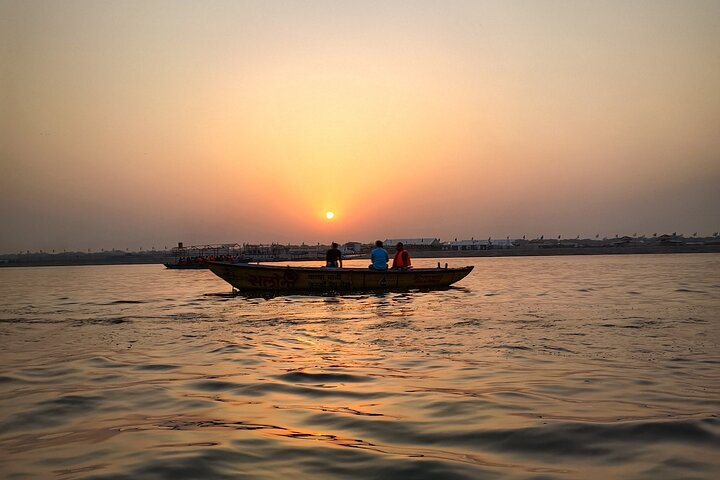
For a short stay, this is the format I would put first, because it answers the timing question without asking much of you. A Varanasi resident leads the ride at sunrise, and from the water you watch morning yoga, mantra recitation and holy dips along the ghats.
I like it for early risers, older travellers and anyone who wants a calm, seated introduction to the river with a local host.
Varanasi Sunrise Boat Tour
From $42.89 · Price checked: Aug 2026
Best for: Early risers, older travellers and short-stay visitors who want a calm, seated introduction to the river at dawn with a local host.
Not for: Travellers wanting temples, Sarnath or the evening aarti, which this short boat outing does not include.
An 80 minute sunrise boat ride led by a Varanasi resident, observing morning yoga, mantra recitation and holy dips along the ghats. Short enough to fit before a full day of other plans.
Check availabilityExternal booking on Viator · pricing and cancellations handled by Viator
Planning seasonal pilgrimage planning in Varanasi
Dawn is the moment that rewards careful planning, whatever the season. At first light, the ghats are a place of daily practice, not spectacle, and you see bathing, prayer and yoga before the city fully wakes.
If you want time at the ghats at dawn, do not book a group tour. Private tours leave earlier and let you pause longer without being herded.
I learned the value of an early start in a very different city. On the Via Dolorosa in Jerusalem in the autumn of 2022, my group started in the Muslim Quarter where metal shutters were still down and the lane smelled of bread and wet stone. The stations were marked modestly, some with barely a plaque above a doorway. By the time we reached the Sepulchre, the lanes behind us had filled with carts, spices and shouted prices. The lesson I took from it, to cover less ground and walk slowly, fits the Varanasi riverfront as well.
Varanasi Morning Boat Tour [RowBoat]: who this tour suits
This rowboat outing also sets off at sunrise, but it keeps you on the water for longer than the shorter sunrise ride. You watch Hindu daily life along the riverbanks from a seated position, at the pace of oars.
It suits early risers and travellers with limited mobility who want a slow morning as a first introduction to the ghats.
![Varanasi Morning Boat Tour [RowBoat] - photo](/images/7330P3.jpg)
Varanasi Morning Boat Tour [RowBoat]
From $45 · Price checked: Sep 2026
Best for: Early risers and travellers with limited mobility who want a seated, slow-paced morning on the river as a first introduction to the ghats.
Not for: Visitors wanting temples, Sarnath or the evening aarti, none of which is included in this morning outing.
A three hour rowboat outing at sunrise along the ghats, observing Hindu daily life on the riverbanks. It allows more time on the water than the shorter 80 minute sunrise option.
Check availabilityExternal booking on Viator · pricing and cancellations handled by Viator
What Surprised Me About Varanasi
The evening ceremony does not keep one fixed clock. Dashashwamedh Ghat hosts Ganga Aarti, and ceremony timing varies with the season, so confirm the day's start time locally.
I have written more about how to approach the ceremony in my Varanasi evening aarti guide.
The monsoon is the season I can say least about with confidence. If your dates fall in the wet months, ask your boat operator and your accommodation directly, close to travel, whether river outings are running.
A port day in the north of Israel taught me something that applies here. In the autumn of 2023, I could still smell salt near the terminal when the road began climbing away from Haifa. In Nazareth, I kept one eye on the church courtyard and one on the time I needed to get back to the harbour. That day showed me that a tight window needs fewer stops and a clear turnaround point. In Varanasi, the evening ceremony plays the role of the harbour: fix it as your anchor, choose the sacred sites that matter most, and protect your return to the river.
Avoid stacking a late-running evening on top of a very early dawn if you tire easily.
Planning the visit well
Good timing in Varanasi is as much about preparation as the calendar.
Start with clothing. Carry modest clothing: long trousers or skirts, covered shoulders, and a scarf for temple entry. You will be denied access to several temples in shorts or sleeveless tops. I keep a scarf in my day bag throughout a visit, since plans change and a temple door may open to you unexpectedly.
Next, think about where your mornings begin. On Route One from Tel Aviv toward Jerusalem in the summer of 2021, the coach left the coast in flat morning haze and began the long climb through the pine hills, air conditioning rattling, everyone silent. By the time the first Jerusalem stone walls appeared I had already been sitting for ninety minutes, and the day's walking had not begun. That lesson carries over: if dawn on the river is your priority, choose a base that lets you start from the river, not one that puts a long road between you and the ghats.
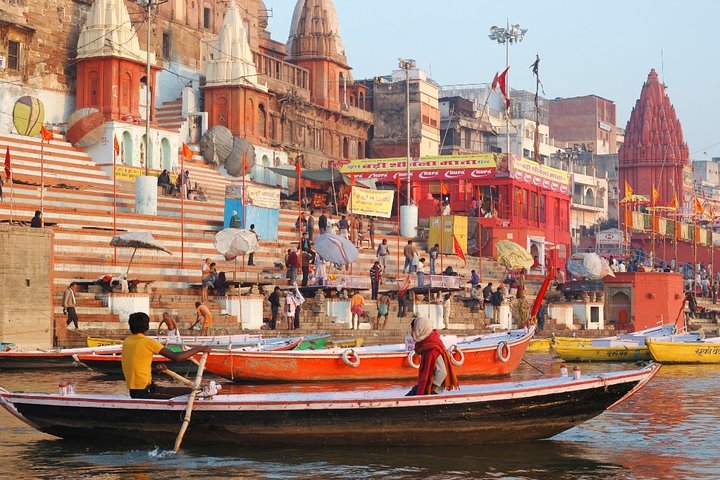
With only one full day, a private itinerary can hold the whole arc. This option pairs a sunrise Ganges boat ride with the Bharat Kala Bhavan museum at BHU and Dhamekh Stupa in Sarnath, and ends at the evening aarti. For background on Sarnath and its Deer Park, the Ministry of Tourism's Sarnath page is a sound place to begin.
It fits families and older visitors who can handle an early start and want Hindu and Buddhist sites plus a museum at a private pace.
Private Full-Day Varanasi Tour with Boat Ride
From $70 · Price checked: Aug 2026
Best for: Travellers with one full day who want Hindu and Buddhist sites plus a museum, at a private pace that suits families or older visitors able to handle an early start.
Not for: Anyone wanting long walks in the old city lanes, or who prefers not to spend twelve hours on a single outing.
A private full day pairing a sunrise Ganges boat ride with the Bharat Kala Bhavan museum at BHU and Dhamekh Stupa in Sarnath, ending at evening aarti. The museum stop sets it apart from similar day plans.
Check availabilityExternal booking on Viator · pricing and cancellations handled by Viator
If you are still weighing formats, my round-up of Varanasi pilgrimage tours sets the options side by side.
Before you visit
Before booking, check four things: the published date of any festival you are chasing, the day's aarti start time, whether your tour is private or shared, and whether your clothing will get you through a temple door.
Here is my pre-booking list, written as a series of checks:
- Confirm the Dev Deepawali date against the published lunar calendar before you pay for any transport or accommodation.
- Agree on a meeting point and an exit route with your companions before the festival crowd gathers.
- Ask locally on the day for the Ganga Aarti start time at Dashashwamedh Ghat.
- Book a private departure if lingering at dawn matters to you, and accept a shared one only if a shorter pause is enough.
- Pack covered clothing and a scarf so that no temple turns you away.
- Ask your operator directly about river outings if you are travelling in the monsoon.
What I would change about my own festival evening is small but real. I would have fixed the exit first and the viewpoint second.
For the wider logistics of the trip, my Varanasi planning guide picks up where this page ends.
Explore More
Related comparisons and guides:
Frequently Asked Questions
Should I plan my Varanasi visit around Dev Deepawali?
Plan around it only if you are comfortable in dense crowds and have secured a room early.
How do I find out when the Ganga Aarti starts?
Ask your hotel, guide or boat host on the day itself. Printed or online times can lag behind seasonal changes at Dashashwamedh Ghat.
Is a sunrise boat ride suitable for travellers with limited mobility?
Both morning boat options are seated, which helps. Ask the operator about boarding at the ghat steps before you book so you know what the embarkation involves.
Can I combine Varanasi and Sarnath in a single day?
A private full-day itinerary can link the river at dawn with Sarnath and a museum at BHU. It asks for stamina, so leave the next morning free if you can.
What should I know about visiting during the monsoon?
I cannot give reliable monsoon conditions here. Contact your boat operator and accommodation close to your travel dates, and treat their answer as the one that counts.
Written from Jerusalem and Cairo.