Masada vs Dead Sea: Which Jerusalem Day Trip Should You Take?
We earn a commission when you book through our links on Viator (PID P00299531), at no extra cost to you. This is how we keep the site free. Learn more →
One is a daytime loop with biblical settings along the road. The other is a pre-dawn departure for sunrise on the fortress, followed by Ein Gedi and a float. I write as a pilgrim who treasures quiet hours, and my judgement leans that way. I have tried to say plainly who should leave each option alone.
I Did Both in One Morning. Here's What I Would Tell a Friend
You can do both, but get the order right. Masada asks something of your legs, and the Dead Sea gives it back. That means one day from Jerusalem works well when the climb comes first and the float follows. Both tours below list Masada ahead of the Dead Sea. Where they differ is the hour you leave and what fills the hours between.
My own proof came in the spring of 2024, in the Judean Desert between the fortress and the shore. I climbed the fortress in the cool hour, then stood two hours later floating in water so heavy it pushed my heels to the surface. Salt dried on my forearms in white lace. My legs were still shaking from the ascent, my skin was slick with mineral mud, and all of it happened before lunch. Reverse that sequence and you would be climbing with a body that has already been told to rest. I would not do it that way.
If a physical ascent is more than you want on this trip, leave the climb off your plans and let the shore be the whole outing. I cover that gentler day in my guide to the Dead Sea from Jerusalem.
Masada and the Dead Sea Day Trip from Jerusalem: The Experience
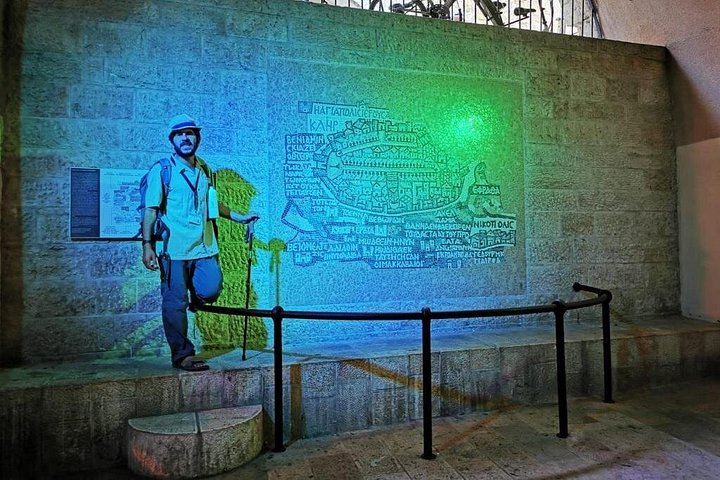
This listing reads as a full desert day with context on the road. It covers Masada's ruins and Herod's palaces, then the Dead Sea, and passes the setting of the Good Samaritan parable along the way. Qumran and the Jordan River baptism site appear as substitutions. I take that as a sign the operator adjusts the route, so ask which version runs on your date if one of those stops carries weight for you.
For a pilgrim who wants a thread of scripture running through a desert day, this strikes me as the more rounded choice. Skip this format if sunrise on Masada is your reason for going, because the listing does not promise it.
Masada and the Dead Sea Day Trip from Jerusalem
From $111 · Price checked: Aug 2026
Best for: Travellers wanting desert history and a Dead Sea visit, with some biblical context along the road, in a single day from Jerusalem.
Not for: Visitors keen on Ein Gedi, which is not listed, or those needing a firm itinerary given the stated substitutions.
A nine hour day from Jerusalem to Masada's ruins, Herod's palaces and the Dead Sea, passing the Good Samaritan setting. Qumran and the Jordan River baptism site are listed as substitutions.
Check availabilityExternal booking on Viator · pricing and cancellations handled by Viator
Where the Sunrise Tour has the advantage
The pull was the hour. In the autumn of 2023, in the Christian Quarter, I learned how much the clock changes a holy place. I reached the Holy Sepulchre before seven, when the limestone still held the night's cold and the loudest sound was a censer chain ticking against itself. Later that same courtyard was a wall of raised phones, and I slipped out through the rooftop monastery, where someone was sweeping dust into the light. The Custody of the Holy Land publishes visitor and liturgy guidance for the church, and I would read it before any early visit.
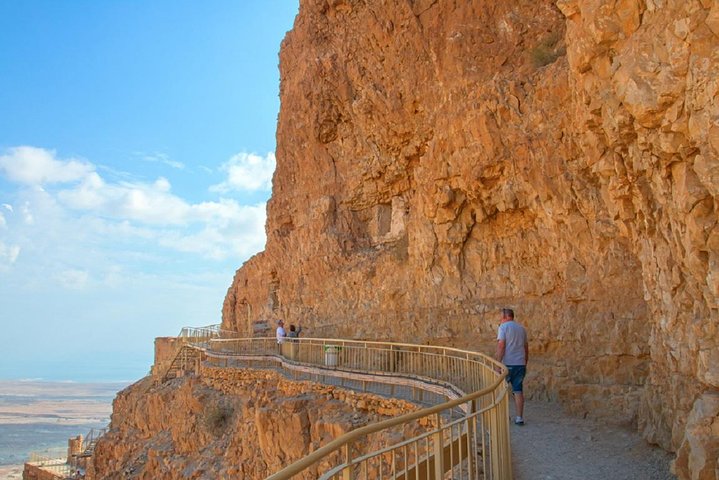
A sunrise ascent at Masada looks like the desert's version of that early hour. I cannot promise you quiet on the plateau, but my own climb taught me that the cool hour is when the fortress should be climbed anyway. Israel Nature and Parks Authority publishes current opening hours and trail notices for Masada National Park, so check its notice before planning a sunrise ascent.
What kept it from a flat recommendation was the cost to your sleep and your budget. A pre-dawn start means an early night before and a long day after, and some of the gates on this route are left for you to pay.
Dead Sea, Masada at Sunrise and Ein Gedi Tour from Jerusalem: The Experience
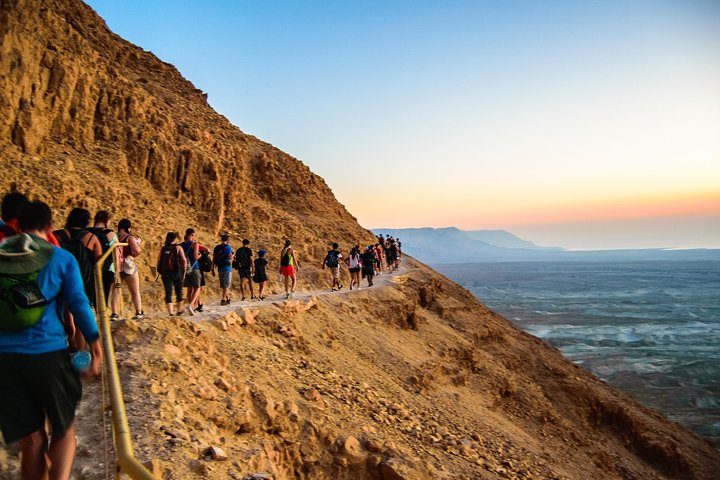
The listing is simple. You leave Jerusalem before dawn, watch the sunrise on Masada, spend time at the Ein Gedi oasis, and finish with a float in the Dead Sea. The Dead Sea beach entrance fee is included, while Masada and Ein Gedi entrance fees and meals are not, so bring a way to pay at each gate and something to eat.
I would weigh Ein Gedi as the deciding stop. It puts a pause between the fortress and the salt, and that rhythm suits a pilgrim who wants time to take in a place before moving to the next one. Choose the daytime tour instead if a pre-dawn alarm would leave you too tired to enjoy the float at the end.
Dead Sea, Masada at Sunrise and Ein Gedi Tour from Jerusalem
From $109 · Price checked: Sep 2026
Best for: Early risers with one free day in Jerusalem who want the Masada sunrise, Ein Gedi and a Dead Sea float in a single trip.
Not for: Travellers who would rather not leave before dawn, or who expect Masada and Ein Gedi entrance fees and meals to be included.
A pre-dawn start from Jerusalem for sunrise on Masada, then time at the Ein Gedi oasis and a float at the Dead Sea. The Dead Sea beach entrance fee is included; Masada and Ein Gedi entrance fees and meals are not.
Check availabilityExternal booking on Viator · pricing and cancellations handled by Viator
How to make the decision
For a first-time pilgrim with one desert day, I lean toward the sunrise tour. For anyone who wants biblical landmarks woven into the drive, I lean toward the daytime loop. What settled it was the Masada lesson itself: the climb belongs in the cool hour, and only one of these listings builds its whole day around that hour.
In the summer of 2021 I watched a coach leave the coast in flat morning haze and begin the long climb through the pine hills, air conditioning rattling, everyone silent. By the time the first Jerusalem stone walls appeared I had already been sitting for ninety minutes, and the day's walking had not begun. Both desert tours here start from Jerusalem. If you are based elsewhere, you would be stacking a transfer on top of an early pickup before the desert even begins.
So my advice is to sleep in Jerusalem and start from a Jerusalem pickup point. Book the daytime loop instead when your bed is outside the city, because pairing a pre-dawn departure with a long transfer is a poor trade for the view. My roundup of Jerusalem pilgrimage tours can help you plan the rest of the week around your desert day.
Before you visit
Check the parks authority notice the evening before a sunrise ascent, set aside money for entrance fees the sunrise listing excludes, and protect a separate morning for the Old City. Jerusalem rewards early hours as much as the desert does, and a desert day spent recovering from a rushed Old City visit helps no one.
Carry your passport on any day out of the city, too. In the winter of 2022, on a short road south of Jerusalem, I learned how close and how administratively separate places here can be. The bus idled at the crossing long enough for the windows to fog, and I drew a line through the condensation to watch the wall go past in grey panels. Ask any operator which vehicle takes you through each leg before you book, and get the answer in writing.
Religious observances can change access and crowd patterns in the Old City, so confirm official visitor notices before travel. The Western Wall Heritage Foundation sets out conduct and dress guidance for the prayer plaza, and I would pack for it on your city day whatever the weather. For background on why these streets carry such weight, the UNESCO World Heritage Centre keeps the record for the Old City of Jerusalem and its Walls.
Giving the Old City Its Own Morning
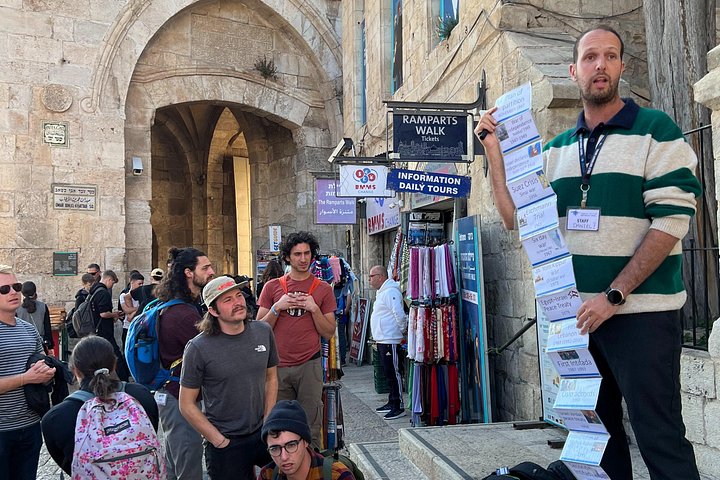
The Old City quarters walk promises a guide who will tailor the route, and the provider says little beyond that. I see the flexibility as useful for pilgrims with a particular church, gate or street in mind, as long as you name it when you book. Skip this format if you need a fixed list of sites confirmed in advance, since the listing leaves its stops open.
Best seller! Jerusalem old city four quarters tour
From $450 · Price checked: Jul 2026
Best for: Visitors who want a half day in Jerusalem's Old City with a guide willing to adapt the route to their interests and pace.
Not for: Travellers who need a confirmed site list or transport arrangements, as the listing details neither.
A five hour guided walk through the Old City's four quarters. The provider offers little detail beyond a promise to tailor the route, so ask about specific sites when booking.
Check availabilityExternal booking on Viator · pricing and cancellations handled by Viator
The Classic Jerusalem Old City Tour takes a different approach. A resident guide presents the Old City as shared ground, with both its conflicts and its harmonies. For a first visit, that framing strikes me as a respectful way in. Returning visitors who already know the quarters may find a general orientation too broad for their second or third time. The source detail on specific stops is thin, so ask. My Old City walking tour guide compares more ways to spend that morning.
Classic Jerusalem Old City Tour
From $478.12 · Price checked: Aug 2026
Best for: First-time visitors to Jerusalem who want a general orientation to the Old City from a resident guide, within a flexible three to six hour window.
Not for: Travellers who need a named list of sites in advance, or a trip that goes beyond the Old City walls.
A guided Old City walk with a local guide who frames its one square kilometre as shared ground for three faiths, with both conflicts and harmonies. Source detail on specific stops is limited.
Check availabilityExternal booking on Viator · pricing and cancellations handled by Viator
Explore More
Related comparisons and guides:
Frequently Asked Questions
Can I see Masada and the Dead Sea in one day from Jerusalem?
Yes. Both desert tours on this page combine the two in a single Jerusalem departure, so you do not need to book separate trips.
What should I pay for myself on the sunrise tour?
Plan to pay Masada and Ein Gedi entrance and buy your own meals on the day. Ask the operator in advance whether card or cash works at each stop.
Which tour has more biblical context?
The daytime Masada and Dead Sea trip passes the Good Samaritan setting and may include Qumran or the Jordan River baptism site instead. If one of those alternates is your main reason for booking, confirm it in writing.
Is the Masada sunrise tour right for everyone?
It does not suit travellers who struggle with very early starts or who do not want a physical climb. For them, a Dead Sea day without the ascent is the kinder plan.
When should I check Masada's opening notices?
Check once when you book and again the evening before you travel, because the parks authority posts current trail and access notices on its own site.
Written from Jerusalem and Cairo.