Dead Sea from Jerusalem: Which Tour Leaves Time to Float?
We earn a commission when you book through our links on Viator (PID P00299531), at no extra cost to you. This is how we keep the site free. Learn more →
What shapes a visit to Dead Sea
A Dead Sea day from Jerusalem works when the itinerary protects your time in the water and doesn't stack stops until the float shrinks to a rushed dip. Of the two tours I compare here, one builds its day around Masada's ruins with the Dead Sea to follow. The other starts before dawn so that Masada, Ein Gedi and a float all fit.
I didn't expect a lesson from the Old City to shape how I read these itineraries. On one combined day I tried to reach far too many holy places between breakfast and dusk. By afternoon my shirt clung to my back, and the crossing queue smelled of diesel and warm bread from a cart nearby. I remember rosaries clinking in a shop doorway more clearly than I remember the grotto, because I reached it with my eyes on my watch. The stone lanes deserved slow feet, and I had walked them like corridors.
Since that day, I read a tour's list of stops as a list of competing claims on your attention. If the float is why you are crossing the desert, it deserves more than the minutes left over once everything else is done. Skip the desert altogether if your only free day in Jerusalem is also your only chance to see the Old City. In that case the Old City walking tour has the stronger claim on your day.
Masada and the Dead Sea Day Trip from Jerusalem: what the itinerary covers
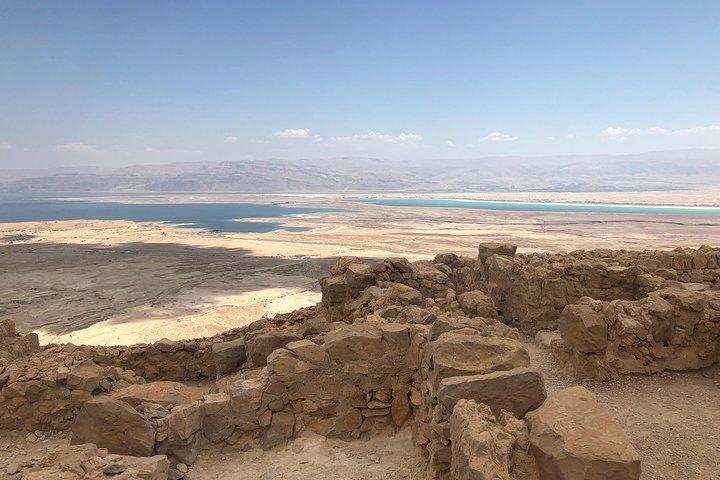
I use "saved" here in the planning sense. If a reader brought me an overstuffed desert plan to rescue, this is the shape I would point to. It has one anchor site, one place to rest in the water, and a road with some biblical context along the way. The day covers Masada's ruins and Herod's palaces, then the Dead Sea, and it passes the Good Samaritan setting on the road.
Qumran and the Jordan River baptism site appear in the record as substitutions. To me that means the day can bend, so ask the operator which version runs on your date before you promise yourself either stop. Choose this tour if you want desert history and a Dead Sea visit without a pre-dawn alarm.
Planning Jerusalem to Dead Sea
The moments worth protecting on a Jerusalem to Dead Sea day are the quiet ones. That means first light on Masada if you choose the sunrise format, a pause at the Ein Gedi oasis, and the float itself.
I learned to value unhurried moments inside the Church of the Holy Sepulchre. After the bright courtyard, the air inside smelled of beeswax, incense and old stone, and it cooled the back of my neck. Lamps hung low over the Stone of Anointing, where a woman pressed a folded cloth to the surface and then to her cheek. The line toward the Edicule barely moved, and I heard prayers murmured in several languages within a few steps of me.
I counted that wait as part of the visit, and I would ask you to treat a desert day the same way. The Custody of the Holy Land publishes visitor and liturgy schedule guidance for the Holy Sepulchre. Services can change what you are able to see, so read that guidance before choosing which day goes to the desert.
Dead Sea, Masada at Sunrise and Ein Gedi Tour from Jerusalem: who this tour suits
This is the tour for early risers with one free day in Jerusalem who want three things in a single trip. It leaves Jerusalem before dawn for sunrise on Masada, continues to the Ein Gedi oasis, and ends with a float in the Dead Sea. The Dead Sea beach entrance fee is included. Masada and Ein Gedi entrance fees and meals are not, so bring a way to pay for those and plan where you will eat.
The sunrise is the reason to choose it, and the sunrise depends on the mountain being open. Israel Nature and Parks Authority publishes current opening hours and trail notices for Masada National Park, so check its notice before planning a sunrise ascent. You can find those notices on the Masada National Park page. Pass on this tour if a pre-dawn start would leave you too tired to enjoy the water later.
What Surprised Me About Dead Sea
What surprised me most was how much the fine print decides the day. The Masada day trip lists substitutions that could swap in Qumran or the Jordan River baptism site. The sunrise tour includes the Dead Sea beach entrance but leaves Masada and Ein Gedi fees and meals to you.
For a pilgrim, the Jordan River baptism site may be the spiritual heart of the whole journey. A substitution is not a promise, though, and I would not book the day trip on the assumption that the site will be included.
Costs surprised me in a quieter way. Paying the entrance fees on the sunrise tour yourself is fine, as long as you know about them before you set out. If you are still deciding whether the fortress or the water should lead your day, my Masada vs Dead Sea comparison sets out how the two pull against each other. I also noticed that the Good Samaritan setting is described as a place the day trip passes. I would treat it as roadside context, not a planned stop where you can linger.
Planning the visit well
Get the Dead Sea right by planning your Jerusalem week around it, not squeezing it into gaps. Put the desert on a day with no early church plans and give the Old City its own mornings. Keep the sunrise tour and an early Holy Sepulchre visit on separate days.
In Jerusalem the hour shapes the visit. I reached the Holy Sepulchre before seven, when the limestone still held the night's cold and the loudest sound was a censer chain ticking against itself. By ten the same courtyard was a wall of raised phones. I slipped out through the rooftop monastery, where someone was sweeping dust into the light. A sunrise desert tour asks for exactly that kind of early morning. Two dawn starts back to back will cost you the attention both deserve.
Build your calendar around the fixed points first. Western Wall tunnel tours can sell out well ahead, so book one before you settle your desert day. If the Temple Mount (Haram al-Sharif) is on your list, avoid Fridays and Saturdays, when non-Muslim access is restricted to specific hours. That can make one of those days a sensible choice for the Dead Sea. The UNESCO World Heritage Centre record for the Old City of Jerusalem and its Walls gives useful background as you plan.
Pack for the Old City as well as the desert. The Western Wall Heritage Foundation publishes conduct and dress guidance for the prayer plaza, and it applies whatever the weather.
Before you visit
I wish I had known that distance on a map tells you little about time on the road around Jerusalem.
A winter road out of Jerusalem taught me this. The bus idled at the crossing long enough for the windows to fog, and I drew a line through the condensation to watch the wall go past in grey panels. Carry your passport on any day that takes you out of the city, and choose an operator whose description states clearly which vehicle takes you where.
Before booking, I would check four things. First, ask the day trip operator which version of the itinerary runs on your date, since Qumran and the Jordan River are listed as substitutions. Second, confirm which entrance fees you will pay yourself. Third, decide whether you can enjoy a pre-dawn start. Fourth, read the Masada notices again close to your date. If you are still building the rest of your week, my guide to pilgrimage tours in Jerusalem can help you place the desert among the city days.
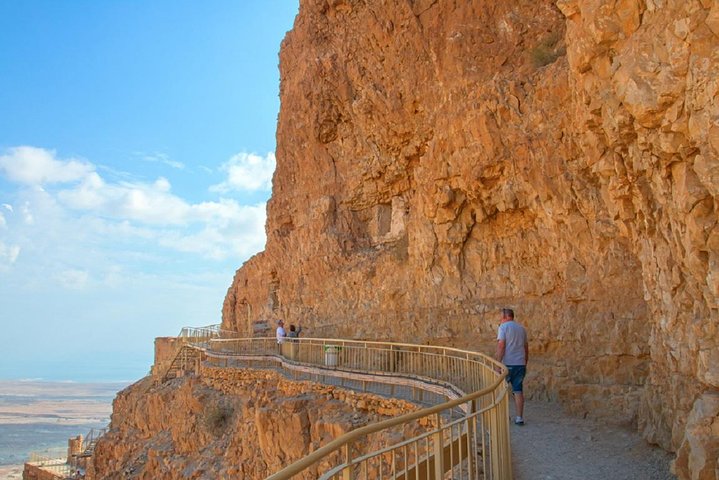
Masada and the Dead Sea Day Trip from Jerusalem
From $111 · Price checked: Aug 2026
Best for: Travellers wanting desert history and a Dead Sea visit, with some biblical context along the road, in a single day from Jerusalem.
Not for: Visitors keen on Ein Gedi, which is not listed, or those needing a firm itinerary given the stated substitutions.
A nine hour day from Jerusalem to Masada's ruins, Herod's palaces and the Dead Sea, passing the Good Samaritan setting. Qumran and the Jordan River baptism site are listed as substitutions.
Check availabilityExternal booking on Viator · pricing and cancellations handled by Viator
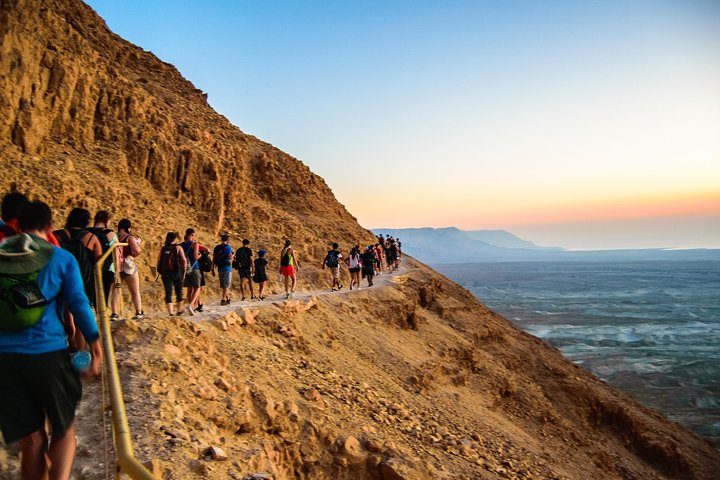
Dead Sea, Masada at Sunrise and Ein Gedi Tour from Jerusalem
From $109 · Price checked: Sep 2026
Best for: Early risers with one free day in Jerusalem who want the Masada sunrise, Ein Gedi and a Dead Sea float in a single trip.
Not for: Travellers who would rather not leave before dawn, or who expect Masada and Ein Gedi entrance fees and meals to be included.
A pre-dawn start from Jerusalem for sunrise on Masada, then time at the Ein Gedi oasis and a float at the Dead Sea. The Dead Sea beach entrance fee is included; Masada and Ein Gedi entrance fees and meals are not.
Check availabilityExternal booking on Viator · pricing and cancellations handled by Viator
Explore More
Related comparisons and guides:
Frequently Asked Questions
Which of these tours gives more time to float in the Dead Sea?
Neither record gives a set length for the Dead Sea stop, so ask each operator how long you will have in the water on your date.
Can I combine a Dead Sea day with Old City sightseeing?
I would give each its own day. The Old City rewards slow mornings, and a desert tour uses up the same hours and energy.
Will either tour take me to the Jordan River baptism site?
Possibly, but only on the Masada day trip, where it is one of the listed substitutions. Treat it as a chance, not a plan.
What costs sit outside the sunrise tour?
Masada and Ein Gedi entrance fees and your meals are paid separately. The Dead Sea beach entrance comes with the booking.
Where should I look for Masada updates before a sunrise start?
The Masada National Park page from the Israel Nature and Parks Authority carries current notices. Read it again a day or two before you go, when last-minute trail changes will show up.
Written from Jerusalem and Cairo.