Jerusalem Tours: Departing from Tel Aviv vs Jerusalem - Which Is Better?
We earn a commission when you book through our links on Viator (PID P00299531), at no extra cost to you. This is how we keep the site free. Learn more →
If the Old City is why you are coming, sleep in Jerusalem and start from a Jerusalem pickup point. A Tel Aviv departure still makes sense for some travellers, and I will say exactly who.
UNESCO lists the Old City of Jerusalem and its Walls as a World Heritage property.
I Did Both and Chose Jerusalem: What the Departure City Changes
A Tel Aviv departure trades Old City hours for road time, while a Jerusalem base hands you the early morning, when churches and lanes are at their quietest. I have started days from both cities, and for pilgrims whose priority is prayer or unhurried walking in the Old City, a Jerusalem pickup is the stronger choice.
My Tel Aviv day came in the summer of 2021, on a coach up Route One. The coach left the coast in flat morning haze and began the long climb through the pine hills, air conditioning rattling, everyone silent. By the time the first Jerusalem stone walls appeared I had already been sitting for ninety minutes, and the day's walking had not begun. Nothing went wrong on that journey.
A Jerusalem base is not the right call for everyone. If your trip is anchored in Tel Aviv for work, family or the coast, and you have one free day, moving hotels for a single visit can cost more energy than the road does. Tel Aviv departures exist for that traveller, and the two below are the ones I would weigh.
Jerusalem Boutique Tour from Tel Aviv: What the Day Covers
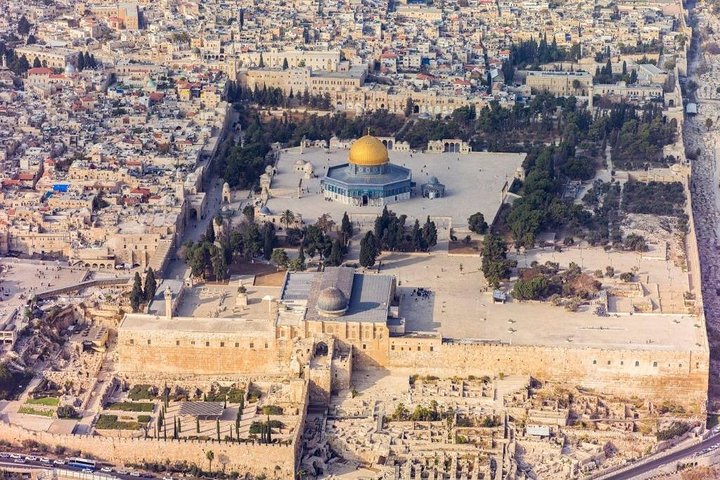
This small-group day leaves Tel Aviv with a later start, then walks down the Mount of Olives into the Old City for the Holy Sepulchre, the Western Wall and the Temple Mount. I like the descent on foot as a way of arriving, because the city reveals itself gradually instead of appearing through a coach window.
Read the operator's own framing carefully: it states that this is not a pilgrimage tour. Expect a broad historical overview, and do not expect time set aside for prayer or liturgy.
At the Western Wall, the Western Wall Heritage Foundation publishes conduct and dress guidance for the prayer plaza. Skip this format if you want to attend a service or linger in prayer; its later start and wide scope point it toward the curious visitor.

Jerusalem Boutique Tour from Tel Aviv
From $150 · Price checked: Aug 2026
Best for: Tel Aviv-based visitors who want a later morning departure and a broad historical overview including Temple Mount, on days other than Friday or Saturday.
Not for: Christian pilgrims hoping to enter the Tomb of Jesus or Golgotha, as the tour does not queue for them, and walkers unsteady on descents.
A small-group day from Tel Aviv with a later start, walking down the Mount of Olives into the Old City for the Holy Sepulchre, Western Wall and Temple Mount. The operator states it is not a pilgrimage tour.
Check availabilityExternal booking on Viator · pricing and cancellations handled by Viator
Where the Four Quarters Walk has the advantage
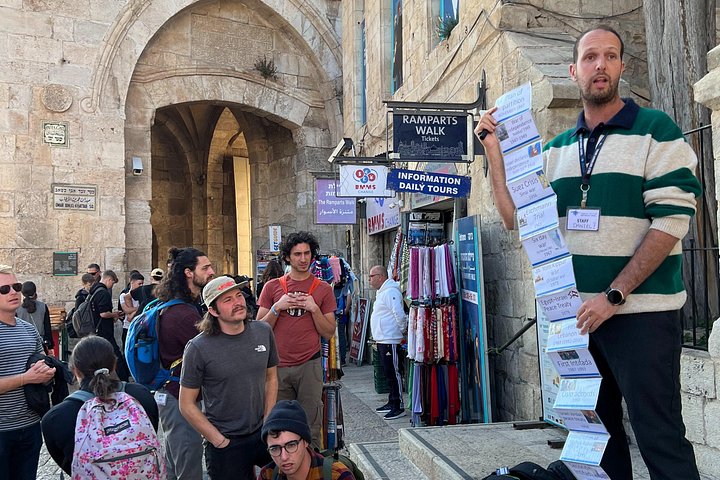
A guided walk through all of the Old City's quarters from a Jerusalem start sounds like the complete answer, and on paper it nearly convinced me. The provider promises to tailor the route but gives little detail beyond that, so ask about specific sites when you book.
What held me back was a morning on the Via Dolorosa in autumn 2022. My group started in the Muslim Quarter where metal shutters were still down and the lane smelled of bread and wet stone. The stations are marked modestly, some barely a plaque above a doorway, and I would have walked past several without a guide. By the time we reached the Sepulchre, the lanes behind us had filled with carts, spices and shouted prices.
That walk taught me that a day in the Old City realistically covers one quarter plus the Western Wall. So I would book this tour and use the tailoring promise to narrow the route, asking the guide to go deep in a single quarter at your own pace. I set out how I would plan a slower route in my Old City walking tour guide.
Best seller! Jerusalem old city four quarters tour
From $450 · Price checked: Jul 2026
Best for: Visitors who want a half day in Jerusalem's Old City with a guide willing to adapt the route to their interests and pace.
Not for: Travellers who need a confirmed site list or transport arrangements, as the listing details neither.
A five hour guided walk through the Old City's four quarters. The provider offers little detail beyond a promise to tailor the route, so ask about specific sites when booking.
Check availabilityExternal booking on Viator · pricing and cancellations handled by Viator
Day Tour to Jerusalem and Bethlehem from Tel Aviv: What to Check
This ten hour day from Tel Aviv pairs Jerusalem with Bethlehem, framed around the roots of several faiths. The listing names no specific stops, so ask for the site list in writing before you pay.
Bethlehem is close to Jerusalem but administratively separate, and that shapes the day. On a winter crossing in 2022, the bus idled at the crossing long enough for the windows to fog, and I drew a line through the condensation to watch the wall go past in grey panels. Not long after, I was drinking cardamom coffee in Manger Square while bells rang over the rooftops.
Carry your passport, expect a crossing in at least one direction, and choose a tour that states clearly which vehicle takes you through. The UNESCO World Heritage Centre record for the Church of the Nativity and the Bethlehem pilgrimage route gives useful background before you go. Choose another option if you want long quiet time at the Nativity, because a two-city day keeps moving.

Day Tour to Jerusalem and Bethlehem from Tel Aviv
From $121 · Price checked: Aug 2026
Best for: Travellers based in Tel Aviv with one day for both cities, including mixed-faith families wanting a broad introduction to the Holy Land.
Not for: Pilgrims who need confirmed church or holy site entries in advance, or those who dislike long transfer days.
A ten hour day from Tel Aviv to Jerusalem and Bethlehem framed around the roots of several faiths. The listing names no specific stops, so check the site list before booking.
Check availabilityExternal booking on Viator · pricing and cancellations handled by Viator
How to make the decision
My decision came at the door of the Church of the Holy Sepulchre in the early morning. In Jerusalem the hour matters more than the itinerary, and only a Jerusalem base reliably puts you at the Sepulchre before the courtyard fills. That single fact settled the comparison for me.
It happened in the Christian Quarter in autumn 2023. I reached the Holy Sepulchre before seven, when the limestone still held the night's cold and the loudest sound was a censer chain ticking against itself. By ten the same courtyard was a wall of raised phones. I slipped out through the rooftop monastery, where someone was sweeping dust into the light, and I knew which city I would recommend sleeping in.
The Custody of the Holy Land publishes visitor and liturgy schedule guidance for the Holy Sepulchre, and I would check it before fixing any early start. Book anything that includes the Holy Sepulchre for early morning, and treat midday church visits as optional.
Classic Jerusalem Old City Tour: A Resident Guide's Orientation
For a first visit from a Jerusalem base, this walk with a local guide is the option I would reach for. The guide frames the Old City as shared ground for several faiths, with conflicts as well as harmonies, and that framing respects the place without flattening it.
Source detail on specific stops is limited, so treat the booking as a conversation. Tell the guide you want an early start near the Sepulchre and ask what the route includes. For more Jerusalem-based options, see my guide to Jerusalem pilgrimage tours.

Classic Jerusalem Old City Tour
From $478.12 · Price checked: Aug 2026
Best for: First-time visitors to Jerusalem who want a general orientation to the Old City from a resident guide, within a flexible three to six hour window.
Not for: Travellers who need a named list of sites in advance, or a trip that goes beyond the Old City walls.
A guided Old City walk with a local guide who frames its one square kilometre as shared ground for three faiths, with both conflicts and harmonies. Source detail on specific stops is limited.
Check availabilityExternal booking on Viator · pricing and cancellations handled by Viator
Before you visit
Most planning trouble in Jerusalem comes from the calendar, the dress guidance and the Bethlehem crossing, not from the choice of guide.
Start with the road.
Next, check the day of the week. Non-Muslim access to the Temple Mount is restricted to specific hours on Fridays and Saturdays, and the queue can be long, so plan any tour that lists it for another day.
Then dress for the Western Wall. Pack clothing that follows the Western Wall Heritage Foundation's guidance, whatever the forecast says.
For Bethlehem, put your passport in your day bag the night before, and confirm with the operator how the crossing is handled.
If you do stay on in Jerusalem, the city also works as a starting point for other day trips, which I cover in my Dead Sea from Jerusalem guide.
Explore More
Related comparisons and guides:
Frequently Asked Questions
Is a Tel Aviv day tour worth it if I only have one free day?
Yes, if your accommodation is fixed in Tel Aviv and moving hotels would cost you more than it gives back. Pick a tour that names its stops in writing so you know how the Jerusalem hours will be used.
Do I need my passport for the Bethlehem part of the day?
Carry it, because Bethlehem is administratively separate from Jerusalem. Ask the operator in advance whether you change vehicles at the crossing.
Can I visit the Temple Mount on any day of the week?
Non-Muslim visitors face restricted hours on Fridays and Saturdays. Arrangements can change, so confirm them close to your date.
Is the Jerusalem Boutique Tour from Tel Aviv suitable for pilgrims?
The operator states that it is not a pilgrimage tour.
Where can I find Holy Sepulchre service times before an early visit?
The Custody of the Holy Land publishes visitor and liturgy schedule guidance on its official site.
Written from Jerusalem and Cairo.