Bethlehem Day Trip from Jerusalem: The Practical Guide Nobody Writes
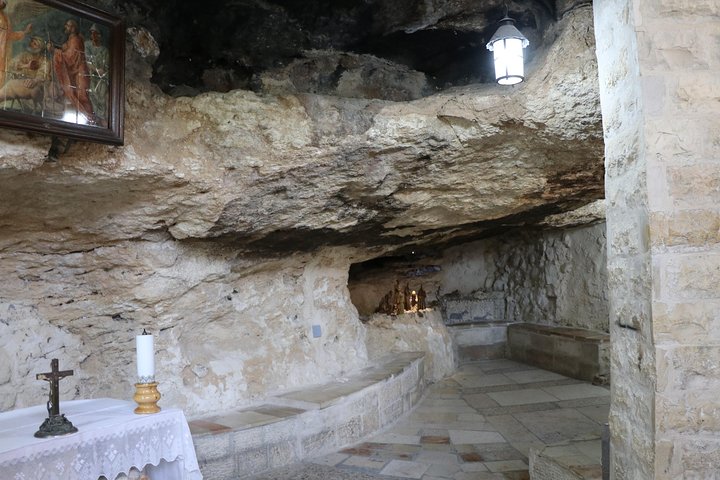
We earn a commission when you book through our links on Viator (PID P00299531), at no extra cost to you. This is how we keep the site free. Learn more →
What shapes a visit to Bethlehem
A Bethlehem day trip from Jerusalem works when you treat it as a short journey into a place that is administratively separate, with its own crossing, its own queues and its own pace. Build the day around the Church of the Nativity, keep your passport on you, and accept that part of the clock will not belong to you.
The road taught me that lesson before the town did. In winter 2022, on the road between Jerusalem and Bethlehem, I learned that close and simple are different things. The bus idled at the crossing long enough for the windows to fog, and I drew a line through the condensation to watch the wall go past in grey panels. Not long afterwards I was drinking cardamom coffee in Manger Square while bells rang over the rooftops. Both halves of that morning belong to the same trip, and I think any honest plan has to hold them together.
Keep the historical weight in mind as you plan. UNESCO identifies Bethlehem's Church of the Nativity and Pilgrimage Route with the place Christian tradition has associated with Jesus's birth since the second century.
Bethlehem is not the right day for a traveller who needs the itinerary to run exactly to schedule. If a fixed timetable matters more to you than the sites themselves, you may be happier spending the day on the Jerusalem Old City walking route and leaving Bethlehem for a trip when you can give it looser hours.
Travel to Bethlehem Half Day Guided Tour from Jerusalem: what the itinerary covers
The listing names Manger Square, the Church of the Nativity, the Milk Grotto and Shepherds' Field, with a licensed local guide, a drive out from Jerusalem and walking within the city itself.
I like it because it covers Bethlehem and nothing else. The checkpoint lesson still applies, though. Choose a tour that states clearly which vehicle takes you through the crossing, and if the listing leaves that unclear, write to the operator before you pay.
This format will leave you short if you also hoped to walk the Via Dolorosa or pray at the Holy Sepulchre on the same day. Those sites sit in Jerusalem and fall outside what this listing covers.
Planning day trip logistics in Bethlehem
The moments I value most in Bethlehem came from slack in the schedule and not from efficiency. The Nativity queue cannot be predicted and pays no attention to the weather, so arrive early, give entry a generous margin, and leave the afternoon unscheduled.
I learned this in Manger Square in winter 2021, in cold rain. Rain came sideways across the square and I queued in a line that moved by inches toward the low Door of Humility. Inside, the air was warm with bodies and lamp oil, and I had to bend almost double to enter. My coat dripped on stone worn smooth by centuries of the same stoop.
I keep coming back to that worn stone. Countless people had bent at the same threshold before me, and the doorway asked the same small posture of me. No timetable could have made that line move faster, and I was grateful nothing afterwards depended on my getting through quickly.
One caution comes straight from that entry. If bending low is painful or difficult for you, raise it with your operator before you book so you know what the doorway will ask of you.
Jerusalem and Bethlehem day tour: who this tour suits
This listing asks more of your day. It pairs the Via Dolorosa and the Holy Sepulchre in Jerusalem with Bethlehem's birthplace sites and Shepherds' Field, and it keeps the focus on Christian landmarks in both cities.
The Jerusalem half deserves its own planning. UNESCO's record for the Old City of Jerusalem and its Walls gives useful background on the setting you will walk through, and the Custody of the Holy Land publishes Holy Sepulchre visitor and liturgy schedule guidance that is worth checking before you travel, since services shape what visitors can see. Religious observances can change access and crowd patterns in the Old City, so confirm official visitor notices before travel.
Skip this format if praying in the Nativity grotto is the whole reason for your trip.
What Surprised Me About Bethlehem
What surprised me most was how rushing changed what I remembered. When I packed a combined Jerusalem and Bethlehem day too tightly, the grotto faded and the side streets stayed with me. Pick a few sites for one day, leave room for queues and crossings, and let the rest wait for another visit.
This comes from a composite field note in which I have folded one combined day, from the Old City of Jerusalem to Manger Square, into a single account. By afternoon my shirt clung to my back, and the crossing queue smelled of diesel and warm bread from a cart nearby. I remember rosaries clinking in a shop doorway more clearly than I remember the grotto, because I reached it with my eyes on my watch. The stone lanes deserved slow feet, and I had walked them like corridors.
That confession sits uneasily with me. My watch took the grotto from me, and the lanes got my hurry.
Shepherds' Field and the Milk Grotto appear on both tours featured here, and I would treat them as places where a guide can help you decide how long to stay once you see how the Nativity queue has gone.
A tightly packed combined day does not suit the traveller who wants silence and unhurried prayer at the birthplace. That traveller should book the Bethlehem-only format and keep Jerusalem for a separate day.
Planning the visit well
Getting a Bethlehem day right depends on a few decisions you make before leaving Jerusalem: carry your passport, know which vehicle takes you across, start early, and protect the afternoon.
Bethlehem is close to Jerusalem but administratively separate, so carry your passport and expect a crossing in at least one direction.
Ask the operator, in writing, whether the same vehicle takes you across the crossing or whether you change vehicles on the way.
Start as early as your tour allows. My rain-soaked queue at the Door of Humility showed me that bad weather does not thin the line, so an early start has to work in any season.
I have no official dress guidance for the Church of the Nativity to pass on, so I will not invent a rule. Ask your guide what the church expects of visitors, and dress for rain as well as for respect if you travel in winter.
For wider planning across the region, from where to stay to how to spread holy sites across several days, my Jerusalem pilgrimage planning guide goes into the structure of a longer stay.
Choose the Bethlehem-only tour if you want someone else to carry the logistics while you carry the prayer.
Before you visit
Before my first Bethlehem visits, I wish I had understood that the planning mistakes worth avoiding come down to time and paperwork. Treat the crossing as real, treat the Nativity queue as open-ended, and treat a combined two-city day as a trade-off you accept knowingly.
Assuming that a short distance means a short trip is the first mistake to catch. The fogged bus window at the crossing reminds me that distance and time follow different rules on this road.
Booking a tour without asking how it handles the crossing leaves you guessing at the moment you most want certainty.
Filling the afternoon with fixed commitments leaves a delayed queue nowhere to go. Leave that part of the day open, and let an unhurried coffee in Manger Square be the reward if the church goes smoothly.
Trying to hold every site in a single day cost me the grotto, which mattered to me more than anything else I saw. If you are still deciding between formats, I compare them side by side in Jerusalem vs Bethlehem day tours.
A traveller who would rather see more places at a quicker pace may reasonably disagree with all of this, and the combined tour exists for that traveller.
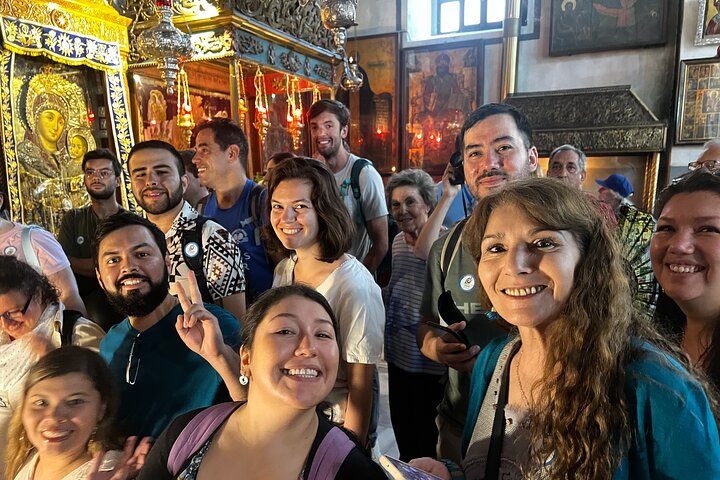
Travel to Bethlehem Half Day Guided Tour from Jerusalem
From $75 · Price checked: Aug 2026
Best for: Christian pilgrims and first-time visitors based in Jerusalem who want Bethlehem's main sites in a morning or afternoon without arranging the trip themselves.
Not for: Travellers wanting Jerusalem's Old City in the same outing, or those hoping for long unhurried time at each church.
A focused half day from Jerusalem covering Manger Square, the Church of the Nativity, the Milk Grotto and Shepherds' Field with a licensed local guide, driving there and walking inside the city.
Check availabilityExternal booking on Viator · pricing and cancellations handled by Viator
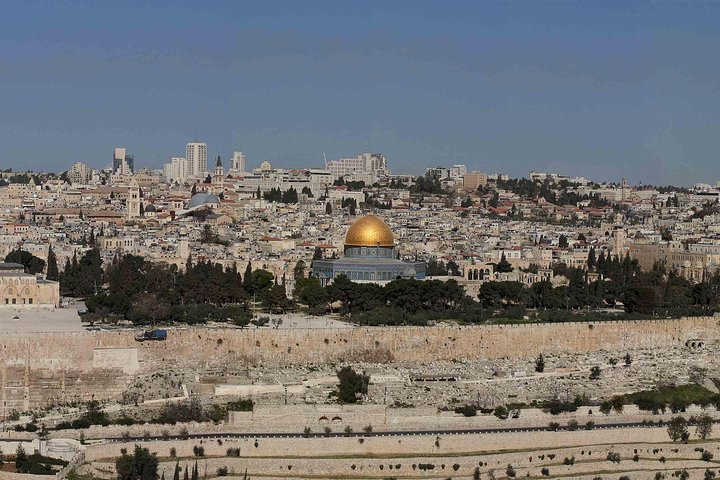
Jerusalem and Bethlehem day tour
From $900 · Price checked: Sep 2026
Best for: Christian pilgrims based in Jerusalem with one day for both cities, who prefer a guided plan covering the main Gospel sites.
Not for: Visitors seeking Jewish or Muslim sites in depth, or a slower visit to either city on its own.
A seven to eight hour day pairing the Via Dolorosa and Holy Sepulchre in Jerusalem with Bethlehem's birthplace sites and Shepherds' Field, keeping the focus on Christian landmarks in both cities.
Check availabilityExternal booking on Viator · pricing and cancellations handled by Viator
Explore More
Related comparisons and guides:
Frequently Asked Questions
Does UNESCO's listing cover more than the Church of the Nativity?
Yes. UNESCO's record is titled the Church of the Nativity and Pilgrimage Route, so the inscription names the route through Bethlehem as well as the church building.
Which of the two tours includes the Holy Sepulchre?
Only the Jerusalem and Bethlehem day tour lists the Holy Sepulchre and the Via Dolorosa. The Bethlehem-only tour stays within Bethlehem's sites.
Do both tours visit Shepherds' Field?
Both listings name Shepherds' Field. The Milk Grotto appears by name only in the Bethlehem-only tour's description, so ask the combined tour's operator if that stop matters to you.
What should I pack for a winter Bethlehem day trip?
Bring a coat that can handle rain while you queue outdoors. Pack a layer you can easily carry, too, because the air inside the church can feel warm once you are through the doorway.
Where can I check Holy Sepulchre timings before a combined day?
The Custody of the Holy Land publishes visitor and liturgy schedule guidance for the Holy Sepulchre. Check it close to your travel date, since services affect what visitors can see.
Written from Jerusalem and Cairo.