Bethlehem Day Trip Guide: What to See, When to Go, and How to Get There
I Didn't Expect Travel to Feel Like This
I arrived at the Damascus Gate bus stop in Jerusalem at 7:30 AM on a Tuesday in March 2022. The sky was that pale blue you get in spring before the heat settles. I had read every Bethlehem day trip guide from Jerusalem I could find, but none of them prepared me for the checkpoint.
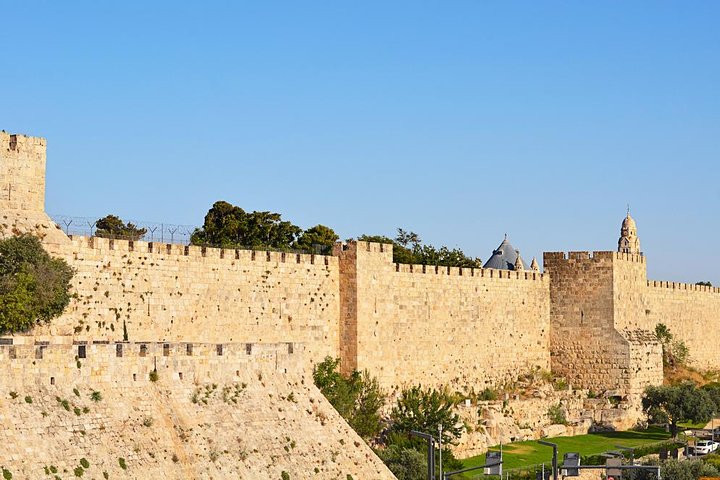
The bus to Bethlehem costs 7 shekels and takes 20 minutes to reach Checkpoint 300. The wall appeared suddenly — grey concrete rising maybe eight metres high. I had seen it in photographs, but standing beneath it felt different. The guard barely glanced at my passport. Most tourists pass freely, as I did. But the reality of the separation barrier is something you feel in your chest, not just your eyes.
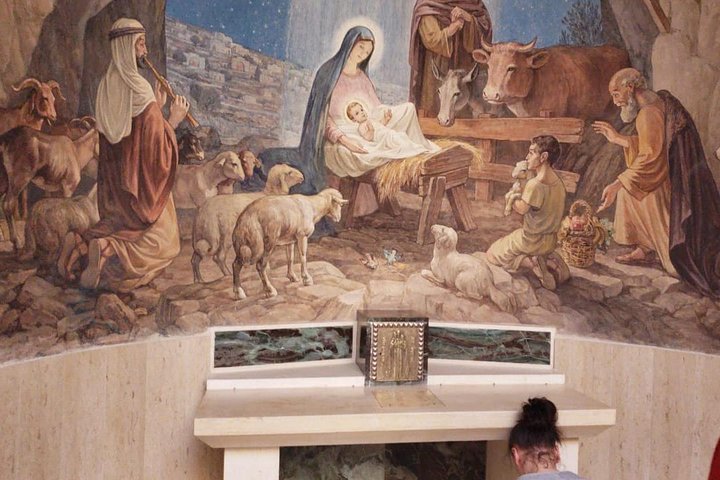
Once through, Bethlehem opened up. Narrow streets lined with shops selling olive wood carvings. A man stacking pita bread outside a bakery. The Church of the Nativity sat at the end of Manger Square, unassuming from the outside. The entrance is called the Door of Humility — a low rectangular opening about 1.2 metres tall. You have to bend to enter. I watched a tall German tourist nearly hit his head. The architect designed it this way in the 6th century to force visitors into a posture of reverence, or at least awareness.
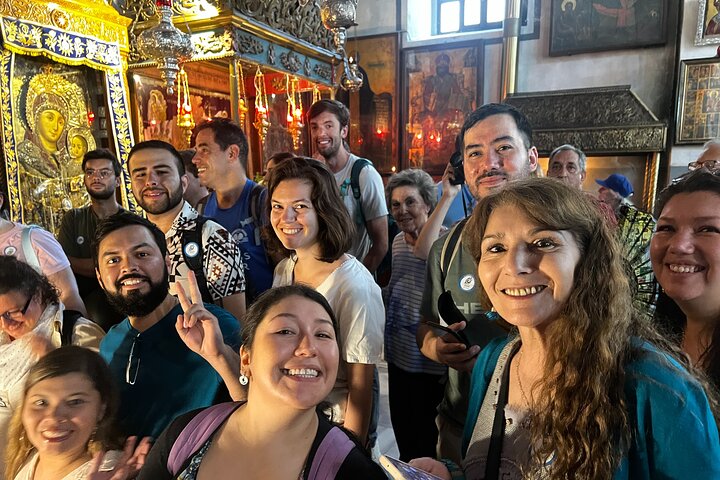
I booked a private tour of Bethlehem from Jerusalem that included the Church of the Nativity, the Milk Grotto, and the Shepherds' Field. My guide, a Palestinian Christian named Rami, had been leading groups for 17 years. He pointed out the silver star marking the traditional birthplace of Jesus, set into the marble floor of the Grotto of the Nativity. Fourteen rays. The star was placed here in 1717 by the Franciscans, he said. The Greek Orthodox had removed an earlier one in the 1600s. The church is jointly managed by Greek Orthodox, Armenian Apostolic, and Roman Catholic authorities. The politics of a single star took up more conversation than the theology.
The Church of the Nativity was built in 339 CE under Constantine and rebuilt in the 6th century under Justinian. The floor mosaics from that period survive in patches — geometric patterns in red and gold. Fire damage from a 19th-century riot blackened sections of the ceiling. The columns still bear Crusader graffiti, names carved in Latin by pilgrims in the 1100s. I traced one with my finger. It felt older than anything I had touched in Jerusalem.
The Tour That Saved My Trip
I had considered taking the public bus and exploring on my own. But Rami's tour made the difference. He knew exactly when the queues at the Grotto would be shortest — 9 AM, before the group buses from Tel Aviv arrive. He also knew which vendors in Manger Square sold genuine olive wood rather than factory-made pieces from China. Without him, I would have spent 45 minutes in line and bought a cross that would have cracked in my luggag
The tour included a stop at the Banksy artwork on the separation wall — a silhouette of a figure throwing a bouquet of flowers instead of a Molotov cocktail. Rami shrugged when I asked about it. "It gets repainted every few months," he said. "The municipality keeps it white. The artists come back at night."
For anyone looking to avoid the guesswork, I recommend this half-day Bethlehem tour from Jerusalem. It covers the essentials without the rush of a full-day group trip. You get about 90 minutes at the church, which is enough to see the Grotto, the main nave, and the adjacent Church of St. Catherin
The Moments That Made Travel in Bethlehem
After the church, Rami took me to the Milk Grotto, a small chapel built over a limestone cave. Local tradition says the Holy Family hid here during the Massacre of the Innocents, and a drop of Mary's milk turned the rock white. The cave walls are scratched and worn from centuries of pilgrims scraping off powder as a fertility charm. I am not sure I believe the story, but I watched a woman from Nigeria kneel and press her palm to the stone for a full minute. Her faith was real enough.
We drove out to the Shepherds' Field in Beit Sahour, about 2 kilometres east of the city. The site is managed by the Franciscans, with a small chapel shaped like a Bedouin tent. The bells rang at noon. A shepherd sat under an olive tree with his flock, ignoring the tourists entirely. I sat on a stone wall and watched him for twenty minutes. This was the moment that mattered more than the Grotto.
Bethlehem receives 2 to 3 million visitors annually, most on day trips from Jerusalem or Tel Aviv. The numbers are concentrated between Easter and October, with a spike during Advent. I visited in March, which meant moderate crowds and temperatures around 18°C. The spring wildflowers were out — red poppies and yellow mustard grass along the road to the field.
A Worth Discovering
Most Bethlehem day trip guides from Jerusalem skip the Old City market. Rami insisted we walk through it on the way back to the bus. The alleys are narrow, the shopkeepers are persistent, and the smell of za'atar and fresh bread fills the air. I bought a bag of dried figs from a woman who had been selling at the same stall for 43 years. She did not haggle. "This is the price," she said in English. "You like it, you buy. You don't, you move." I bought two bags.
The tour included lunch at a family-run restaurant in Beit Jala, a Christian town adjacent to Bethlehem. Stuffed grape leaves, lamb with rice, and a salad of tomatoes and cucumbers that tasted like they had been picked that morning. The owner brought out a plate of knafeh without being asked. "On the house," he said. "For the pilgrim."
What Really Surprised Me About Bethlehem
The quiet. I expected the Church of the Nativity to feel like the Sistine Chapel at peak hour — elbows, whispers, guards shushing people. It was not that. At 9:15 AM, the Grotto had maybe twenty people. The nave was half empty. The Armenian chapel off the north aisle had no one at all. I stood there for five minutes in complete silence. The only sound was the creak of a wooden door from somewhere deeper in the complex.
I also did not expect the checkpoint to feel so normal. On the way back to Jerusalem, the Israeli soldiers waved the bus through without stopping. A woman next to me, a Palestinian with a Jerusalem ID, had to step out and show her permit. She was back in under a minute. It was routine for her. For me, it was the part of the trip I had worried about most, and it turned out to be the least eventful.
What surprised me most was how much time you actually get at the Church of the Nativity on a group tour. Most Bethlehem day trips from Jerusalem advertise "guided visit to the Church of the Nativity." In practice, that means 40 minutes inside, including the queue for the Grotto. My private tour gave me 90 minutes. If you want more time, book a private guide or go independently. The bus from Jerusalem runs every 30 minutes.
Nadia Osman's Insider Tips for Getting It Right
I have been to Bethlehem four times now — twice as a pilgrim, twice as a researcher. Here is what I have learned:
- Go in spring or autumn. March through May and September through November are the best months. Summer is hot (35°C in July) and crowded. Winter is cold and rainy, but the church is quieter.
- Dress for religious sites. The Church of the Nativity requires covered shoulders and knees. Carry a scarf. I learned this the hard way on my first visit and had to buy a shawl from a vendor for 20 shekels.
- Bring cash. Many shops in the Old City do not accept credit cards. Israeli shekels are accepted everywhere. Jordanian dinars are not.
- Book a guide. A good guide saves time and provides context. Rami pointed out details I would have missed — the 4th-century mosaic floor visible through a grate in the floor, the Armenian inscription above the main altar, the bullet holes in the wooden doors from the 2002 siege.
- Check the calendar. Easter and Christmas are busy. The church can have queues of 2+ hours. If you want a quieter visit, aim for a Tuesday or Wednesday in mid-March or mid-October.
- Do not skip the Shepherds' Field. It is 15 minutes from the church and offers a different perspective. The chapel is small but the landscape is open. Stand at the edge of the field and look toward the hills. This is where the angels appeared. You can see why.
If you are planning a longer stay in Jerusalem, read our full Jerusalem guide for more on the Old City, the Western Wall, and the Church of the Holy Sepulchre. For other day trip options, check day trips from Tel Aviv.
What I Wish I'd Known Before I Went
I wish I had known that the checkpoint is not the barrier you imagine. It is a concrete wall with a metal turnstile and a soldier in a booth. It took me 90 seconds to pass through. The anxiety I carried for the entire bus ride was wasted energy.
I wish I had known that the Church of the Nativity is not the grand basilica you see in tourist brochures. It is dark, cramped in places, and the floor is uneven from centuries of wear. The real beauty is in the details — the faded mosaics, the Crusader graffiti, the silver star that has caused more arguments than prayers.
I wish I had known to pack half what I brought. I carried a backpack with a water bottle, a guidebook, a camera, a jacket, and snacks. I used the water and the jacket. Everything else stayed in the bag. The Camino Francés in 2009 taught me this lesson the hard way — three days in, heels raw, I threw half my gear in a hostel bin in Pamplona. A Dutch pilgrim said everyone does that. I should have remembered.
I wish I had known to volunteer in the kitchen before visiting the sanctum. At the Golden Temple in Amritsar in November 2015, I spent 30 minutes rolling chapati dough in the langar hall. The marble was cold through thin cotton, gold reflected in the sarovar, and the kitchen hummed with the rhythm of a thousand meals. That act of service changed how I experienced the temple. In Bethlehem, there is no kitchen to volunteer in, but there is a lesson in it: do something before you see the main attraction. Walk the market. Talk to a shopkeeper. Sit at the Shepherds' Field for ten minutes. The church will still be there when you are ready.
Finally, I wish I had known that the best view of Bethlehem is from the rooftop of the Lutheran Church on Manger Square. The door is usually unlocked. Climb the stairs. From the top, you see the whole city — the minarets, the bell towers, the wall in the distance, the hills of the Judean desert beyond. I found it on my third visit, by accident. I stood up there for twenty minutes, alone, watching the sun move across the stone. It was the only moment in Bethlehem that felt entirely min
Related comparisons and guides:Explore More
Frequently Asked Questions
Do I need a passport to go from Jerusalem to Bethlehem?
Yes, bring your passport. Most tourists pass through Checkpoint 300 without issue, but Israeli guards may ask for identification. EU and US citizens typically pass freely. Israeli citizens need special permission to enter Bethlehem.
How long does it take to get from Jerusalem to Bethlehem?
The bus from Damascus Gate takes 20-30 minutes. Including the checkpoint, plan 45 minutes to 1 hour total. Private taxis take about 20 minutes. Traffic is heavier on Fridays and Sundays.
Is it safe to visit Bethlehem as a day trip?
Yes. Bethlehem is a tourist-friendly city with a visible security presence. The main sites are clustered around Manger Square. Most of the 2-3 million annual visitors come on day trips without incident. Check your government's travel advisory before going.
What is the best time of year to visit Bethlehem?
Spring (March to May) and autumn (September to November) offer the best weather — temperatures between 15-25°C. Summer is hot and crowded. Winter is cold and rainy but the church is quieter. Easter and Christmas are peak seasons with long queues.
Can I visit Bethlehem on my own without a tour?
Yes. Take bus 231 from Damascus Gate in Jerusalem to Checkpoint 300, walk through, then take a shared taxi (sherut) or walk 15 minutes to Manger Square. A tour saves time and provides context, especially at the Church of the Nativity.
How much time do you need for a Bethlehem day trip?
A half-day (4-5 hours) is sufficient for the Church of the Nativity, Milk Grotto, and Manger Square. A full day (6-8 hours) allows time for the Shepherds' Field, the Old City market, and lunch. Most day trips from Jerusalem run from 8 AM to 2 PM.
Private Tour of Bethlehem from Jerusalem
The tour that saved my trip — 90 minutes at the Church of the Nativity instead of 40, plus a guide who knew the back alleys and the best knafeh spot. Skip the group bus crowds. Cons: costs more than public transport.
Check Availability →Half-Day Bethlehem Tour from Jerusalem
A solid option if the private tour is booked. Covers the church, Milk Grotto, and Shepherds' Field in 5 hours. The group size is small (max 15). Pros: affordable and efficient. Cons: less time at each site.
Check Availability →