Jerusalem Guide: Walking the Holy City Without the Hype
I Didn't Expect Travel to Feel Like This
I arrived in Jerusalem for the first time in March 2018. I had read the guidebooks, studied the maps, and traced the Via Dolorosa on paper. None of it prepared me for the weight of the limestone at the Western Wall at 4 AM. The plaza was empty except for an old man wrapped in a tallit, rocking back and forth. Stars still out. Paper prayers wedged into every crack of the stones. I am not Jewish, but I understood in that moment why this place matters — not as a tourist attraction, but as a living archive of faith that breathes through the night.
Most guides tell you to go during the day, when the sun hits the golden dome and the crowds flood in. I disagree. My advice for first-timers starts with the same instruction: go before dawn. The wall at 4 AM is a different place. The sound of your own footsteps echoes off the stones. You can hear the water from the Western Wall tunnels dripping somewhere below. It is the only time the city feels like it belongs to the people who came to pray, not the people who came to photograph.
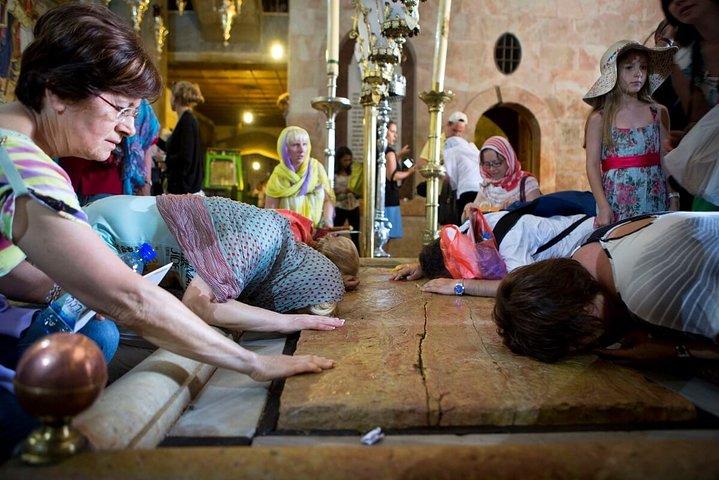
I made the rookie mistake of wearing shorts on my first morning. A security guard at the Jaffa Gate stopped me before I even entered the Old City. "Cover your knees," he said, not unkindly. I had a scarf in my bag — I always carry one now. In Jerusalem, a scarf for shoulders and knees is not optional. It is the difference between entering the Church of the Holy Sepulchre or standing outside watching others go in.
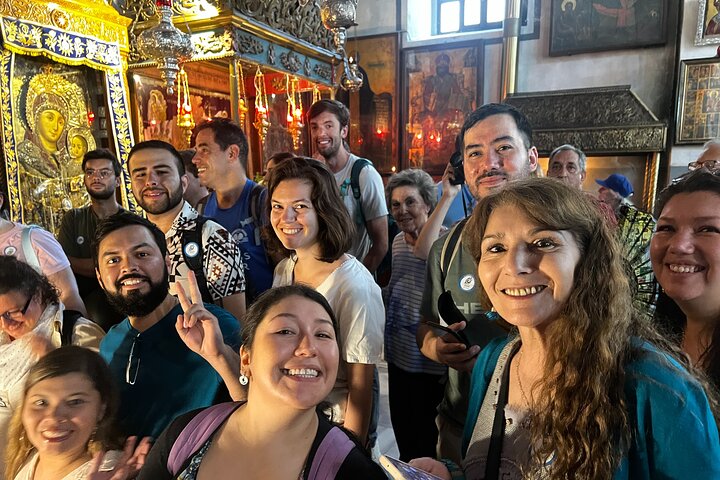
That first day, I booked a walking tour through the Old City. I had read that the Jerusalem Old City Walking Tour covered the four quarters efficiently, and it did. Our guide, a Palestinian Christian named Sami, pointed out the difference between the original Herodian stones at the base of the Western Wall and the Ottoman additions above. He explained why the Church of the Holy Sepulchre's doors are opened by a Muslim family — a 12th-century arrangement that still holds today. The tour saved my trip because it gave me context I could not have found in a book.
The Tour That Saved My Trip
Jerusalem Old City Walking Tour with Western Wall and Church of the Holy Sepulchre
Covers all four quarters in 3 hours. Good for first-timers. Guide Sami was excellent — knowledgeable without being preachy. The tour moves fast, so wear comfortable shoes. Not ideal for those who want deep dives into one site.
Check Availability →The Moments That Made Travel in Jerusalem
April 2019, Good Friday. I woke at 5 AM and walked to the Via Dolorosa before the sun had cleared the rooftops. The Franciscan friars led the procession at 5:45 AM carrying a wooden cross. The cobblestones were wet from overnight rain. At Station 5, a shopkeeper handed out cups of mint tea from a tray — hot, sweet, served without ceremony. By Station 9 the crowd was 200 deep, but the first hour was quiet. I had asked at St. Saviour Monastery the day before about the private Friday procession, and they told me it starts at 5:30 AM. No one else in my hostel knew. Walk the Via Dolorosa before 7 AM. It is the only way to feel the weight of the Stations without the crush of bodies.
Another morning, I lined up at the Mughrabi Gate at 7:00 AM with my passport for Temple Mount. Only about 200 to 300 non-Muslims are admitted per session. I got in on my second try — the first was a Friday during Ramadan when the site closed without notice. Check the Islamic calendar before you go. The platform itself is wider than I expected. The Dome of the Rock is not as large as photographs suggest, but the tile work is finer. I sat on the steps near the Chain Gate and watched a group of schoolchildren from Gaza on a field trip. They were laughing, chasing each other between the cypress trees. It was the most human moment I witnessed in Jerusalem.
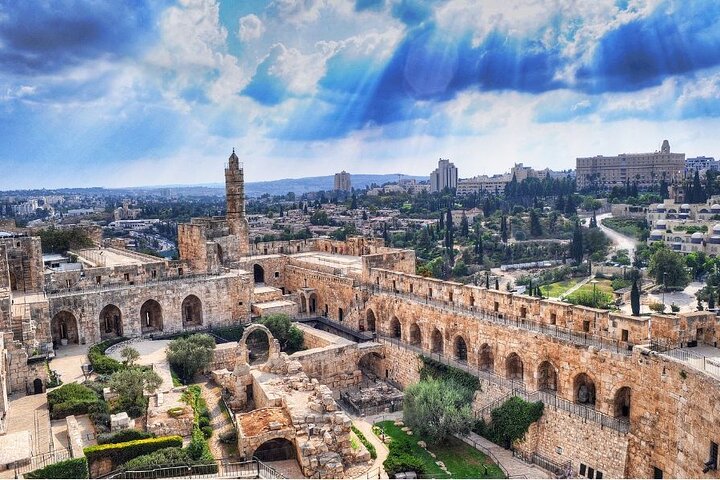
I also walked the Ramparts Walk — entrance at Jaffa Gate, ₪25, 90 minutes. The northern section gives you views over the Christian and Muslim Quarters. From above, the city makes sense: the walls, the gates, the way the markets snake between them. I recommend doing this walk on your first day. It orients you in a way that a map cannot.
A Worth Discovering
Jerusalem Ramparts Walk and City Walls Tour
A guided version of the Ramparts Walk. The guide explains the history of each gate and the siege tactics used over centuries. Takes about 2 hours. Good for history buffs. Not for those with mobility issues — there are steep stairs.
Check Availability →What Really Surprised Me About Jerusalem
The quiet. I expected noise — markets, calls to prayer, church bells. And yes, those exist. But I did not expect the pockets of silence. The Garden Tomb at 8 AM, before any groups arrive. The Armenian Quarter on a Sunday afternoon. The rooftop of the Austrian Hospice, where I sat for an hour watching the sun set over the Mount of Olives and heard nothing but wind.
I also did not expect the food to be so good. The hummus at Abu Shukri on Via Dolorosa is worth the queue. The knafeh at Jafar Sweets in the Muslim Quarter — hot, cheesy, drenched in syrup — is the best I have had outside of Nablus. And the coffee at Tmol Shilshom, a bookshop-café in the Nahlaot neighborhood, is strong and served with a date cooki
The other surprise: how small the Old City is. You can walk from Jaffa Gate to the Western Wall in ten minutes. From there to the Church of the Holy Sepulchre in another ten. But the density of history in those few hundred metres is overwhelming. Every stone has a story, and every story has a counter-story. Jerusalem does not offer easy narratives.
Nadia Osman's Insider Tips for Getting It Right
- Western Wall: Visit Thursday evening or Friday morning for Bar Mitzvah ceremonies. The atmosphere is celebratory, and families hand out sweets. Go at 4 AM for solitude.
- Temple Mount: Line up at the Mughrabi Gate by 7:00 AM with your passport. Only 200–300 non-Muslims admitted per session. The site closes to non-Muslims without notice on Fridays during Ramadan and on Islamic holidays.
- Via Dolorosa: Walk before 7 AM. The Franciscans do a private procession most Fridays — ask at St. Saviour Monastery the day before. Start at the Lions' Gate, not the usual tourist start.
- Ramparts Walk: Enter at Jaffa Gate for the northern section. ₪25, 90 minutes. Best views of the Christian and Muslim Quarters.
- Dress code: Carry a scarf for shoulders and knees. No shorts or sleeveless tops at religious sites. This applies to men and women.
- Money: Shekels (₪) for most things. Many shops accept cards, but smaller vendors and taxis prefer cash.
- Transport: The light rail connects the Old City to the new city. The 1 bus from the Central Bus Station drops you at Jaffa Gate.
- Season: Spring (March–May) has the best weather. Passover and Easter overlap some years — book accommodation three months ahead. Summer is hot and crowded. Winter is rainy but empty.
What I Wish I'd Known Before I Went
I wish I had known to check the Islamic calendar before planning my Temple Mount visit. I wasted a morning queuing at the Mughrabi Gate only to find it closed for a holiday. I wish I had known that the Western Wall has a separate section for women and men — and that the women's section is smaller. I wish I had known that the Church of the Holy Sepulchre is busiest between 10 AM and 2 PM, and that the best time to visit is right after it opens at 5 AM.
I wish I had packed lighter. The Old City is all hills and cobblestones. A backpack with water, a scarf, and a map is enough. I carried too much and regretted it by day two.
I wish I had known about the Jerusalem Holy Sites Tour with Garden Tomb and Mount of Olives. I tacked it on at the end of my trip and wished I had done it earlier — the guide connected the geography to the scripture in a way that made the rest of my visit more coherent.
And I wish I had spent more time in the Armenian Quarter. It is the quietest of the four quarters, with narrow alleys lined with pottery workshops. The St. James Cathedral is closed to tourists most of the time, but if you ask nicely at the monastery gate, they might let you in for a few minutes. I did not ask. I regret that.
Explore More
Related comparisons and guides:
Frequently Asked Questions
When is the best time to visit the Western Wall?
For solitude, go at 4 AM. For atmosphere, visit Thursday evening or Friday morning during Bar Mitzvah ceremonies. The wall is open 24 hours.
Can non-Muslims visit Temple Mount?
Yes, but only through the Mughrabi Gate. Line up by 7:00 AM with your passport. Only 200–300 non-Muslims are admitted per session. The site may close without notice on Islamic holidays and Ramadan Fridays.
What should I wear in Jerusalem?
Cover shoulders and knees at all religious sites. Carry a scarf. No shorts or sleeveless tops. This applies to men and women. Comfortable walking shoes are essential.
How long do I need in Jerusalem?
Three full days is enough for the Old City, Mount of Olives, and Yad Vashem. Add two more days for Bethlehem and Masada if you have tim
Is Jerusalem safe for solo travelers?
Yes, I traveled solo as a woman and felt safe. The Old City is well-patrolled. Avoid political demonstrations. Keep your passport with you at all times for checkpoints.
What is the best way to get from the airport to Jerusalem?
The train from Ben Gurion Airport to Jerusalem's Yitzhak Navon station runs every 30 minutes and takes about 30 minutes. A shared taxi (sherut) costs around ₪64 and drops you at your hotel.