Jerusalem Pilgrimage Itinerary: 3 Days for Christian, Jewish, and Muslim Holy Sites
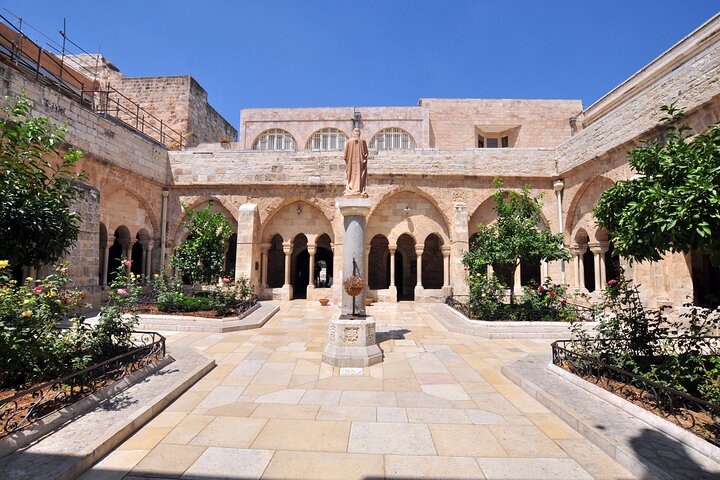
My Travel Week in Jerusalem — Every High and Low
I arrived in Jerusalem on a Tuesday afternoon in March 2018, tired from a delayed flight out of Cairo and carrying a bag that was heavier than I'd intended. I had been to the city before — twice, actually — but never with the goal of visiting all three Abrahamic holy sites in a single trip. The Old City, as I knew, covers just 0.9 square kilometers divided into four quarters: Muslim, Christian, Jewish, and Armenian. That compactness, I reasoned, would make a 3-day pilgrimage itinerary possible without rushing. I was half right.
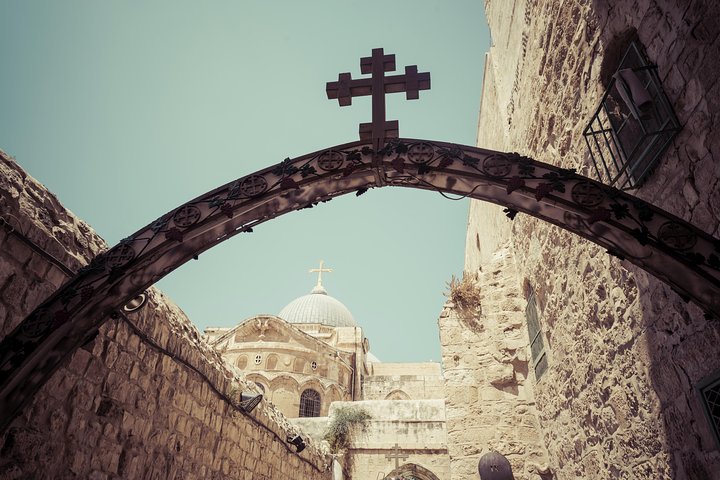
My first stop, after dropping my bag at a guesthouse near the Jaffa Gate, was the Western Wall. I had read that the wall receives ten million visitors annually, and I wanted to see it before the crowds. I walked through the Armenian Quarter, past the Tower of David, and down toward the Jewish Quarter. The sun was beginning to set, and the limestone walls of the Old City caught the light in a way that made the whole place feel older than its thousands of years.
I stood at the Western Wall at 4 AM on a Thursday in March 2018. The plaza was empty except for an old man wrapped in a tallit, rocking back and forth. I am not Jewish, but I understood in that moment why this place matters. The limestone was cold under my fingers. Paper prayers filled every crack. The old man hummed a melody I didn't recognize. Stars were still out. I stayed for forty minutes, watching the sky lighten. If you're planning this itinerary, I'd recommend you book a guided tour of the Western Wall tunnels for the historical context — the above-ground wall is only a fraction of the structur
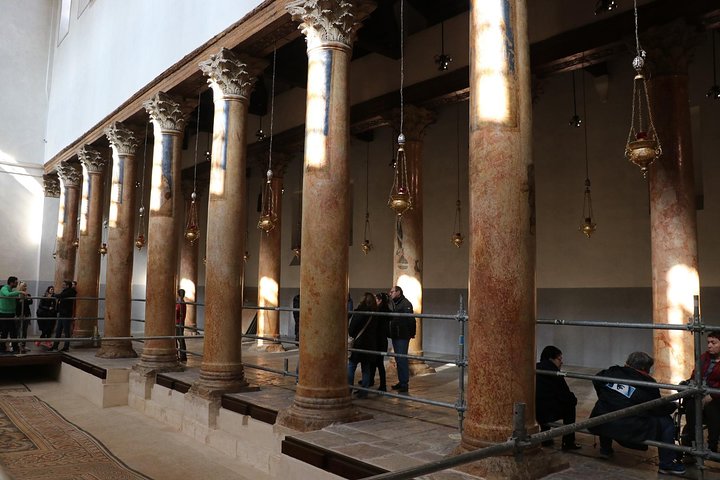
Thursday morning, I visited the Church of the Holy Sepulchre. It's jointly managed by six Christian denominations since 1852 — a status quo arrangement that means the keys are held by a Muslim family, the Nuseibehs. I entered through the main door at 8 AM and found a queue already forming for the Edicule, the tomb itself. I waited forty-five minutes. Inside, the space is small, maybe two meters by two meters. A priest from the Greek Orthodox church was reading prayers. I knelt, touched the marble slab, and left. I spent the rest of the morning walking the Via Dolorosa, stopping at each of the fourteen stations. The fifth station is in the Muslim Quarter, marked by a small chapel that's easy to miss if you're not looking.
Friday morning, I returned to the Western Wall. I had been told by a local guide that Thursday evening or Friday morning is the time for Bar Mitzvah ceremonies. He was right. The plaza was alive with families, singing, and the sound of the shofar. I watched from the women's section, standing near the back. A boy of thirteen read from the Torah, his voice shaking slightly. His father placed a hand on his shoulder. I felt like an outsider in the best possible way — a witness to something that wasn't for me but was beautiful nonetheless.
Product 1 — The Highlight of Day 1
Jerusalem Old City Walking Tour
I booked this tour on my second day. The guide, a Palestinian Christian from the Old City, knew every shortcut through the souk. The tour covers all four quarters in three hours. Drawback: you don't get much time inside each site — maybe ten minutes at the Church of the Holy Sepulchre. Worth it for the orientation alone.
Check Availability →The Day Everything Went Wrong (and Right)
Day 2 was supposed to be my Dome of the Rock day. I had researched the visiting hours: non-Muslims can enter the Temple Mount compound from 7:30 AM to 11 AM and again from 1:30 PM to 2:30 PM, Sunday through Thursday. I arrived at the Chain Gate at 8:15 AM. The line was already long. Security was slow. By the time I passed through the metal detector, it was 9 AM.
The Dome of the Rock was completed in 691-692 CE under Umayyad Caliph Abd al-Malik. The gold dome you see today is a 1990s restoration — the original was lead, then copper, then aluminum before the current gold plating. I stood on the platform, looking up at the octagonal structure, and felt the weight of fourteen centuries. I am not Muslim, but I had read the Quran in translation during my studies. I knew this was the place from which the Prophet Muhammad is believed to have ascended to heaven.
Then I made a mistake. I tried to walk toward the Al-Aqsa Mosque to get a better angle for a photo. A Waqf guard stopped me. "No entry," he said. "Praying area." I apologized and stepped back. I had forgotten that the mosque itself is not open to non-Muslim visitors during prayer times. I spent the next hour walking the perimeter of the compound, sitting on a bench near the Fountain of Qaytbay, watching pigeons circle the dom
At noon, I left the compound and walked to the Muslim Quarter for lunch. I ate hummus and ful at a small restaurant near the Damascus Gate. The owner, an older man with a thick mustache, asked where I was from. "Cairo," I said. He smiled and brought me extra bread. "You're family," he said.
That afternoon, I visited the Mount of Olives. I took a taxi from the Old City to the top of the mount — about 15 shekels. The view of the Old City from the summit is straightforward: the golden Dome of the Rock in the foreground, the walls of the Old City beyond, and the Kidron Valley below. I walked down through the Jewish cemetery, past thousands of white tombstones on the slope. At the bottom, I entered the Garden of Gethsemane. The olive trees are ancient — some are believed to be over 900 years old. I sat on a stone wall and wrote in my notebook. A group of Russian pilgrims were singing hymns near the Church of All Nations. I stayed until the sun began to lower.
That evening, I made another mistake. I tried to enter the Church of the Holy Sepulchre for the evening liturgy. The line stretched from the entrance down the Christian Quarter road. I waited twenty minutes and gave up. I went back to my guesthouse, ate a sad dinner of crackers and cheese, and went to bed early. The day had been full of small failures — missed photo opportunities, closed doors, long lines. But I had seen the Dome of the Rock, walked the Mount of Olives, and sat in Gethsemane. That counted for something.
Product 2 — My Day 3 Savior
Jerusalem Day Tour: Mount of Olives, Garden of Gethsemane, and Old City
On day 3, I booked this guided tour to salvage the itinerary. The guide, a Jewish Israeli woman, was knowledgeable about all three faiths. She pointed out details I would have missed — like the Armenian ceramic tiles on the walls of the Old City. The tour runs from 8 AM to 2 PM, which left me the afternoon for the Israel Museum. Not for independent travelers who prefer to wander at their own pace.
Check Availability →What I'd Do Differently Next Time
I made a list on the flight home. Here's what I'd change:
- I'd book the Dome of the Rock for the earliest possible entry. The 7:30 AM slot is less crowded. I'd arrive at the Chain Gate by 7:15 AM and be through security before the tour groups arrive. I'd also book a guided Temple Mount tour to understand the religious and political layers of the site — the Dome of the Rock, the Al-Aqsa Mosque, and the significance of the Haram al-Sharif.
- I'd carry a scarf everywhere. I knew the dress code rules — shoulders and knees covered for all religious sites — but I forgot my scarf at the guesthouse on day 2. I had to buy a cheap one from a vendor near the Jaffa Gate. It was thin and kept slipping off my shoulders. Pack a proper pashmina.
- I'd skip the Israel Museum on this trip. I went on the afternoon of day 3, thinking the Dead Sea Scrolls exhibit would be a quick hour. It was three hours. I missed the afternoon at the Western Wall, which I had wanted to see again before Shabbat. The museum is worth a separate trip.
- I'd stay in the Christian Quarter, not near Jaffa Gate. My guesthouse was fine, but it was a fifteen-minute walk to the Western Wall and twenty minutes to the Church of the Holy Sepulchre. Staying inside the Old City, near the Muristan, would have saved me time and shoe leather.
What I Wish I'd Known Before I Went
I've walked these quarters dozens of times now, and I keep a running list of things I wish someone had told me before my first pilgrimage. Here are the ones that matter most:
- The Old City is not a museum. It is a living neighborhood. People live, work, pray, and argue here. The souk is loud, crowded, and sometimes overwhelming. The smell of spices, grilled meat, and exhaust fills the alleys. That's not a flaw — it's the point.
- Checkpoint realities are real. I entered the Old City through the Damascus Gate on day 2 and found an Israeli checkpoint with a long line. It took twenty minutes to pass. Plan an extra thirty minutes for any entry into the Old City, especially during holidays or heightened security periods.
- Dress codes are enforced unevenly. At the Church of the Holy Sepulchre, a guard stopped a woman in shorts and told her to cover up. At the Western Wall, the dress code is strictly enforced at the plaza entrance — skirts below the knee, sleeves past the elbow. At the Dome of the Rock compound, women are expected to cover their hair, arms, and legs. I saw a woman turned away for wearing a sleeveless top. Carry a scarf.
- The best time to visit the Western Wall is before dawn. I did this on my first morning and it remains the most quiet, most personal moment of the trip. The plaza at 4 AM is empty. The wall is cold. The only sounds are birds and the occasional prayer. Go then.
- Spring (March to May) is the best season. I visited in March and the weather was perfect — warm days, cool evenings. The almond trees were in bloom on the Mount of Olives. Passover and Easter overlap some years, which means crowds and higher prices. Book accommodation three months ahead if you're traveling during March or April.
- Pack half what you think you need. I brought a backpack that was too heavy and boots I had not broken in. By day 2, my heels were raw. I threw half my gear in a bin at the guesthouse — extra shirts, a book I wasn't reading, a second pair of shoes. You don't need much. A change of clothes, a scarf, comfortable walking shoes, and a water bottle.
One more thing: if you're visiting multiple holy sites in a single day, pace yourself. I tried to do the Church of the Holy Sepulchre, the Western Wall, and the Dome of the Rock in one morning. It was too much. Each site deserves its own time. The Old City is small, but it is dense. Three days is enough, but only if you don't try to see everything.
Explore More
Related comparisons and guides:
Frequently Asked Questions
Is 3 days enough for a Jerusalem pilgrimage covering all three faiths?
Yes, but you need to be organized. The Old City is compact — 0.9 square kilometers — so you can walk between the Western Wall, Church of the Holy Sepulchre, and Dome of the Rock in under twenty minutes. Three days gives you time for each site without rushing, plus a morning on the Mount of Olives. I did it in March 2018 and it worked, though I'd skip the Israel Museum on a short trip.
What is the dress code for visiting Jerusalem's holy sites?
For all three sites, cover your shoulders and knees. At the Western Wall, women need skirts below the knee and sleeves past the elbow. At the Dome of the Rock compound, women must cover their hair, arms, and legs. At the Church of the Holy Sepulchre, shorts and sleeveless tops are not allowed. I carry a large scarf that works as a shawl, head covering, and skirt wrap.
Do I need to book tickets in advance for the Dome of the Rock or Western Wall?
Entry to the Western Wall plaza is free and open 24/7 — no booking needed. The Dome of the Rock compound (Temple Mount) is also free, but non-Muslims can only enter during specific hours: 7:30–11 AM and 1:30–2:30 PM Sunday through Thursday. Arrive early; security lines can take twenty minutes. I recommend booking a guided tour for the historical context.
Which quarter of the Old City should I stay in for a pilgrimage?
The Christian Quarter is the most central for accessing all three sites. I stayed near the Jaffa Gate, which was a fifteen-minute walk to the Western Wall and twenty minutes to the Church of the Holy Sepulchre. The Muslim Quarter is closer to the Dome of the Rock but can be noisy at night. The Jewish Quarter is quiet but farther from the Christian and Muslim sites.
What is the best time of year for a Jerusalem pilgrimage?
Spring (March to May) offers the best weather — warm days, cool evenings, and almond trees blooming on the Mount of Olives. I visited in March 2018 and found it ideal. Passover and Easter overlap some years, which brings crowds and higher prices. Book accommodation three months ahead if traveling in March or April.
Are there security checkpoints entering the Old City?
Yes. The main gates — Jaffa, Damascus, and Lions' — have Israeli security checkpoints with metal detectors. I waited twenty minutes at the Damascus Gate on a Tuesday afternoon. Plan an extra thirty minutes for any entry into the Old City, especially during holidays or heightened security periods. The checks are routine but can be slow.