Dev Deepawali in Varanasi: Dates, Crowds, and a Practical Pilgrim Plan
We earn a commission when you book through our links on Viator (PID P00299531), at no extra cost to you. This is how we keep the site free. Learn more →
You have to plan Dev Deepawali in Varanasi backwards from a date you can't know far in advance. Dev Deepawali follows the Hindu lunar calendar, so confirm the published festival date before booking transport or accommodation.
I have visited Varanasi in summer, during the monsoon, in spring and in winter, but never during Dev Deepawali itself. This page is a pilgrim's plan built from those four seasons. I've said so up front so you can judge my advice with that in mind.
How the seasons change Varanasi
The season decides what Varanasi will let you do.
India's Ministry of Tourism describes Varanasi as a pilgrimage city on the Ganges and directs visitors to its ghats and sacred sites. Read the Ministry of Tourism's Varanasi page before any guide starts walking you through the lanes.
I learned the most about crowds on an ordinary evening. At Dashashwamedh Ghat in spring 2024, I arrived while the priests' platforms were still empty and claimed a step with a clear sightline. By dusk there was no floor visible behind me, only people. When the tiered lamps were lit and swung in unison, I felt their heat on my face from where I sat, and every bell on the ghat rang at once.
That wasn't even a festival night. I expect Dev Deepawali needs more room still, so I would plan for it the way a pilgrim plans for a vigil: arrive early, stay in your place, and accept that you may not want to push your way out halfway through. Dashashwamedh Ghat hosts Ganga Aarti, and ceremony timing varies with the season, so confirm the day's start time locally. My Ganga Aarti timings guide explains how I think about that wait.
The aarti is an act of worship first. As a guest, your place is at its edge: keep your phone low and leave room for the families who have come to pray.
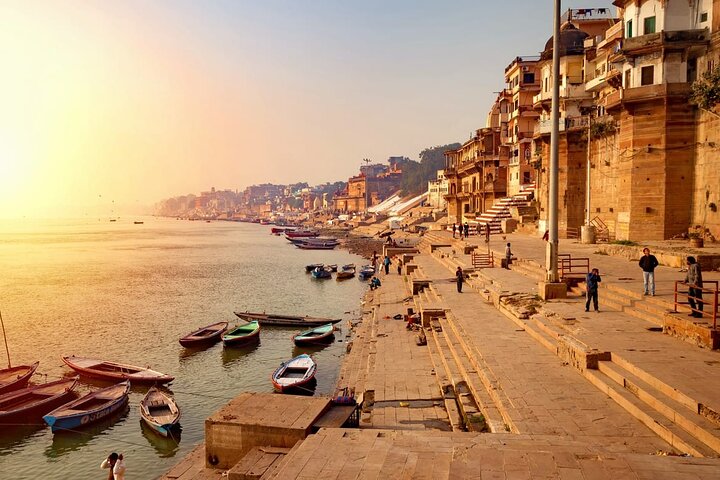
Full Day Varanasi Private Tour with Temples, Ghats & Rituals: Peak Season
For a festival week I lean toward a private guide, because a private day can work around the crowds. This tour is a long private day with a local guide. It starts with a sunrise boat and moves on through old temples and alleyways. The listing doesn't say much about which sites you'll see, so ask directly whether Sarnath or the evening aarti is part of the plan before you commit.
A private guide can start earlier and let you pause without being herded along. Choose this tour if you want a guide's stories to shape the day and you're happy to agree on stops in advance.
Full Day Varanasi Private Tour with Temples, Ghats & Rituals
From $24 · Price checked: Aug 2026
Best for: Travellers wanting a private full day in Varanasi shaped by a local guide's stories, who are happy to agree on stops in advance.
Not for: Planners who need a named site list, or those with limited stamina for an eleven hour day.
A private eleven hour day with a local guide, starting with a sunrise boat and moving through old temples and alleyways. Site detail is thin, so confirm whether Sarnath or aarti is included.
Check availabilityExternal booking on Viator · pricing and cancellations handled by Viator
When to plan a visit to Varanasi
The monsoon taught me that in Varanasi the river decides. When the water rises, boat rides can stop and the lower ghats go under, so any plan built around a boat needs a backup on land.
I went in late summer 2022, while the monsoon was still going. Brown water had covered the lower steps and was lapping at doorways that stand high and dry in winter. The boats I had hoped to ride were tied off and going nowhere. Rain fell in warm sheets, and the whole waterfront smelled of wet silt and soaked marigolds.
That visit changed how I think about the Ganges. I had been treating it as a backdrop to my schedule. Now I think of it as the first thing to check, before any booking. My seasonal timing guide for Varanasi explains how I weigh river access against crowd size.
If you have your heart set on a boat at dawn, don't plan a trip in monsoon weather and trust to luck.
One Day Admirable tour in Varanasi Private Guided Tour: lower-season fit
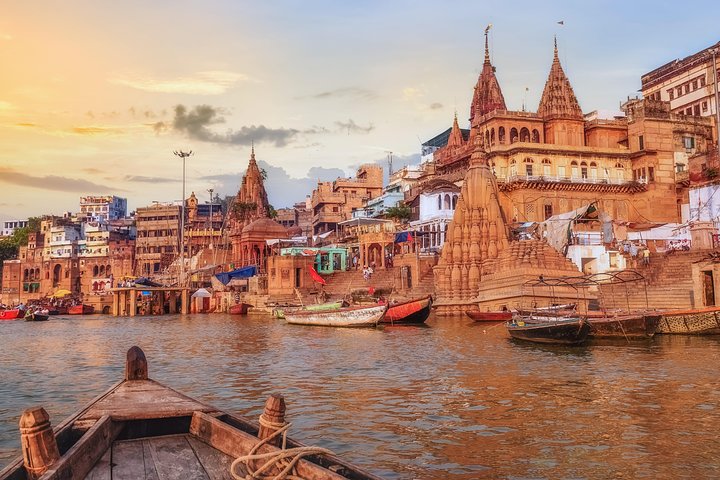
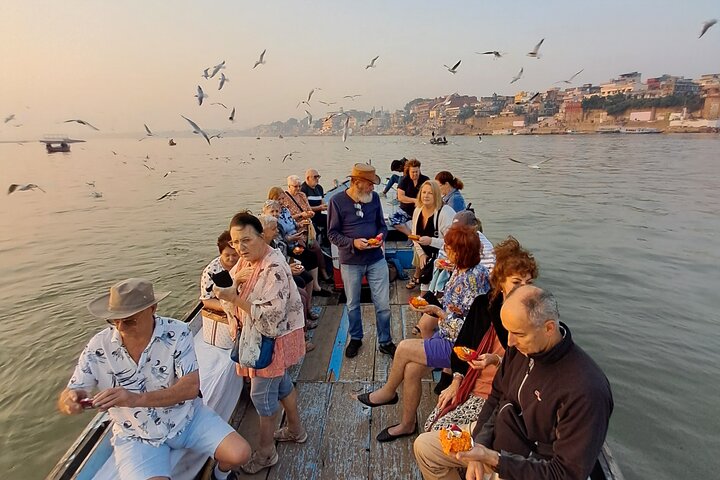
This is the tour I'd look at for a quieter week, mainly because of the rooftop. It's a long private day. It starts with a very early hand-rowed boat along the ghats to Manikarnika, then goes through old town lanes and temples, reaches Sarnath after breakfast, and ends with the evening aarti seen from a rooftop seat. That seat does away with the long wait for a step that I described above, which is hard on tired legs.
I suspect all those parts fit together more easily outside festival weeks, and a seated aarti suits anyone who can't hold a step for long. Two cautions apply. In monsoon weather, ask what replaces the boat if rowing is suspended. Along the waterfront, some ghats are places of grief as well as prayer, so ask your guide where to keep your camera down.
One Day Admirable tour in Varanasi Private Guided Tour
From $65.38 · Price checked: Aug 2026
Best for: Travellers with one day in Varanasi who can manage a very early start and a twelve to fourteen hour schedule, and who value seated aarti viewing.
Not for: Anyone uncomfortable passing an active cremation ghat, or travellers who want a gentler pace spread over two days.
A long private day starting with a 5 am hand-rowed boat along the ghats to Manikarnika, then old town lanes and temples, Sarnath after breakfast, and evening aarti viewed from a rooftop seat.
Check availabilityExternal booking on Viator · pricing and cancellations handled by Viator
Packing for the season
Pack for heat, crowded streets and temple entry. That means loose clothes that cover your shoulders and legs, slip-on shoes, a scarf for temples, and a way to carry water. A schedule that gives up the middle of the day matters as much as anything in your bag.
I learned this at Godowlia crossing in summer 2019. The heat came up off the road in visible waves and my shirt was soaked through. I had brought good walking shoes and no way to carry water. A cycle rickshaw bell rang directly behind my ear and I understood, too late, that I had planned this trip like a European city break.
My walking shoes turned out to be the wrong kind of good. Slip-ons would have been easier at every temple doorway, and they suit narrow lanes where you stop and start constantly. Forgetting water was the bigger mistake. In heat like that, a bottle you can carry comfortably is essential. The other lesson from that morning was to schedule around the heat, walking early and late and resting in between.
Carry modest clothing: long trousers or skirts, covered shoulders, and a scarf for temple entry. Several temples can refuse entry to visitors in shorts or sleeveless tops, so dress conservatively for every shrine on your route. My ghats and temples walking guide pairs these packing notes with a route.
Leave heavy lace-up boots at home if you'll spend your days in the old city's lanes and shrines. They're built for trails, and you'll spend the day taking them off and putting them back on.
Before you visit
I wish I'd known that in Varanasi rest matters as much as effort. A festival trip needs a planned half-day of quiet, a guide whose stops are agreed in writing, and a backup plan for the river.
I found that rest at Sarnath in winter 2025. The great brick stupa rose out of clipped lawns like something left behind by a different country. Monks in maroon walked slowly around it while parakeets argued in the trees. After my four days in Varanasi's lanes, the open sky overhead felt like taking off a heavy coat.
I'd give Sarnath a half-day of its own, not a quick stop squeezed between other sights. India's Ministry of Tourism has a separate Sarnath and Deer Park page that is worth reading first. The one-day tour above includes Sarnath after breakfast, which is efficient, but if your trip allows it I'd still go separately and slowly.
What to Check Before Booking
- Ask the operator of the full-day private tour whether Sarnath and the evening aarti are included, and get the answer in writing.
- Ask what replaces the boat ride if the river is running high or rowing has been suspended.
- On the day itself, check the aarti start time locally with your guide or your accommodation.
- Decide in advance whether you want a step, a boat or a rooftop for the aarti, because that choice decides when you need to arrive.
- Set aside one quiet half-day in the middle of the trip, and keep it free.
If that list feels like too much to arrange, choose a simpler plan. One unhurried evening at the ghats, spent in quiet attention to the worship around you, can be enough.
Explore More
Related comparisons and guides:
Frequently Asked Questions
When is Dev Deepawali held in Varanasi?
The festival follows the Hindu lunar calendar, so it falls on a different date each year. Check the published date when you first book, then check it again shortly before you travel.
Should I watch the Ganga Aarti from the steps, a boat or a rooftop?
A step means arriving long before the ceremony and holding your place, while a boat or rooftop seat gives up closeness for a calmer wait. If your stamina is limited, the seated options are easier on you.
Do I need a private guide during Dev Deepawali?
You don't need one, but a private guide lets you set the pace, which helps on a crowded festival day. Agree on the stops beforehand so you aren't renegotiating in the middle of a crowd.
What should I wear to temples in Varanasi?
Wear clothes that cover your shoulders and legs, and bring a scarf. Keep a spare scarf in your day bag in case the first one gets wet or dusty on the ghats.
Is Sarnath worth visiting on a Dev Deepawali trip?
Yes, if you treat it as a rest from the old city and not another sight to tick off. A slow half-day there can restore your energy before the evenings on the ghats.
Written from Jerusalem and Cairo.