Varanasi Private vs Group Tours: Which Format Fits Pilgrims?
We earn a commission when you book through our links on Viator (PID P00299531), at no extra cost to you. This is how we keep the site free. Learn more →
This page is for pilgrims choosing between private and group tours in Varanasi, and my verdict comes first: for the ghats and the temple lanes, I would book private. India's Ministry of Tourism describes Varanasi as a pilgrimage city on the Ganges and directs visitors to its ghats and sacred sites. You are entering a place of worship first and a sight second, and the tour format you choose decides how much of it you can hear, ask about, and sit with.
If you are still comparing operators more broadly, my overview of Varanasi pilgrimage tours covers the wider field. Here I stay with one question: one guide for you alone, or one guide for a crowd?
I Did Both and Chose Private. Here's What I Learned
Private guiding suits Varanasi better than group commentary for pilgrims who want to ask questions and hear the answers. I joined a group tour at Dashashwamedh Ghat and then went out with a private guide the following morning, and the difference came down to noise, pace, and whether my own questions had any room to breathe.
The group outing was in autumn 2022. In the group tour I could hear perhaps every third sentence over the boat engines and hawkers. Varanasi rewards private guiding more than almost anywhere I write about, because the questions worth asking here are personal ones, and they need a quiet exchange.
Full Day Varanasi Private Tour with Temples, Ghats & Rituals: The Experience
According to its listing, this private day pairs you with a local guide, opens with a sunrise boat, and then moves through old temples and alleyways. Its appeal lies in the guide's stories and in the freedom to shape the day together. The weak point is the thin site detail. Before paying, I would write to the operator and ask, in plain terms, whether Sarnath or the evening aarti is part of the plan.
Where the Group Tour has the advantage
Group walking has a gift that private guiding lacks: shared silence. On a group walk along the Stations of the Cross in autumn 2022, I felt it clearly. My group started in the Muslim Quarter where metal shutters were still down and the lane smelled of bread and wet stone. The stations were marked modestly, some barely a plaque above a doorway, and by the time we reached the Sepulchre the lanes behind us had filled with carts, spices and shouted prices. Walking slowly with others, and accepting that one morning covers only a small part of an old city, made the day whole.
One Day Admirable tour in Varanasi Private Guided Tour: The Experience
The listing for this private day is the most detailed of the options I compare here. It describes a very early hand-rowed boat along the ghats to Manikarnika, then old-town lanes and temples, Sarnath after breakfast, and evening aarti watched from a rooftop seat.
Pass on this one if early starts and very long days wear you down. For a pilgrim with one day and energy to spare, it covers Hindu and Buddhist sites without a second booking.
How to make the decision
My decision came on the steps of Dashashwamedh Ghat the morning after the group tour, when a single question received a full answer. Private guiding won because it gave my questions space and gave me time to sit, which matters most in the places where pilgrims come to pray, mourn and bathe.
The next morning, alone with a guide, I asked why the cremation fires are never allowed to go out, and got a long, patient answer while we sat on warm stone steps watching the river turn brass-coloured. No part of that exchange would have survived a group microphone. I am not qualified to speak for the faith behind those fires, and I will not try. I can say that hearing it explained by someone local, at my own pace, changed what I was looking at.
The temple lanes confirmed the choice. In winter 2023 I walked Vishwanath Gali. The lane narrowed until two people could not pass without turning sideways, and the air was thick with marigold, incense, and the sourness of drains. I left my sandals at a stall and walked the last stretch barefoot on stone slick with flower water, while a bell rang somewhere above and did not stop.
Varanasi's core temple lanes require shoe and bag deposits and may restrict cameras. A private guide who knows the deposit points saves you from doubling back through a lane that narrow. Carry as little as possible, and pack modest clothing: long trousers or skirts, covered shoulders, and a scarf for temple entry. My ghats and temple walking guide goes further into the lanes themselves.
Before you visit
Three things would have shaped my bookings earlier: dawn on the ghats rewards a private start, Sarnath costs far more time in traffic than the map suggests, and ceremony times and festival dates shift. Checking each before you pay spares you a rushed day and a missed aarti.
Start with dawn. If unhurried time at the ghats at first light matters to you, avoid the group format. A private booking lets you ask for an earlier start and a longer pause without being herded back to the boat.
Sarnath is the second lesson. India's Ministry of Tourism gives Sarnath and its Deer Park their own page, apart from the city. I made the trip in winter 2024. The car crawled through horn-blare and diesel for what felt like forever, and I regretted the detour twice. Then the city thinned into fields and low brick, and we arrived at lawns so quiet I could hear my own footsteps on the gravel. The contrast was almost physically disorienting. Sarnath is close in kilometres and far in traffic time. Skip it if you have only part of a day, and when you do go, ask your guide to leave in the morning before the city congests.
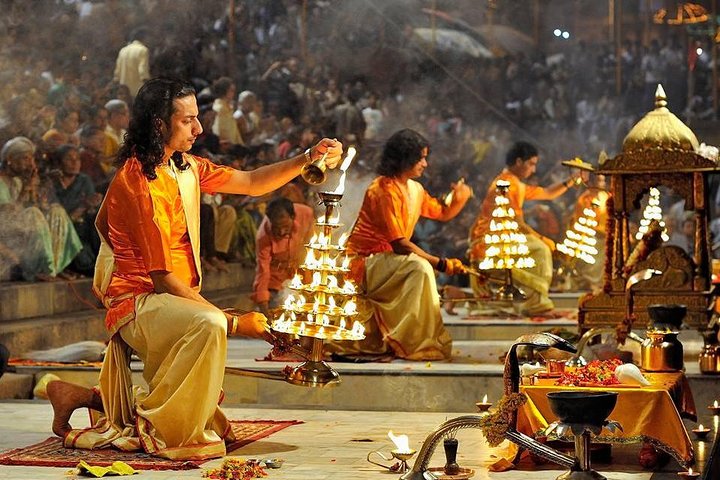
Third, the calendar. Dashashwamedh Ghat hosts Ganga Aarti, and ceremony timing varies with the season, so confirm the day's start time locally. Dev Deepawali follows the Hindu lunar calendar, so confirm the published festival date before booking transport or accommodation.
For a gentler first morning, the Varanasi Morning Boat Tour offers a seated, slow rowboat outing along the ghats, watching daily life on the banks from the water. My Varanasi boat tour review compares river options in more depth.
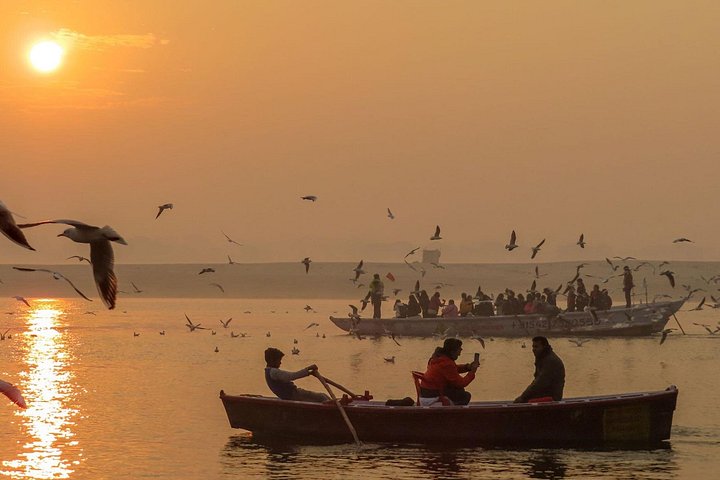
Full Day Varanasi Private Tour with Temples, Ghats & Rituals
From $24 · Price checked: Aug 2026
Best for: Travellers wanting a private full day in Varanasi shaped by a local guide's stories, who are happy to agree on stops in advance.
Not for: Planners who need a named site list, or those with limited stamina for an eleven hour day.
A private eleven hour day with a local guide, starting with a sunrise boat and moving through old temples and alleyways. Site detail is thin, so confirm whether Sarnath or aarti is included.
Check availabilityExternal booking on Viator · pricing and cancellations handled by Viator
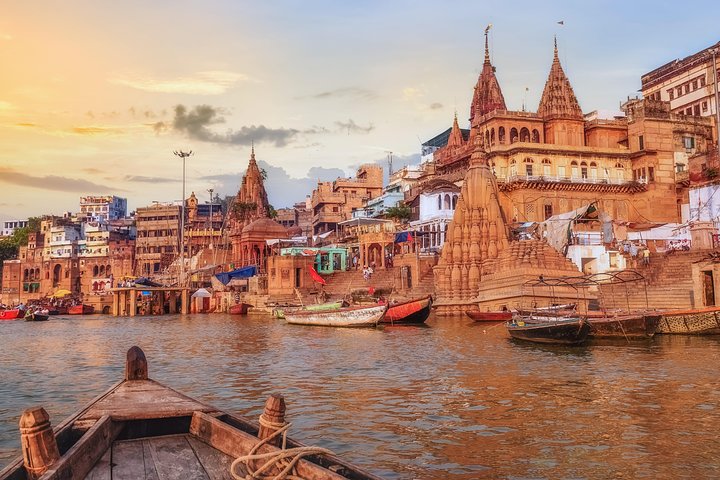
One Day Admirable tour in Varanasi Private Guided Tour
From $65.38 · Price checked: Aug 2026
Best for: Travellers with one day in Varanasi who can manage a very early start and a twelve to fourteen hour schedule, and who value seated aarti viewing.
Not for: Anyone uncomfortable passing an active cremation ghat, or travellers who want a gentler pace spread over two days.
A long private day starting with a 5 am hand-rowed boat along the ghats to Manikarnika, then old town lanes and temples, Sarnath after breakfast, and evening aarti viewed from a rooftop seat.
Check availabilityExternal booking on Viator · pricing and cancellations handled by Viator
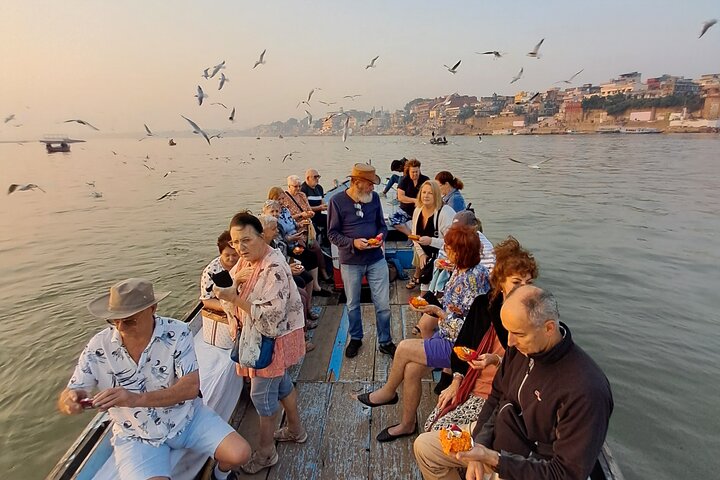
Varanasi tour in one day
From $63 · Price checked: Aug 2026
Best for: Short-stay visitors with a single day and stamina for up to fourteen hours, who want Hindu and Buddhist sites handled in one private plan.
Not for: Travellers uncomfortable at cremation grounds, or anyone with limited energy who would be better served splitting the day.
A private package for one full day, covering the sunrise boat, old alleys and a cremation ground, Sarnath and evening aarti. Coverage matches similar full-day plans, so compare timings and details.
Check availabilityExternal booking on Viator · pricing and cancellations handled by Viator
![Varanasi Morning Boat Tour [RowBoat] - photo](/images/7330P3.jpg)
Varanasi Morning Boat Tour [RowBoat]
From $45 · Price checked: Sep 2026
Best for: Early risers and travellers with limited mobility who want a seated, slow-paced morning on the river as a first introduction to the ghats.
Not for: Visitors wanting temples, Sarnath or the evening aarti, none of which is included in this morning outing.
A three hour rowboat outing at sunrise along the ghats, observing Hindu daily life on the riverbanks. It allows more time on the water than the shorter 80 minute sunrise option.
Check availabilityExternal booking on Viator · pricing and cancellations handled by Viator
Explore More
Related comparisons and guides:
These are the four tours I would weigh for this decision. The cards carry current ratings and booking details.
Frequently Asked Questions
Is a private tour worth it for a first-time pilgrim in Varanasi?
On a first visit you meet rituals and customs you have never seen, and a private guide can explain each one as it happens. A group suits you better if travelling with others matters more to you than asking questions.
Can I see Sarnath and the ghats in a single day?
Two of the private full-day plans listed here combine Sarnath with the ghats. Ask each operator how the drive fits around the morning boat and the evening ceremony.
Do Varanasi day tours include the evening Ganga Aarti?
Some listings name the aarti clearly, while the Full Day Varanasi Private Tour leaves it unconfirmed. Get the answer in writing before you pay.
What footwear works on a Varanasi temple tour?
Sandals you can slip off and back on quickly make the shoe deposits much easier. Temple lanes can be wet with flower water, so be ready to walk barefoot on slippery stone.
Is a rowboat tour suitable for travellers with limited mobility?
The Varanasi Morning Boat Tour listing describes a seated, slow-paced morning and names travellers with limited mobility among its intended guests. Confirm boarding arrangements at the ghat with the operator before booking.
Written from Jerusalem and Cairo.