Jerusalem vs Varanasi: Which Pilgrimage Destination Should You Choose?
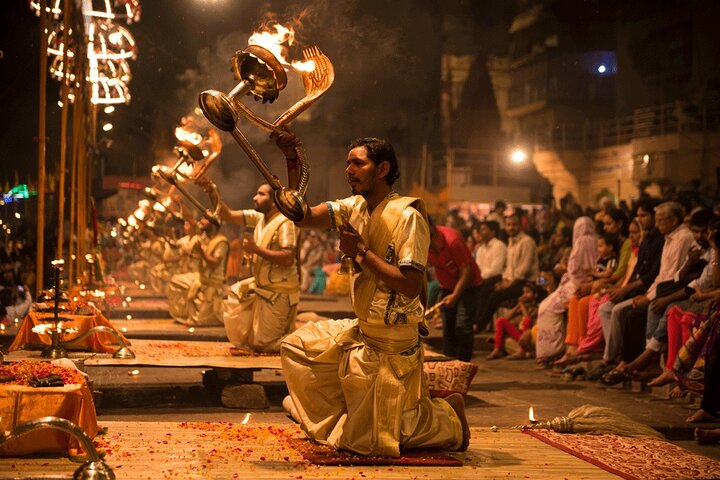
We earn a commission when you book through our links on Viator (PID P00299531), at no extra cost to you. This is how we keep the site free. Learn more →
Comparing Jerusalem and Varanasi
Choose Jerusalem if your pilgrimage follows the Abrahamic calendar and you can plan around Shabbat, Friday prayers and security screening. Choose Varanasi if you are drawn to the river, the ghats and the temple lanes, and you can travel light in modest layers. Neither city rewards a rigid schedule, and each asks for a different kind of preparation.
Jerusalem is a walled city with layered claims on every stone. UNESCO records the Old City of Jerusalem and its Walls as a World Heritage site, and you feel that density the moment you pass a gate. Varanasi is organised around water. India's Ministry of Tourism describes Varanasi as a pilgrimage city on the Ganges and directs visitors to its ghats and sacred sites.
Skip Jerusalem as a first pilgrimage if you cannot build slack around its weekly closures. Skip Varanasi if crowded, barefoot, sensory lanes would overwhelm the reason you came.
Jerusalem Full-Day Tour from Jerusalem: the Jerusalem option
This guided day suits the traveller who wants the sacred and the ordinary city in one sweep. It covers the Old City's four quarters, the Western Wall, the Via Dolorosa and the Holy Sepulchre, then moves out into the modern city, Nahlaot and Mahane Yehuda Market.
Two checks before you go. The Custody of the Holy Land publishes visitor and liturgy schedule guidance for the Holy Sepulchre, and liturgies change what you can see inside. The Western Wall Heritage Foundation sets out conduct and dress guidance for the prayer plaza. Neither description of the Jerusalem tours here lists the Western Wall tunnels, so book those separately if they matter to you; public access is limited and tunnel tours sell out days ahead.
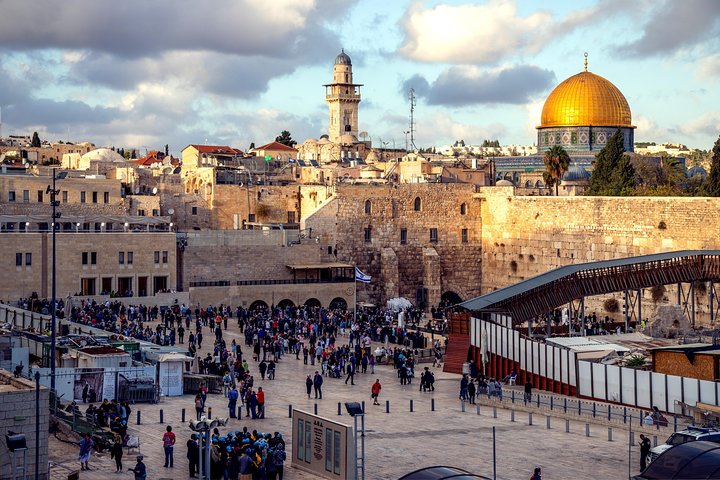
Best of Jerusalem Full-Day Tour from Jerusalem
From $69 · Price checked: Aug 2026
Best for: Energetic first-timers staying in Jerusalem who want sacred sites and everyday modern neighbourhoods together in one ten hour day.
Not for: Older travellers or anyone with limited stamina, since the route is walking-based and runs about ten hours.
A long day on foot covering the Old City's four quarters, the Western Wall, Via Dolorosa and Holy Sepulchre, then continuing into the modern city, Nahlaot and Mahane Yehuda Market.
Check availabilityExternal booking on Viator · pricing and cancellations handled by Viator
Where Jerusalem has the advantage
Jerusalem won me over with its thresholds, and it tested me with its timing. One winter Friday I came out of a church at Jaffa Gate to find the city changing around me. By early afternoon on Friday the traffic thinned strangely, shutters came down street by street, and the light went gold and quiet. I stood at the gate watching a city put itself away, and my planned dinner and my planned transport had both evaporated while I was inside.
That evening remains one of my favourite Jerusalem memories, but it was not the evening I had planned. The lesson I took from it: build your Jerusalem week around Shabbat and Friday prayers, keep Friday evening and Saturday for quiet indoor days, and confirm in advance what transport runs.
The Western Wall taught me something different, on a hot summer day. I emptied my bag into a plastic tray while the metal detector beeped at someone's belt ahead of me. My linen scarf, folded in my daypack since Alexandria, went over my shoulders before I stepped onto the plaza. The stone underfoot was already too hot to stand on barefoot.
Then there was spring, when Passover and Holy Week overlapped. The lanes were so dense that I moved at the pace of the crowd, not my own. Palm fronds brushed my face from one direction, and the smell of roasting nuts came from another.
Jerusalem and Bethlehem day tour: The Jerusalem Gospel Route
This day is built for Christian pilgrims based in Jerusalem who have only one day for both cities. It pairs the Via Dolorosa and the Holy Sepulchre with Bethlehem's birthplace sites and Shepherds' Field, and it keeps the focus on Christian landmarks throughout. UNESCO's record for the Church of the Nativity and the Bethlehem pilgrimage route is worth reading beforehand, because context makes a short visit far richer.
This is not the day for a traveller who wants the Jewish Quarter, the Western Wall or Muslim heritage at the centre of the visit, since the itinerary is shaped around Gospel sites. If your pilgrimage runs longer than one day, my guide to Christian pilgrimage routes shows how to give Bethlehem its own unhurried day.
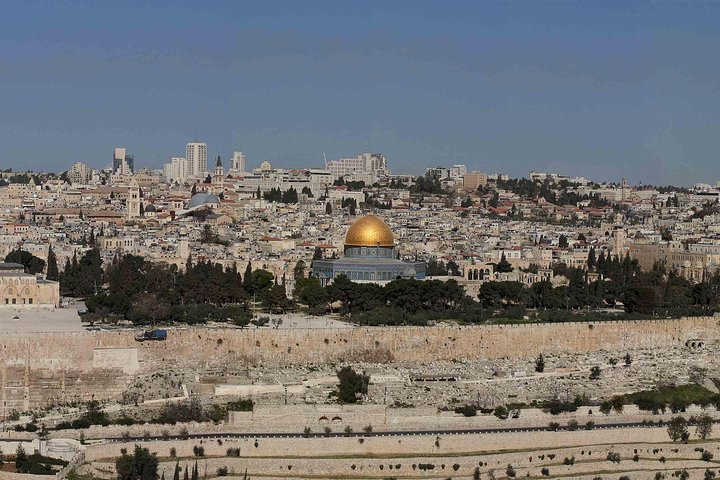
Jerusalem and Bethlehem day tour
From $800 · Price checked: Aug 2026
Best for: Christian pilgrims based in Jerusalem with one day for both cities, who prefer a guided plan covering the main Gospel sites.
Not for: Visitors seeking Jewish or Muslim sites in depth, or a slower visit to either city on its own.
A seven to eight hour day pairing the Via Dolorosa and Holy Sepulchre in Jerusalem with Bethlehem's birthplace sites and Shepherds' Field, keeping the focus on Christian landmarks in both cities.
Check availabilityExternal booking on Viator · pricing and cancellations handled by Viator
How to make the decision
The comparison settled for me in Vishwanath Gali one winter. The lane narrowed until two people could not pass without turning sideways, and the air was thick with marigold, incense, and the sourness of drains. I left my sandals at a stall and walked the last stretch barefoot on stone slick with flower water. A bell rang somewhere above and did not stop.
Nothing in Jerusalem had asked me to give up my shoes, my bag and my sense of direction all at once. Varanasi's core temple lanes require shoe and bag deposits and may restrict cameras.
Local advice is to carry modest clothing: long trousers or skirts, covered shoulders, and a scarf for temple entry, because you can be refused entry to several temples in shorts or sleeveless tops. If a festival is drawing you, remember that Dev Deepawali follows the Hindu lunar calendar, so confirm the published date before you book transport or accommodation.
Full Day Varanasi Private Tour: the Varanasi option
This private day with a local guide begins with a sunrise boat and then moves through old temples and alleyways. I value the private format in Varanasi for one practical reason: private tours leave earlier and allow a longer pause at the ghats at dawn, without the feeling of being herded along by a group.
The listing's site detail is thin, and that is my main reservation. Before you book, agree the stops in writing and ask whether Sarnath or the evening aarti is included. The Ministry of Tourism's page on Sarnath and the Deer Park will help you decide whether that detour belongs in your day. Skip this format if you prefer a fixed, fully published itinerary and dislike negotiating the details with a guide.
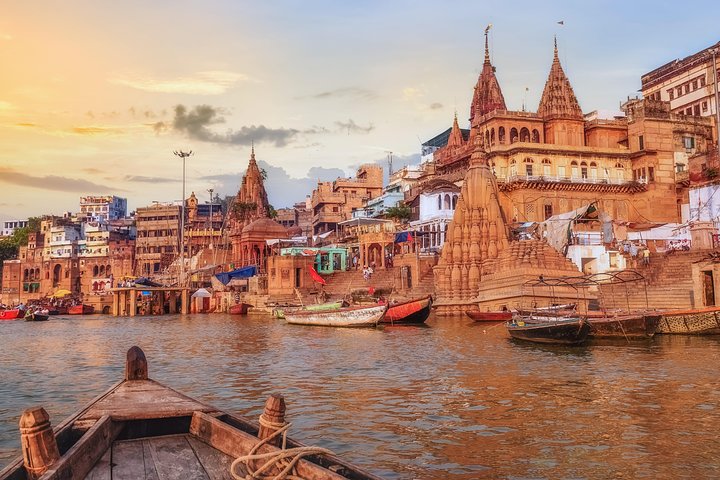
Full Day Varanasi Private Tour with Temples, Ghats & Rituals
From $24 · Price checked: Aug 2026
Best for: Travellers wanting a private full day in Varanasi shaped by a local guide's stories, who are happy to agree on stops in advance.
Not for: Planners who need a named site list, or those with limited stamina for an eleven hour day.
A private eleven hour day with a local guide, starting with a sunrise boat and moving through old temples and alleyways. Site detail is thin, so confirm whether Sarnath or aarti is included.
Check availabilityExternal booking on Viator · pricing and cancellations handled by Viator
Varanasi Morning Boat Tour: A Seated Varanasi Start
This rowboat outing at sunrise along the ghats lets you watch Hindu daily life on the riverbanks from a seat. I would steer early risers and travellers with limited mobility here first, as a gentle introduction before any lane walking.
Skip this format if temple interiors are your priority, because the whole experience happens from the water. Pair it with a guided lane visit on another morning.
![Varanasi Morning Boat Tour [RowBoat] - photo](/images/7330P3.jpg)
Varanasi Morning Boat Tour [RowBoat]
From $45 · Price checked: Sep 2026
Best for: Early risers and travellers with limited mobility who want a seated, slow-paced morning on the river as a first introduction to the ghats.
Not for: Visitors wanting temples, Sarnath or the evening aarti, none of which is included in this morning outing.
A three hour rowboat outing at sunrise along the ghats, observing Hindu daily life on the riverbanks. It allows more time on the water than the shorter 80 minute sunrise option.
Check availabilityExternal booking on Viator · pricing and cancellations handled by Viator
Before you visit
Anyone hoping to visit the Temple Mount (Haram al-Sharif) should avoid planning for Friday or Saturday, since non-Muslim access is restricted to specific hours and the queues can be long.
For fuller shortlists, see my guides to Jerusalem pilgrimage tours and Varanasi pilgrimage tours.
Explore More
Related comparisons and guides:
Frequently Asked Questions
Can I see Jerusalem and Bethlehem on the same day?
Yes, the Jerusalem and Bethlehem day tour combines both cities around Christian sites. Before the day, confirm the pickup point and any documents the operator asks you to carry.
Does the Ganga Aarti start at the same time every evening?
No. Dashashwamedh Ghat hosts Ganga Aarti, and the ceremony timing varies with the season, so confirm that day's start time locally.
Is Varanasi manageable for someone with limited mobility?
The seated rowboat tour is the gentler entry point, since it keeps you on the river and away from the steps and crowds of the lanes. Temple lanes involve barefoot walking in narrow spaces, so ask any guide about the route before booking.
Should I check Jerusalem opening information before every visit?
Yes, because access can shift around festivals and liturgies. The Custody of the Holy Land updates its Holy Sepulchre guidance, and it is worth rechecking the evening before your visit.
Which city suits a traveller mixing faith with sightseeing?
Jerusalem makes that mix easier on a single day, since one full-day tour pairs the Old City with Nahlaot and Mahane Yehuda Market. In Varanasi, a private guide can adapt the balance if you agree the stops in advance.
Written from Jerusalem and Cairo.