Jerusalem Seasons: When to Go for Good Weather, Small Crowds, and the Right Observances
When is the best time to visit Jerusalem?
Jerusalem is a pilgrimage destination with four distinct seasons — and the best time to visit depends on what you value more: good weather, small crowds, or alignment with religious observances. Spring (March–May) gives you the best weather and the highest prices. Winter (December–February, outside Christmas) gives you rain, empty plazas, and hotel rates that drop 30–40%. Summer (June–August) is hot, crowded, and expensive. Autumn (September–November) is the compromise — still warm, less crowded than spring, with Sukkot and the Jewish High Holidays adding texture to the city if you plan around them.
I have visited Jerusalem in every season across three trips since March 2018. My best visit was late March — the almond trees were flowering on the Mount of Olives, the temperature held at 18°C, and I walked the Via Dolorosa at 6 AM without seeing another person for the first hour. The worst was August 2019 when the mercury hit 35°C and the stones of the Western Wall plaza radiated heat through the soles of my shoes. Every season works for someone. Here is what I learned from each.
If you want one tour that works in any season, the Temple Mount and Dome of the Rock Tour handles the access logistics that are tricky regardless of the month — visiting hours shift seasonally and the tour operator tracks the calendar so you do not have to. I booked it in both spring and winter, and both times the guide navigated the Mughrabi Gate queue smoothly.
Recommended Tours for Every Season
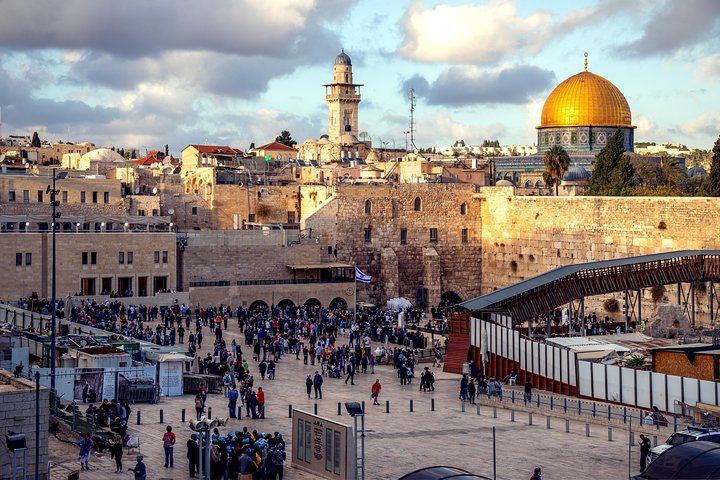
Best of Jerusalem Full Day Tour
Covers Old City, Mount of Olives, and Yad Vashem. Guide quality varies — ask for someone with archaeological training. Best in spring and autumn when the full day outdoors is comfortable. In summer, the midday Mount of Olives segment can be punishing.
 Check Availability →
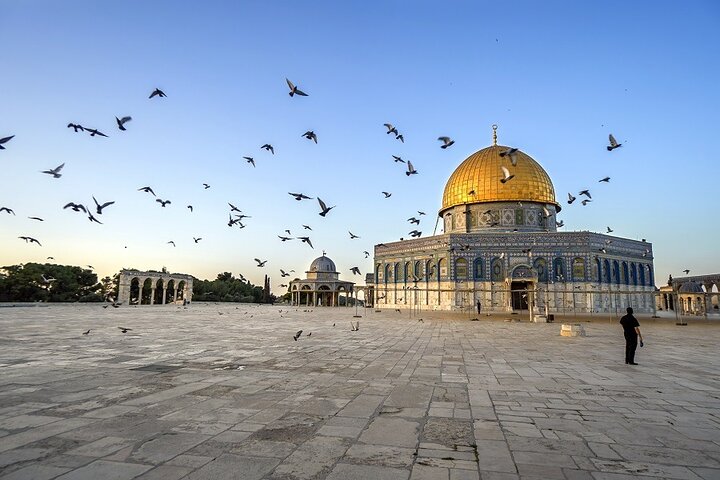
Jerusalem Temple Mount & Dome of the Rock Tour
Includes Western Wall tunnels. Temple Mount access handled for you. Works year-round — the morning timing means you finish before summer heat peaks. Winter fog can obscure the views from the Mount of Olives overlook but the platform itself is always clear.
 Check Availability →
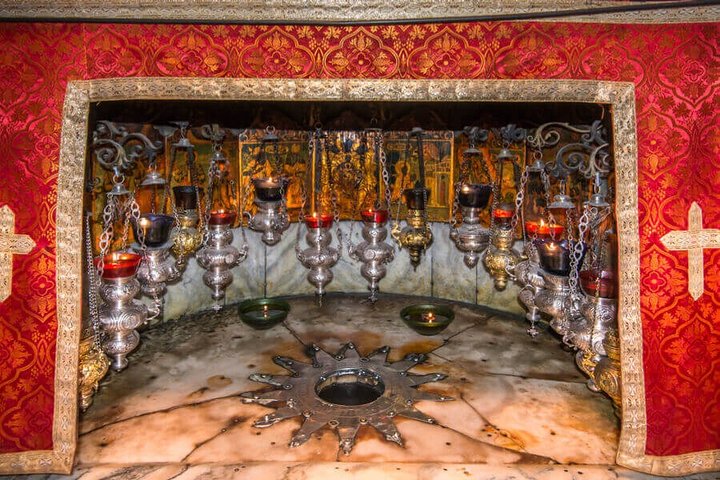
Jerusalem and Bethlehem Day Tour
Bethlehem gets only 90 minutes — enough for Church of the Nativity. Best in spring when the West Bank hills are green. Christmas season (December) is chaotic — book months ahead and expect gridlock at the checkpoint.
 Check Availability →
Jerusalem season by season — what I experienced
Spring (March–May)
This is the season most pilgrims choose, and the city is ready for you. Temperatures sit at 15–25°C. The almond trees on the Mount of Olives bloom in March. By April the wildflowers in the Judean Hills are at their peak — the drive to Bethlehem passes fields of red poppies and yellow mustard.
The complication is the religious calendar. Passover and Easter often overlap in March or April. On the weekend they coincide, the Old City is shoulder-to-shoulder. I walked the Via Dolorosa on Good Friday in April 2019 — the Franciscan procession at 5:45 AM was manageable. By 9 AM the crowd was 200 deep and I could not see the cobblestones. Book accommodation three months ahead if your dates fall during Passover or Easter week. Hotels near Jaffa Gate fill first — consider the Christian Quarter guesthouses which are closer to the Church of the Holy Sepulchre and quieter at night.
Temple Mount visiting hours expand to 7:30–11:00 AM and 1:30–2:30 PM in spring. Line up at the Mughrabi Gate by 7:00 AM with your passport. Only 200–300 non-Muslims are admitted per session. I made it in on my second attempt in March — the first was a Friday during Ramadan when the site closed without notice. Check the Islamic calendar before you go.
Summer (June–August)
I visited in August 2019 and would not do it again. Daytime temperatures reach 32–38°C with strong sun. The Old City streets are narrow and shaded in places, but the Western Wall plaza is an open expanse of limestone that radiates heat. I stood at the wall at 11 AM and lasted seven minutes before retreating to the shade of the Wilson's Arch synagogue.
Summer is also the most crowded season — school holidays bring families from Europe and North America. Tour groups fill the Church of the Holy Sepulchre from 10 AM to 3 PM. The Via Dolorosa is a slow-moving line of tour groups following numbered flags. If you must visit in summer, follow the same rule I use in every season: go before 7 AM. The Church opens at 5 AM. The Western Wall is 24 hours. The Old City before dawn in August is warm but empty. By 10 AM the heat and the crowds arrive together.
On the positive side, summer days are long — sunset is after 7:30 PM in June and July. The light on the Dome of the Rock at golden hour is striking. Evening temperatures drop to 20°C, comfortable for the Ramparts Walk or dinner on a rooftop in the Christian Quarter.
Autumn (September–November)
Autumn is my second-favourite season after spring. September is still warm (25–30°C) but the humidity drops. October temperatures settle at 18–25°C — ideal for walking. November cools to 12–20°C with occasional rain. The crowds thin after the Jewish High Holidays in September–October.
The Jewish High Holidays — Rosh Hashanah, Yom Kippur, and Sukkot — fall in September or October depending on the Hebrew calendar. Yom Kippur is the most significant: the entire city shuts down. No cars, no light rail, no shops. The Western Wall plaza fills with worshippers in white. I was in Jerusalem for Yom Kippur in 2022 and it was the quietest 25 hours I have ever experienced in a city. The silence is total — even the birds seem to notice. For a pilgrim interested in Jewish observance, this is profound. For a pilgrim who wants to see sites and eat in restaurants, it is a day to plan around.
Sukkot brings temporary booths (sukkahs) built in courtyards, on balconies, and outside restaurants throughout the Jewish Quarter. The atmosphere is festive. Temple Mount hours follow the autumn schedule and are generally reliable outside of Jewish and Islamic holidays.
Winter (December–February)
Winter in Jerusalem is rainy, cold after dark, and the cheapest season to visit. Daytime temperatures run 8–15°C with night drops to 2–5°C. Rain falls an average of 8–10 days per month. The limestone streets of the Old City become slick. I walked the Via Dolorosa in January 2023 in steady drizzle — the cobblestones were treacherous but the Stations of the Cross were empty. I had Station 5 to myself for fifteen minutes.
December is the exception to winter's quiet. Christmas draws pilgrims from every continent. Bethlehem is gridlocked. The Church of the Nativity queue can exceed three hours on December 24–25. If Christmas in the Holy Land is important to you, arrive on December 22 or earlier and stay through December 27. Book accommodation by September. The Jerusalem International YMCA runs a Christmas Eve service that is less crowded than Bethlehem and still meaningful.
January and February are the quietest months of the year. Hotel prices drop to their annual low. The Western Wall at 4 AM in January is colder than you expect — I wore two layers and was still shivering. But the plaza was mine. One old man in a tallit, one security guard, and me. Temple Mount hours shorten to 7:30–11:00 AM in winter with the afternoon session dropped entirely. Check the schedule — the winter timetable catches first-time visitors by surprise.
Who these tours are not for — and when to skip them
The Best of Jerusalem Full Day Tour is not a good choice in July and August. The midday segment on the Mount of Olives has no shade and the guide moves at a pace that is draining in 35°C heat. Summer pilgrims are better off with a half-day morning tour and a siesta during the hot hours. If you book the full day in summer, carry two litres of water and a hat with a brim — the tour operator does not provide water.
The Jerusalem and Bethlehem Day Tour should be avoided during Christmas week. The Bethlehem checkpoint crossing, which normally takes 30–45 minutes, can take two hours or more. I tried this tour in December 2021 during the Christmas season and we got 45 minutes in Bethlehem — barely enough to see the Church of the Nativity from the outside before the guide called us back to the bus. Go to Bethlehem independently on a non-Christmas weekday or skip it entirely during the holiday crush.
Nadia Osman's Season-by-Season Jerusalem Guide
- Best overall months: March, April (early), October, November — good weather, manageable crowds, sites on normal schedules. Passover and Easter complicate April — check the calendar.
- Best for budget: January, February — hotel rates at annual lows, empty sites, rain manageable with a good coat. Temple Mount afternoon session cancelled — plan mornings only.
- Best for Christian pilgrimage: March–April (Easter) or December (Christmas) — book accommodation months ahead. Walk the Via Dolorosa before 7 AM regardless of season. The Franciscans do a private Friday procession most weeks — ask at St. Saviour Monastery.
- Best for Jewish pilgrimage: September–October (High Holidays) — Yom Kippur shuts the city. The Western Wall plaza fills with worshippers. Sukkot brings festive booths throughout the Jewish Quarter.
- Best for Muslim pilgrimage: Avoid Ramadan Fridays for Temple Mount access. The site closes to non-Muslims without notice. The Al-Aqsa compound is busiest during the last ten days of Ramadan.
- Avoid: July–August for heat and crowds. Christmas week for Bethlehem gridlock. Passover–Easter overlap weekends for Old City crowding. Ramadan Fridays for Temple Mount closures.
- Dress for the season: Carry a scarf year-round for holy sites regardless of temperature. Spring and autumn: layers. Summer: light cotton that covers shoulders and knees. Winter: waterproof coat, warm layers underneath, waterproof shoes for the Old City cobblestones.
- Light rail note: The light rail stops from Friday afternoon through Saturday evening for Shabbat year-round. Plan Friday afternoon transport in advance — taxis cost more during Shabbat.
What should I know about Jerusalem's religious calendar?
The religious calendar runs Jerusalem. The Jewish Shabbat (Friday sunset to Saturday sunset) stops the light rail and closes most shops in the Jewish Quarter. The Muslim call to prayer echoes from minarets five times daily. Christian church bells ring on Sunday mornings across the four quarters. The three Abrahamic calendars overlap and diverge in ways that can catch a pilgrim by surprise.
Passover and Easter often coincide in March or April — on these weekends the Old City is shoulder-to-shoulder and hotel prices double. Ramadan moves roughly 11 days earlier each year on the Gregorian calendar. During Ramadan, Temple Mount is closed to non-Muslims on Fridays and the Mughrabi Gate queue can be unpredictable on other days. The Jewish High Holidays (Rosh Hashanah, Yom Kippur, Sukkot) fall in September or October — Yom Kippur shuts the entire city for approximately 25 hours. I was in Jerusalem for Yom Kippur in 2022 and the silence was total — no cars, no shops, no restaurants. Profound if you expect it, a lost day if you do not.
Before booking flights, check the Hebrew calendar, the Islamic calendar, and the Western Christian calendar. They rarely align, and a pilgrimage planned around one tradition's observances can run into another's restrictions. I use timeanddate.com for the Hebrew calendar and IslamicFinder for the Islamic calendar. The combination has saved me from showing up at a closed Temple Mount more than once.
What I wish I'd known about Jerusalem's seasons
I wish I had known that the Temple Mount visiting hours change seasonally — winter drops the afternoon session entirely. On my first winter visit in January 2023, I arrived at the Mughrabi Gate at 1 PM expecting the afternoon window and found it closed. The morning session had ended at 11:00 AM. I lost a day. Temple Mount visiting hours for non-Muslims: summer (Sunday–Thursday 7:30–11:00 AM and 1:30–2:30 PM), winter (Sunday–Thursday 7:30–11:00 AM only). Closed Fridays and all religious holidays.
I wish I had known that the Via Dolorosa on Good Friday is a spectacle — but not a pilgrimage. After 9 AM, it is a crush of tour groups, television cameras, and street vendors selling olive-wood crosses. The pilgrims who walked the Stations in prayer were pushed to the edges. If Good Friday matters to you, find a pre-dawn service. The Franciscans lead a procession at 5:45 AM that is quiet and prayerful. Ask at St. Saviour Monastery near the New Gate the day before.
I wish I had known about Yom Kippur before my 2022 autumn visit. I arrived at my hostel on the eve of Yom Kippur and the receptionist said, "Tomorrow nothing moves." She was right. No cars, no buses, no light rail, no shops, no restaurants. The silence was extraordinary — but I had planned to visit Yad Vashem that day and could not reach it. Yom Kippur is a profound experience if you expect it. If you do not, it is a day lost.
Explore More
Related comparisons and guides:
Frequently Asked Questions
What is the best month to visit Jerusalem?
March and October are the best months — temperatures of 15–25°C, manageable crowds, and most sites on normal schedules. Avoid March–April if your dates coincide with Passover–Easter overlap without booking accommodation months ahead. November is also good — cooler but still comfortable for walking.
Is Jerusalem too hot in summer?
Yes, July and August reach 32–38°C with strong sun. The Western Wall plaza is an open expanse of limestone that radiates heat. Visit sites before 10 AM or after 5 PM. The Church of the Holy Sepulchre opens at 5 AM — go at opening. Carry two litres of water. Evening temperatures drop to a comfortable 20°C.
Does it rain in Jerusalem in winter?
Yes — expect rain on 8–10 days per month from December to February. Daytime temperatures run 8–15°C. The Old City cobblestones become slick. Carry a waterproof coat and waterproof shoes. The upside: hotel prices drop 30–40% from spring rates and sites are nearly empty. January and February are the quietest months of the year.
When are the Temple Mount visiting hours?
Summer (approximately April–October): Sunday–Thursday 7:30–11:00 AM and 1:30–2:30 PM. Winter (approximately November–March): Sunday–Thursday 7:30–11:00 AM only — no afternoon session. Closed Fridays and all religious holidays. Line up at the Mughrabi Gate by 7:00 AM with your passport. Only 200–300 non-Muslims admitted per session. The site may close without notice on Islamic holidays and Ramadan Fridays.
Can I visit Jerusalem during Yom Kippur?
Yes, but be prepared — the entire city shuts down for approximately 25 hours. No cars, no light rail, no buses, no shops, no restaurants. The Western Wall plaza fills with worshippers in white. The silence is complete. It is a profound experience for pilgrims interested in Jewish observance. For pilgrims who want to see sites and eat in restaurants, plan around Yom Kippur — nothing is open.
Should I visit Jerusalem at Christmas?
Christmas in Jerusalem and Bethlehem is a major draw for Christian pilgrims, but the crowds are intense. Bethlehem is gridlocked — the Church of the Nativity queue can exceed three hours on December 24–25. Book accommodation by September. Consider the Jerusalem International YMCA Christmas Eve service as a less crowded alternative. Arrive December 22 or earlier and stay through December 27 if Christmas is your focus.