Disclosure: This page contains affiliate links to Viator. If you book through them, Faith Pilgrimage earns a commission at no extra cost to you. My assessments are my own.
Skip to main content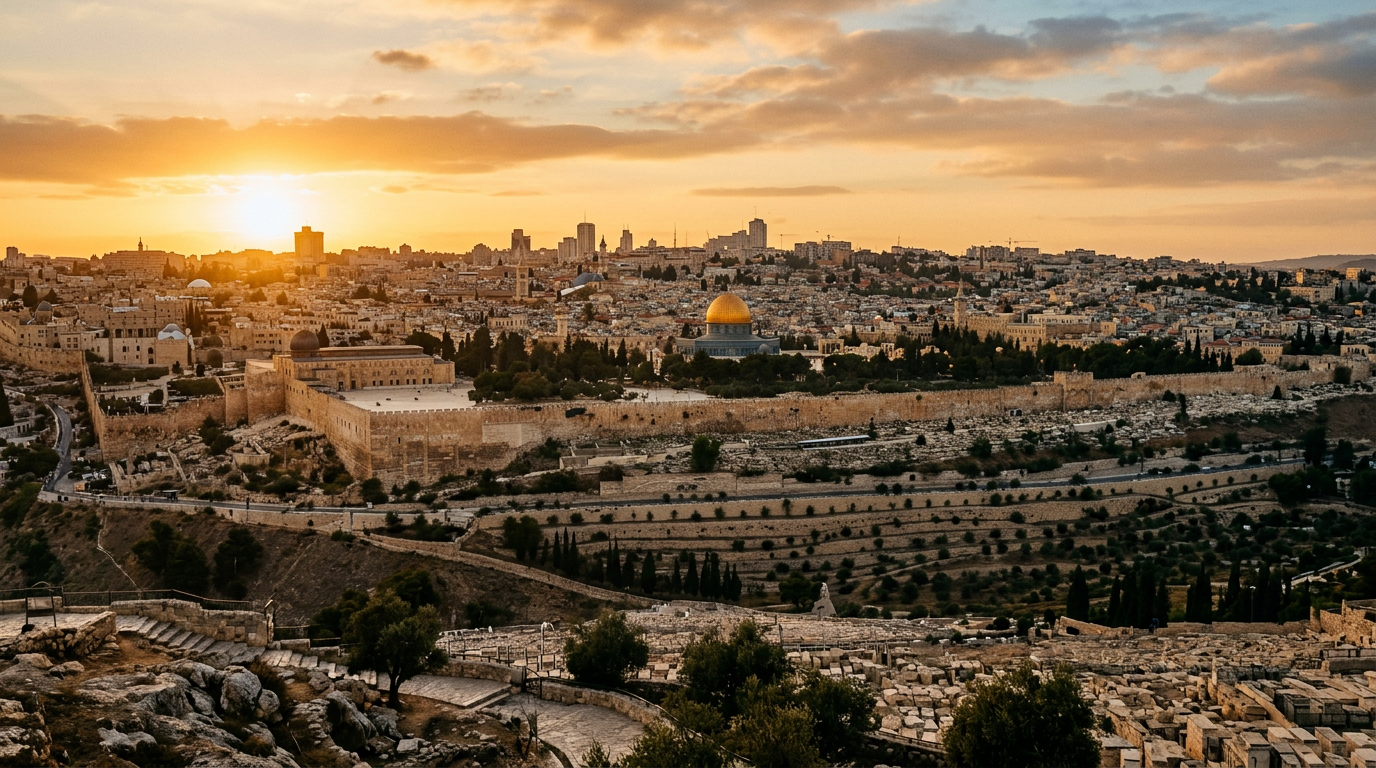
Jerusalem vs Nazareth: Which Holy City for a Christian Pilgrimage?
>One city holds the death and resurrection of Christ I recommend booking the Masada And The Dead Sea Day Trip From Jerusalem.. The other holds his childhood, his first synagogue sermon, and the gateway to the Galilee. Here is how to choose.
re is how to choose.
Disclosure: This page contains affiliate links to Viator. If you book through them, Faith Pilgrimage earns a commission at no extra cost to you. My assessments are my own.
Jerusalem: dense, walkable, three religions intersecting in one square kilometre. Nazareth: two hours north, an Arab-Israeli city of 77,000, dominated by the largest Christian church in the Middle East and acting as the gateway to the Sea of Galilee. I have done both cities multiple times and led small pilgrim groups through each. The question I get most often is whether Nazareth is worth a separate day when Jerusalem already holds so much. The honest answer is yes, with one caveat: only if your itinerary has the room.
The two cities tell two different halves of the gospel. Jerusalem holds the Passion, the Crucifixion, the empty tomb, and the Ascension. Nazareth holds the Annunciation, the childhood, the carpentry workshop, and the synagogue where Jesus read from Isaiah. The Christian imagination needs both. If you are deciding between them, the practical difference comes down to time and what you can absorb. A Nazareth and Galilee day tour from Jerusalem Choose this if: you have one full spare day and want to combine the Basilica of the Annunciation with the Sea of Galilee sites. Skip if: you already plan a separate Galilee overnight or you want to spend the day slowly in Jerusalem. is the most efficient way to cover both in a single day if you do.
What Each City Contains
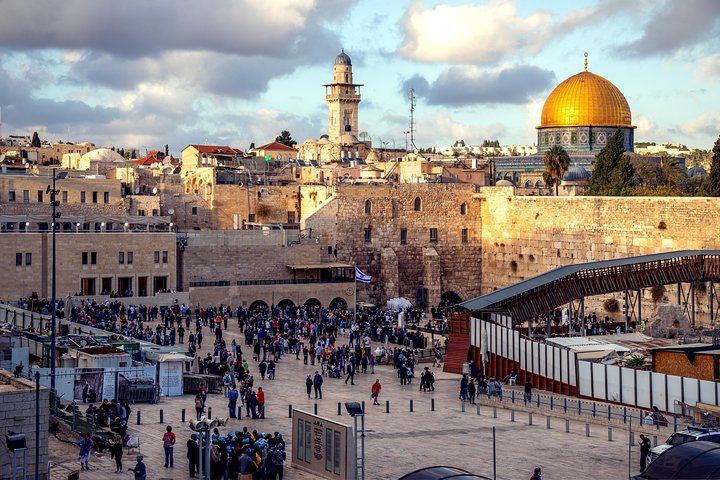
Jerusalem's Christian core sits inside the Old City walls and just beyond them. Inside: the Church of the Holy Sepulchre with the rock of Calvary and the Tomb of Christ, the Via Dolorosa and its fourteen Stations, the Western Wall plaza, the Temple Mount, and the Church of the Redeemer in the Muristan. Just outside: the Mount of Olives, the Garden of Gethsemane, the Dominus Flevit chapel, the Church of All Nations, and the Tomb of Mary. Add the Mount Zion sites (the Cenacle, King David's Tomb, St. Peter's in Gallicantu) and you have a full week of material.
Nazareth is a working Arab-Israeli city, not a museum town. The headline is the Basilica of the Annunciation, completed in 1969 over the remains of a 4th-century church and a 12th-century Crusader church. It is the largest Christian church in the Middle East, and the lower level contains the Grotto of the Annunciation, the traditional site where the Angel Gabriel announced to Mary that she would conceive Jesus. Adjacent is the Church of St. Joseph, built over a cave venerated as the carpentry workshop of Joseph. A few minutes away is the Greek Orthodox Church of St. Gabriel, which some traditions (notably the Eastern Orthodox) identify as the actual Annunciation site. The Old Souq sells food, spices, and crafts. Beyond the city, the Mount Tabor tradition of the Transfiguration is 20 minutes by taxi.
Distance, Transport, and the Practical Layer
Jerusalem sits in the central highlands at roughly 800 metres elevation. Nazareth sits in the Lower Galilee at roughly 350 metres. The drive between them is 150 km and takes about two hours via Highway 6 or through the Jezreel Valley. There is no checkpoint on this route for foreign tourists (the West Bank separation barrier runs east of Nazareth, and the highway bypasses it). This makes Nazareth logistically simpler than Bethlehem for international visitors, even though it is five times further away.
Public buses run from the Jerusalem Central Bus Station to Nazareth several times a day. The trip takes 2 to 2.5 hours depending on traffic and costs around 40 shekels. From Tel Aviv, frequent buses cover the same route in roughly 1.5 hours. A taxi direct from Jerusalem costs 600 to 800 shekels each way. Guided tour buses are the easiest option: they handle the highway, the parking, and the timing at each site.
Time, Cost, and Pace
Jerusalem rewards a slow visit. The Old City alone holds enough material for three full days if you attend services, walk the Ramparts, and sit quietly at the Western Wall or in the rotunda of the Sepulchre. Most pilgrims give it two to three days. The Christian sites need at least one full day and ideally two. Budget $50 to $90 per day for guided tours depending on group or private format.
Nazareth needs four to six hours for the basilica, St. Joseph's, the souq, and lunch. If you bundle the Galilee sites (Capernaum, Mount of Beatitudes, Yardenit baptismal site, Tabgha) you need a full day. Combined Nazareth-and-Galilee day tours from Jerusalem run 12 to 14 hours and cost $130 to $180 per person. Independent travel is cheaper (bus fare is the main cost) but the logistics are heavier.
Atmosphere and Crowds
Jerusalem is busy year-round and extreme around Easter, Passover, and the Jewish High Holidays. The Via Dolorosa on Good Friday has 200-deep crowds by mid-morning. The Church of the Holy Sepulchre can hold 400 people in the rotunda during peak hours. Plan around the religious calendar, or go at dawn. Nazareth is calmer. The Basilica of the Annunciation sees steady tour bus traffic from mid-morning to mid-afternoon but rarely feels packed. The Old Souq is a working market, not a tourist trap, and the pace slows noticeably after 4 PM.
One observation worth flagging: the cultural register is different. Jerusalem is layered, contested, and politically heavy. The Old City holds checkpoints, soldiers, and the constant presence of religious-national tension. Nazareth is a quieter, predominantly Muslim-and-Christian Arab town where life moves at Levantine pace. Many pilgrims find Nazareth more relaxing precisely because it does not carry Jerusalem's weight.
Which One Should You Pick?
Choose Jerusalem if you have one day, if your devotional focus is the Passion or the Resurrection, or if you want the layered experience of all three Abrahamic faiths in one walk. Jerusalem is the answer for first-time Christian pilgrims almost without exception. The empty tomb is the centre of the religion, and it is here.
Choose Nazareth if you have a second or third day in the region, if your focus is the human life of Jesus (childhood, family, early ministry), or if you specifically want to use it as a base for the Sea of Galilee sites. Nazareth is also the better choice for travellers who want to step out of Jerusalem's intensity and breathe.
If you can do both, do both. They are not in competition; they are two chapters of the same gospel. Most pilgrims spend three to four days in Jerusalem and add a long day trip (or an overnight in Tiberias) for Nazareth and Galilee. That balance lets you absorb each city at its own pace. If you have only one spare day beyond Jerusalem, the Nazareth and the Galilee day tour from Jerusalem Choose this if: you have one long spare day and want the Annunciation, Capernaum, the Mount of Beatitudes, and Yardenit in a single run. Skip if: you would rather move slowly and split Nazareth and Galilee across two days. covers both in roughly 14 hours and is the most efficient single-day option.
For more on planning the Jerusalem side, read the full Jerusalem guide. For the Old City in particular, see the Old City walking route.
Explore More
Related guides and comparisons: