About Faith Pilgrimage
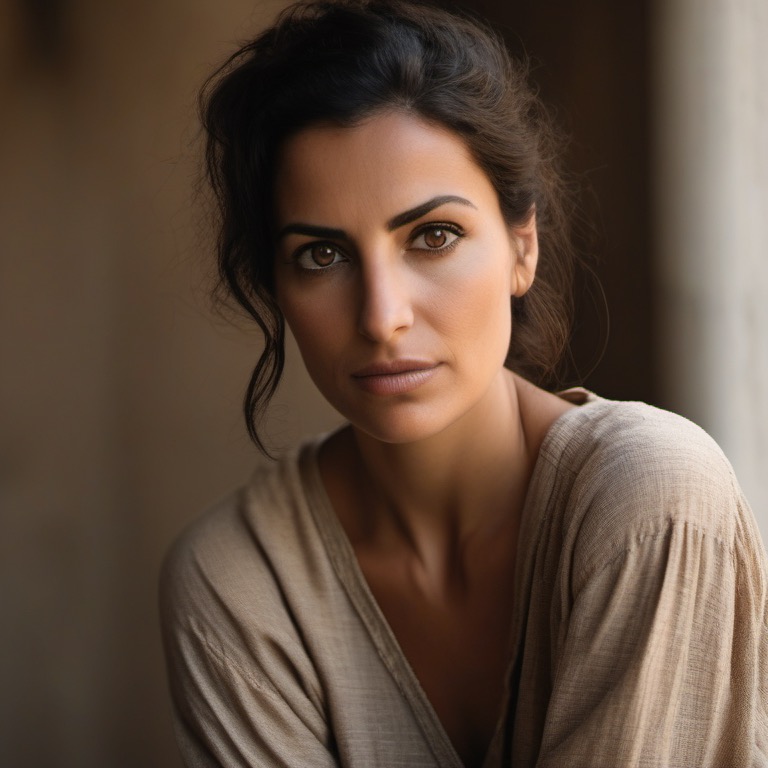
I'm Nadia Hassan. I write about pilgrimage — the walking, the queuing, the blisters, the moments that catch you off guard. This site exists because I could never find the guide I wanted to read before I left home.
I'm Egyptian and Italian, which meant I grew up between a Cairo where the call to prayer set the rhythm of the day and a Naples where saints' feast days did the same thing with brass bands. Nobody sat me down and explained that these were two different religious systems. They were simply what the year looked like. I think that accident of upbringing is why I've never been able to write about one tradition as though it were the only serious one.
I · Where I've been Feet first, always.
I walked the Camino Francés in my early thirties, badly prepared, with boots I'd bought the week before. I arrived in Santiago with two ruined toenails and a much better understanding of why people do this. I've stood at the Western Wall in Jerusalem on a Friday evening as the light went out of the stone, close enough to hear the man beside me crying. I spent Diwali in Varanasi, on a rooftop above Dashashwamedh Ghat, watching lamps go down the river until I lost count. I fasted through Ramadan in Istanbul one year and learned that iftar in a stranger's home is one of the great hospitalities of the world.
None of that makes me a scholar. I have no divinity degree and I'm not going to pretend the difference doesn't matter. What I do have is a notebook full of specifics: which gate opens at what hour, which guide actually knew the history, which boat man overcharged me and by how much. My credentials are logistical and observational, not theological. I've written for Religious Travel Quarterly and contributed to a BBC World Service segment on modern pilgrimage, both of which taught me that the interesting part of this subject is almost never the part that sounds profound.
II · Why this site I got tired of being sold to.
Two things pushed me into building Faith Pilgrimage.
The first was price. I have watched operators charge four hundred euros for a day that consists of a minibus, a car park, and ninety minutes of unstructured time at a basilica. Pilgrims are unusually easy to overcharge, because we arrive already convinced the destination is priceless, and it feels vulgar to haggle over something holy. Operators know this. Somebody should say so out loud, with numbers.
The second was watching sacred places get treated as sets. I was at a ghat in Varanasi at dawn, during a cremation, and a woman a few metres away was doing take after take of herself in a linen dress, adjusting the light. I don't think she meant harm. I think nobody had ever told her that this was a funeral. That's a failure of guidance, and guidance is a thing a website can actually provide.
III · How I work Nothing I haven't checked.
My rules are simple and I'd rather state them plainly than have you guess.
I go, or I say I haven't. Where I'm writing from memory of a place I've stood in, I write in the first person. Where I'm relying on someone else's account or on an operator's own description, I say that too. You should always be able to tell which one you're reading.
Prices get named. Vague words like affordable are how bad value hides. I give figures, and I tell you what the same thing costs if you arrange it yourself, which is often a great deal less.
Every tradition gets the same care. I don't rank faiths, and I don't write about Hindu ritual with an anthropologist's tweezers and Christian ritual with a warm hand. That asymmetry is everywhere in travel writing and it's the thing I watch for hardest in my own drafts.
I tell you when not to go. Some tours are wrong for some people. Some sites are best visited alone with a printed map and no guide at all. Saying so costs me nothing I want to keep.
Faith Pilgrimage earns commission on some bookings, at no extra cost to you. That funds the trips. It has never bought a good review, and if a tour is poor value I say it and lose the fee.
IV · A personal note What I think this is for.
People ask which faith I belong to. The honest answer is that I was raised inside two and have spent twenty years as a respectful guest in several more, and that the question has stopped feeling like the important one.
Here is what I've come to believe, for whatever it's worth. Pilgrimage works not because the destination is magic but because the going is deliberate. You leave. You are uncomfortable. You are among strangers who want the same thing you want. Something in that arrangement loosens whatever you were holding too tightly at home. I've seen it happen to devout people and to sceptics on the same road, which suggests to me that the mechanism is older and simpler than doctrine.
I live in Cairo with my husband, a Coptic historian who corrects my dates, and our two daughters, who have been dragged around holy sites on three continents since they could walk. They are unimpressed by most of it, which I find useful. Last year, in the Church of the Holy Sepulchre, my younger one looked at the queue for the tomb and asked why everyone was so quiet. I didn't have a good answer. I'm still working on it. That's more or less what this site is.
If you've been somewhere I get wrong, write and tell me. I'd rather be corrected than trusted.